


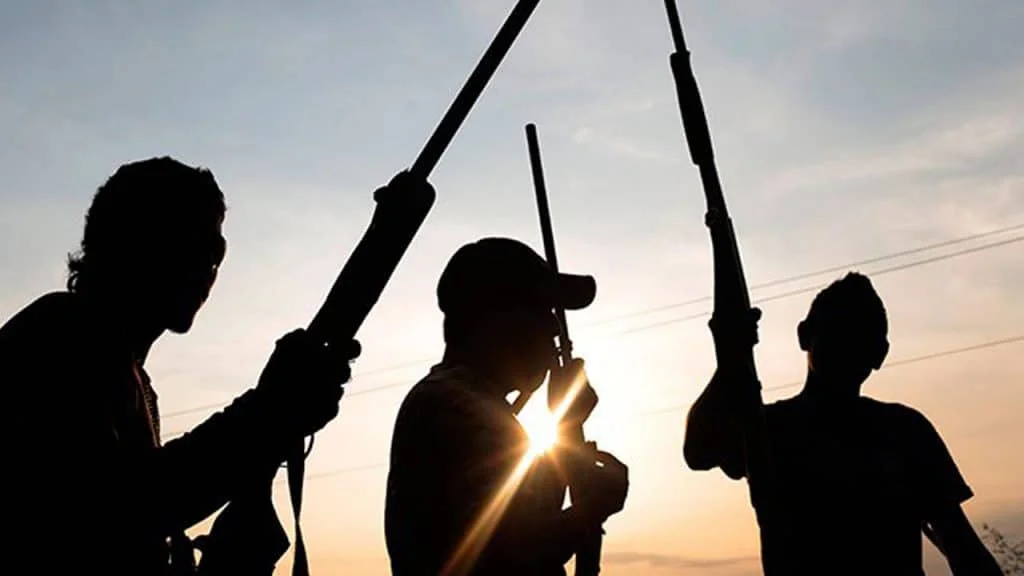
“Negotiating and making peace deals with terrorists or bandits is counterproductive as they barely keep their word. Communities and policymakers who promote such ideas will regret it.
General Christopher Musa, BBC Hausa Service. That statement, reportedly made by General Christopher Musa just five days before his removal as Chief of Defense Staff, deserves serious national reflection.
When a country is fighting a war, there is no such thing as coincidence. Every event, every decision, and every omission carries weight and consequence. Nigeria is, by every measure, a nation at war — a war not declared in the traditional sense, but one that has ravaged communities, destroyed families, and claimed the lives of countless soldiers and civilians.
Across the country, the Nigerian Armed Forces are engaged on multiple fronts against criminal and extremist groups whose sole agenda is the destabilization of the state. Military personnel have become frequent targets of ambushes and coordinated attacks, often from adversaries equipped with weapons as sophisticated as, or even superior to, those of the national military.
This is not merely a regional insurgency; it is a national crisis. The most difficult kind of war to fight is one in which the enemy operates from within — when the battlefront runs through the nation’s political, social, and institutional fabric.
The Seeds of Compromise
History provides context for today’s realities. During President Goodluck Jonathan’s administration, he publicly admitted that Boko Haram had infiltrated his government. Under mounting pressure, his administration reluctantly explored dialogue with the insurgents. What shocked many Nigerians at the time was the revelation that the terrorists had nominated then-General Muhammadu Buhari as their preferred representative at the negotiation table.
That episode was a missed signal. No terrorist group names a representative it does not trust. Buhari, who would later become President, had at the time been a vocal critic of Jonathan’s counterinsurgency operations, arguing that they unfairly targeted the North.
By 2013, negotiations among opposition figures led to the merger that produced the All Progressives Congress (APC). Buhari became the party’s flagbearer in 2014 and was elected president in 2015 — the same individual once mentioned in connection with those insurgent overtures.
The Buhari Years and Their Legacy
Under Buhari’s administration, terrorism — previously confined to the Northeast — spread to other regions: the Northwest, North-Central, and even parts of the South. The administration resisted the international classification of Boko Haram as a terrorist organization and later rebranded violent groups as “bandits.”
A policy of rehabilitating and reintegrating so-called “repentant” fighters became state doctrine, even as security forces complained of insufficient support and systemic sabotage. Numerous reports and videos of soldiers lamenting internal compromises appeared online, often to no effect.
In one notable instance, Qatar convicted individuals for financing terrorism in Nigeria and forwarded their names to the Buhari administration. No visible action followed. Similarly, when the late Dr. Obadiah Mailafia, a former Central Bank deputy governor, alleged that a sitting governor was coordinating terrorist activities, his claim was dismissed, and he died soon after under unclear circumstances.
By the end of Buhari’s tenure, insecurity had metastasized nationwide, leaving the country more fragmented and vulnerable.
Also Read: Why The World is Watching Nigeria and Why That Should Alarm Us
An Unchanged Pattern
President Bola Tinubu assumed office on May 29, 2023, but the pattern remains disturbingly familiar. Killings persist. Armed groups continue to operate freely in many regions. And the policy of “peace parleys” and “rehabilitation” for terrorists still holds.
It is within this context that General Musa’s BBC Hausa remarks must be understood. His caution against negotiating with terrorists was grounded in field experience and national interest. Yet, just days later, he was relieved of his position — a move that has inevitably raised questions.
Reports continue to surface of government emissaries meeting with armed groups who arrive fully armed, issue demands, and depart unchallenged. Meanwhile, calls for justice and accountability for other detained citizens, including political activists, remain entangled in selective legal processes.
The Nation’s Burning Roof
Nigeria today stands at a critical crossroads. The flames of insecurity are not isolated incidents; they are signs of a broader collapse of trust between leadership and citizens, between the protectors and the protected.
A nation cannot sustain peace while accommodating those who wage war against it. The contradiction is fatal. Those who still view this crisis as distant or exaggerated must realize that a house on fire eventually consumes all within it.
At this stage, Nigeria faces two stark choices: to put out the fire through unity, justice, and decisive leadership — or to watch helplessly as it spreads beyond control.
Prayers may soothe the mind, but without action, the flames will not go out. The time for hard choices is now.
