


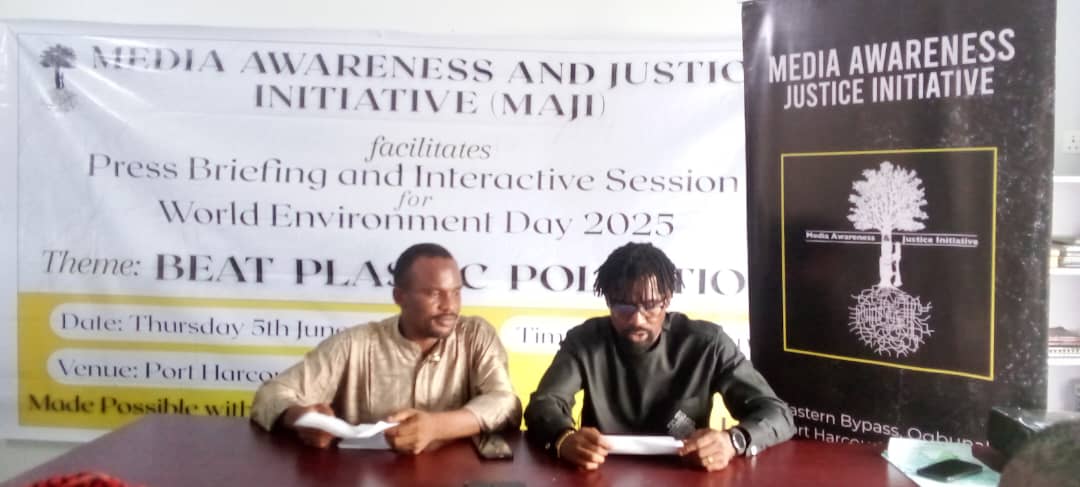
As part of activities marking the 2025 World Environment Day, the Media Awareness and Justice Initiative (MAJI) has called on the Federal Government to declare the indiscriminate use and dumping of plastic waste in undesignated areas as illegal. The call was made during a press briefing in Port Harcourt themed “Beat Plastic Pollution”, where the organization outlined its stanffce and recommendations on effective plastic waste management across Nigeria.
Speaking at the event, the Executive Director of MAJI, Okoro Emmanuel, emphasized the urgent need for the establishment of plastic collection and waste management centers across all local government areas and zones in the 36 States of the Federation. He also advocated for a policy environment that encourages private sector participation through incentives.
“There has to be a collaborative approach and synergy among key stakeholders, aimed at raising awareness and carrying out sensitization in rural and urban communities across Nigeria, These efforts should be delivered using localized platforms and indigenous languages.”
MAJI urged state governments to domesticate existing environmental legal frameworks and policy documents, and called on the Federal Government and the National Assembly to develop or amend legislation regulating plastic importation and ensuring compliance nationwide.
Related: HYPREP Launches Biodegradable Bag Initiative for Mangrove Restoration
The group warned that while plastic is valuable for storage and packaging, its unsustainable production and disposal have led to serious environmental contamination, especially in water bodies and biodiversity hotspots.
In his remarks, Ikechukwu Ahaka, Project Officer at MAJI, stressed the need for stronger mechanisms to combat marine plastic pollution, noting that over 12 million tons of plastic are dumped into the ocean annually.
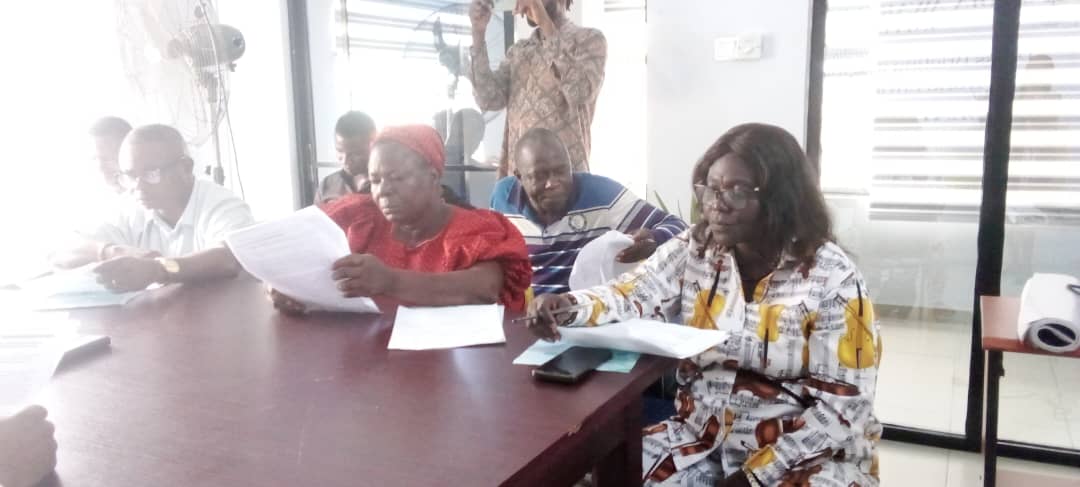
“A single plastic item can take over 450 years to decompose,” Ahaka said. “The UN Secretary-General, António Guterres, warned in 2024 that ‘we are choking on plastic.’ This is not just rhetoric it’s a global emergency. Each year, humanity produces more than 460 million metric tons of plastic, with studies suggesting that people may ingest the equivalent of 50 plastic bags annually due to micro plastics in food.”
Ahaka also cited a 2024 prediction by the UN Intergovernmental Negotiating Committee on Plastic Pollution that by 2050, there could be more plastic than fish in the oceans, urging immediate action from all stakeholders.
MAJI however pointed out that Nigeria ranks 9th globally in terms of ocean plastic pollution and currently lacks a federal ban on single-use plastics The organization warned that continued inaction would worsen the country’s environmental crisis, especially in vulnerable ecosystems like the Niger Delta.
“Aquatic animals, livelihoods, and biodiversity in Nigeria’s coastal regions are dying due to plastic pollution and the toxic chemical reactions from plastic decay,” the group stated. They further observed that rural and urban communities, companies, and households remain heavily dependent on single-use plastics one of the major sources of plastic waste.
“Government at all levels appears to lack the political will, manpower, technology, and strategy to enforce proper waste management policies,” the group noted. MAJI concluded by calling on the Nigerian Government, communities, companies, and individuals to take collective and urgent action to regulate plastic use and mitigate its devastating environmental impacts.
