


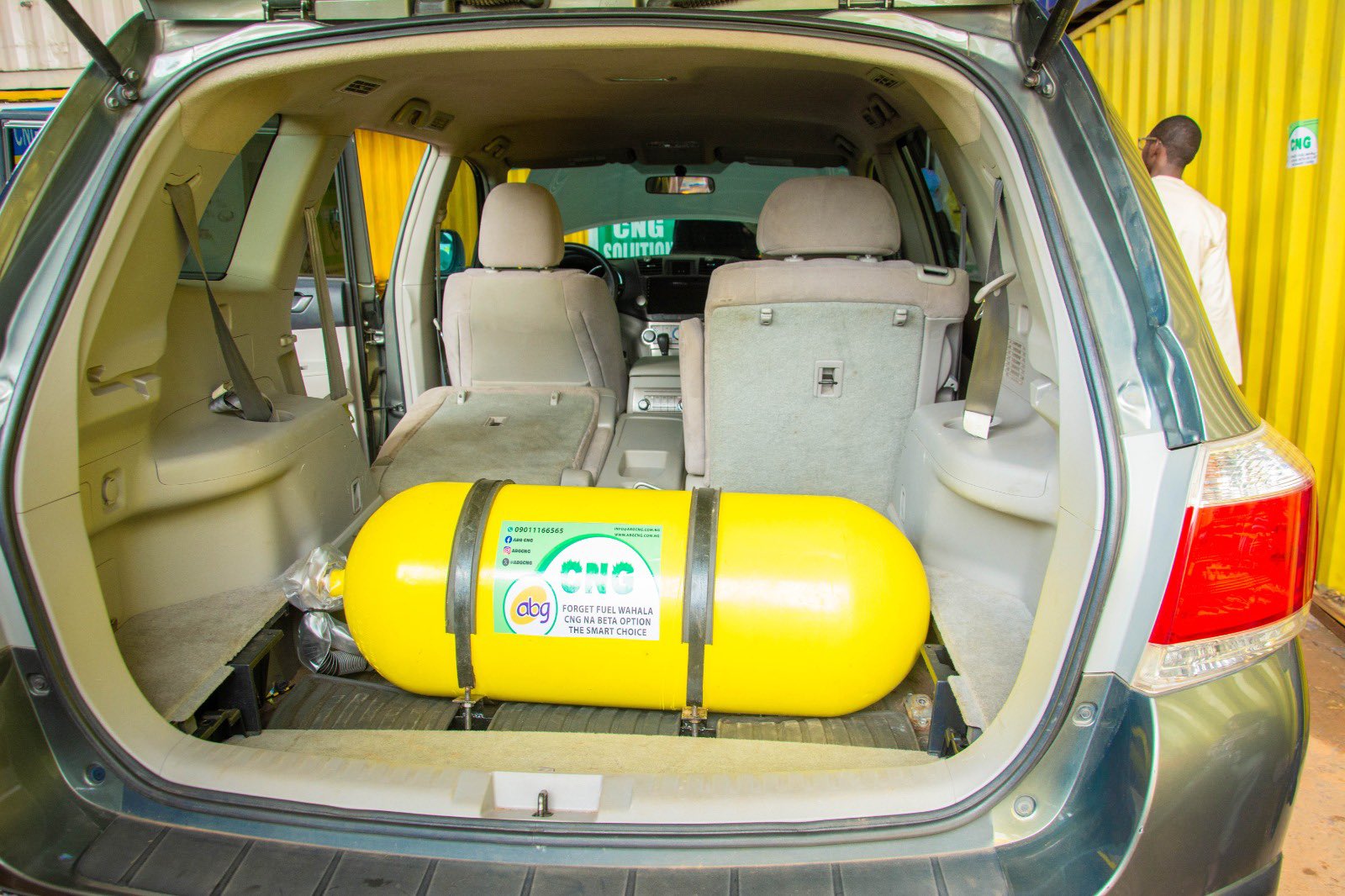
The Federal Government is targeting an additional 130,000 compressed natural gas (CNG) vehicle conversions between September 2026 and February 2027, aiming to increase Nigeria’s CNG-powered vehicle population from 143,000 to 273,000 within five months.
The Presidential Initiative on Compressed Natural Gas and Electric Vehicles (Pi-CNG & EV) announced the target at its Regional Townhall and Stakeholder Dialogue in Abuja, while acknowledging challenges involving gas supply, financing, refuelling infrastructure and private-sector participation.
Executive Chairman of the initiative, Barr. Ismaeel Ahmed, said the success of Nigeria’s CNG transition depends on making the alternative fuel accessible, affordable and acceptable to Nigerians.
He noted that motorists must have reliable access to gas, affordable vehicle conversion and refuelling services, as well as confidence in the safety and economic benefits of CNG.
Ahmed also stressed that the programme’s benefits must extend to drivers, commuters, small-business owners, technicians and transport operators, adding that progress should be measured by its impact on ordinary Nigerians.
Head of Gas Supply and Integration at Pi-CNG & EV, Engr. Tare Mayor Bright said the initiative expects to deliver about 82,000 conversions through its in-house programmes, while private-sector operators and state governments are projected to contribute approximately 48,000.
Read Also: uganda-courts-dangote-for-refinery-fertiliser-investments
He warned that gas supply must expand alongside the growing number of converted vehicles, identifying funding limitations and the initiative’s limited control over private-sector conversion activities as major risks.
The Federal Government is relying on the deployment of 100,000 conversion kits, the National Auto-Gas Conversion Programme, increased private-sector investment, and expansion into the South-East and South-South to achieve the target.
Nigeria’s CNG programme has recorded significant growth, with vehicle conversions increasing from about 11,500 in 2023 to 143,000 by the third quarter of 2026. Conversion centres have also risen from approximately seven to 415, while cumulative investment in the programme is estimated at $2.6 billion.
However, the country currently has 113 operational CNG refuelling stations operated by 24 companies. Another 127 daughter stations are planned across 31 states and territories but are yet to be commissioned.
To improve gas supply, Pi-CNG & EV has established a framework involving the Gas Aggregation Company Nigeria (GACN), the Nigerian Midstream and Downstream Petroleum Regulatory Authority (NMDPRA) and portfolio managers to coordinate supplier onboarding, contracts, payments and monitoring.
The initiative also disclosed that gas supply agreements covering 20 million standard cubic feet per day were executed in February 2025 by NGML, GACN and NEPL, while another agreement for 10 million standard cubic feet per day was operationalised in May 2026 by NGML, GACN and CNL.
Beyond February 2027, the programme is targeting 500,000 cumulative CNG-powered vehicles in its second year and one million over its lifetime. Other targets include 2,500 refuelling stations, 2,000 accredited conversion centres, training 11,000 technicians and retrofitting 350,000 diesel-powered trucks.
Despite the expansion, reliable gas supply, adequate refuelling infrastructure, and accessible financing remain critical to sustaining Nigeria’s CNG adoption drive.
