


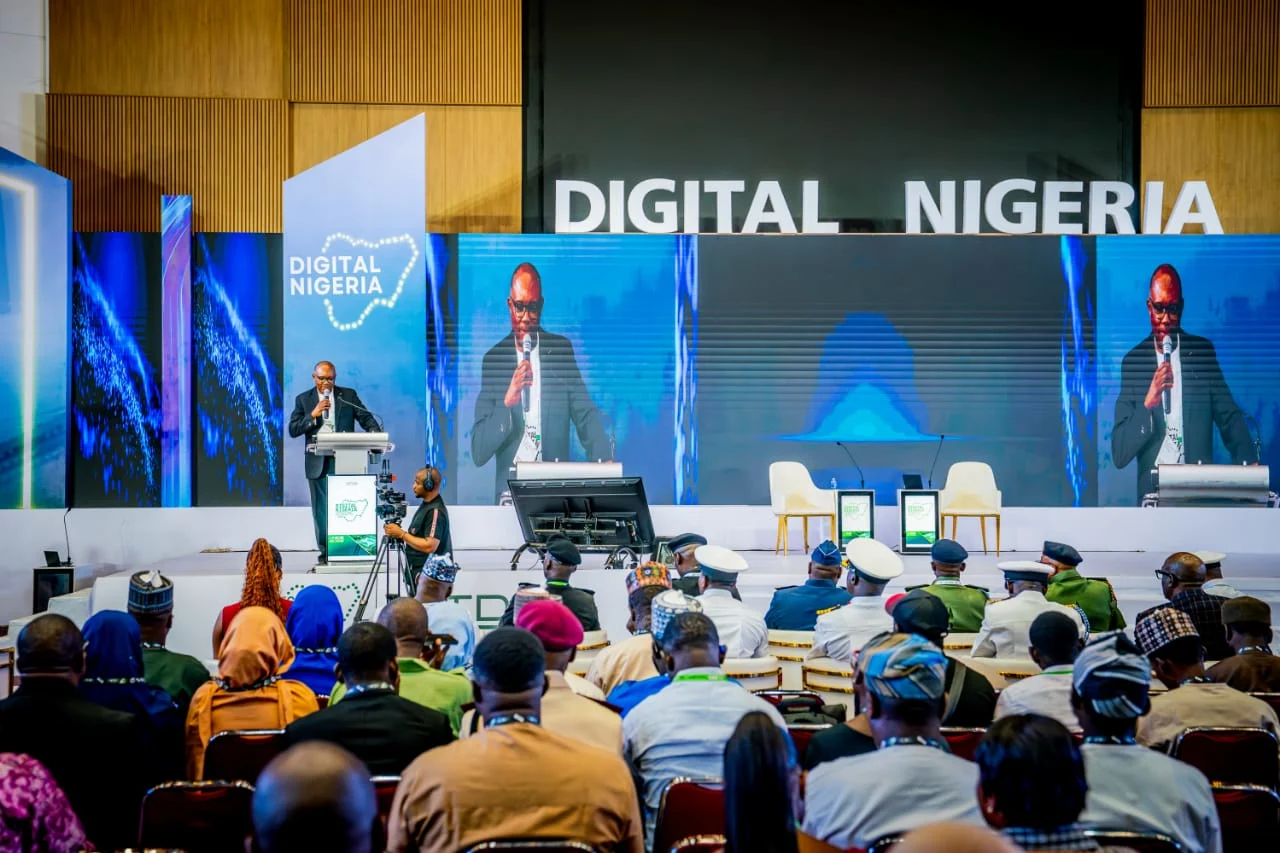
Nigeria’s ambition to grow its economy to $1 trillion by 2030 will depend largely on how effectively the country turns digital innovation into increased productivity, industrial development, investment and job creation.
This was the consensus among stakeholders at the 2026 Digital Nigeria International Conference and Exhibition, held at the President Bola Ahmed Tinubu International Conference Centre in Abuja. Participants called for stronger partnerships and practical measures to ensure that technological advancements translate into tangible economic benefits.
Speaking at the conference, the Director-General of the National Information Technology Development Agency (NITDA), Kashifu Inuwa Abdullahi, represented by the Director of Special Duties, Aristotle Onumo, urged the government, private sector, academic institutions, innovators and development partners to strengthen collaboration towards accelerating Nigeria’s digital transformation.
Onumo said Nigeria had the human resources, creativity and entrepreneurial drive to become a major player in the global digital economy. However, he stressed that achieving this ambition would require sustained investment in digital infrastructure, skills development, innovation and strategic partnerships.
He described technology as an important tool for national development and economic competitiveness, noting that no single institution could drive the country’s digital transformation without the active participation of other sectors.
A major attraction at the conference was the Builders Festival, an initiative aimed at bringing innovators together with investors, industry players and businesses in need of technological solutions.
The festival received more than 1,500 applications following a call for innovative solutions to 21 priority challenges identified by companies and institutions.
From the entries, 30 finalists were selected to develop prototypes and present their solutions to investors, industry leaders and judges. The overall winner received a $50,000 equity-free grant, while other successful participants received grants ranging from $10,000 to $30,000, alongside mentorship and business development support.
Organisers said the initiative was designed to help innovators move beyond developing ideas by providing access to funding, business networks and institutional support needed to turn their solutions into sustainable businesses.
Also speaking, the Director-General of the Nigerian Association of Chambers of Commerce, Industry, Mines and Agriculture (NACCIMA), Olusola Obadimu, warned that Nigeria’s $1 trillion economic ambition could remain out of reach unless digital innovation was directly linked to productivity, industrialisation, exports and employment.
He urged stakeholders to move beyond discussions about technology and concentrate on solutions that would produce measurable economic results.
Obadimu maintained that achieving the target would require closer coordination between technology, business and investment, adding that lasting economic growth must be driven by productive enterprises in agriculture, manufacturing, mining, trade and services.
He identified micro, small and medium enterprises (MSMEs) as major drivers of economic transformation, stressing that digital policies must be designed to improve their productivity, efficiency and competitiveness.
The NACCIMA chief also described the partnership between his organisation and NITDA as an important step towards connecting technological innovation with commercial opportunities.
Beyond the economic benefits of digital transformation, participants also emphasised the need to strengthen cybersecurity, protect digital information and ensure that more Nigerians benefit from technological advancement.
The Commander of the Nigerian Army Cyber Warfare Command, E. S. Mustapha, raised concerns about emerging security threats associated with artificial intelligence and other advanced technologies. He called for increased investment in digital skills and stronger cooperation to address the growing cybersecurity challenges.
Similarly, the Inspector-General of Police, Tunji Disu, represented by the Commissioner of Police, Ayodele Oluyemi, highlighted how artificial intelligence, data analytics and digital forensics were improving intelligence gathering and modern policing.
The National Commissioner and Chief Executive Officer of the Nigeria Data Protection Commission, Vincent Olatunji, represented by Adaobi Nwankwo, stressed that protecting personal information and ensuring responsible data management were essential to building public confidence in digital services.
The Federal Character Commission also called on stakeholders to ensure that the country’s digital transformation agenda created opportunities for all Nigerians, regardless of their geographical location, gender or social background.
