


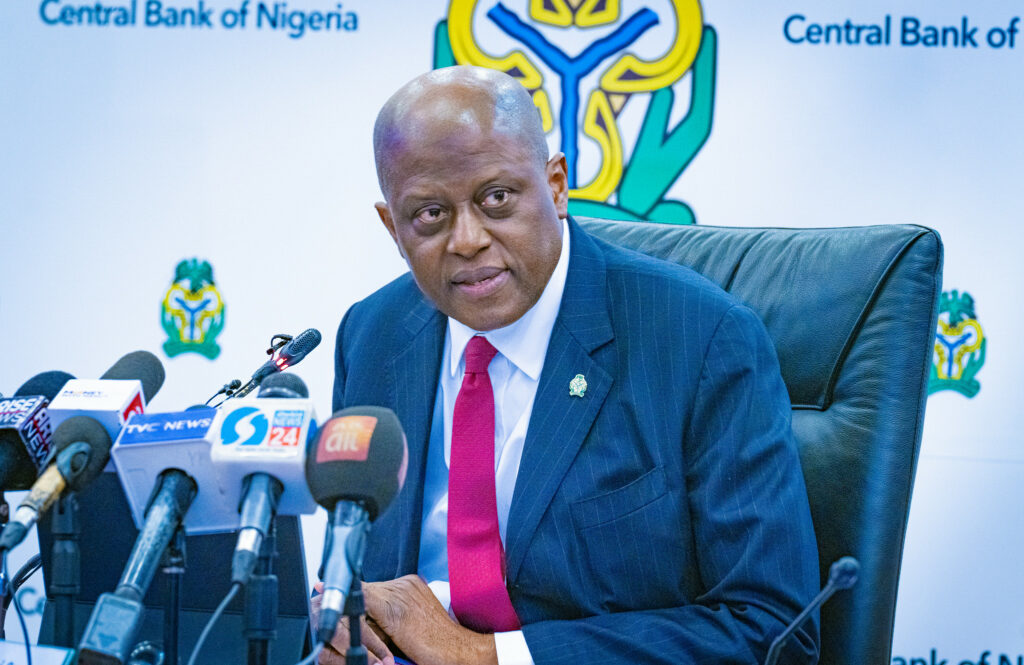
The Central Bank of Nigeria (CBN) has urged commercial banks to translate the ₦4.65 trillion raised during the latest recapitalisation exercise into increased productive lending, improved financial services and stronger support for economic growth.
CBN Deputy Governor, Corporate Services, Dr Muhammad Sani Abdullahi, made the call on Tuesday at the 38th Seminar for Finance Correspondents and Business Editors organised by the Finance Correspondents Association of Nigeria (FICAN).
Abdullahi said 33 banks had met the revised minimum capital requirements by the end of the two-year recapitalisation programme announced by the apex bank in March 2024.
According to him, the increased capital base had strengthened the capacity of banks to meet the financing needs of a growing economy.
“Stronger bank balance sheets should translate into wider access and better service,” Abdullahi said, stressing that the success of the recapitalisation exercise should be measured not only by the amount of capital raised but also by the quality of financial services and productive lending it generates.
He said stronger banks would be critical to Nigeria’s ambition of building a $1 trillion economy by 2030, noting that higher capital buffers would improve banks’ ability to finance infrastructure, industrial expansion, international trade, innovation and digital transformation.
The deputy governor, however, stressed the need for stronger corporate governance and robust risk-management systems to accompany the increased capital base.
He identified cybersecurity threats, climate change, geopolitical uncertainty, technological disruption, liquidity pressures and third-party dependencies among the emerging risks facing the banking industry.
Read Also: petroan-visits-azikel-refinery
Abdullahi also highlighted developments in Nigeria’s foreign exchange market, saying the average gap between official and parallel-market exchange rates had narrowed significantly.
He said the gap, which averaged 68.2 per cent between January and May 2023, had fallen to less than two per cent.
According to him, Nigeria’s gross external reserves stood at $55.60 billion as of September 11, 2026, while reserves at the end of August provided 11.3 months of import cover.
He further disclosed that headline inflation, which peaked at 34.8 per cent in December 2024, had moderated to 15.43 per cent in July 2026.
Real gross domestic product (GDP), he added, grew by 4.43 per cent in the second quarter of 2026.
Despite the improvement in key economic indicators, Abdullahi cautioned that the moderation in inflation and stronger economic growth did not mean that pressure on households and businesses had ended.
He urged banks to ensure that the benefits of recapitalisation translated into greater access to finance and improved services across the economy.
Addressing financial journalists, the CBN deputy governor also underscored the importance of accurate and objective reporting in strengthening transparency and public understanding of developments in the financial sector.
He said financial journalists had an important role to play in explaining reforms, scrutinising financial institutions and helping the public understand changes within the financial system.
“Accurate and objective reporting strengthens market transparency, supports investor education and enables informed public debate,” he said.
