


The Federal Government has announced plans to blacklist schools, publishers and authors found using or distributing textbooks that have not been nationally approved for use in public schools.
The move is part of a new reform aimed at improving the quality of learning materials and ensuring that Nigerian students have access to textbooks that meet approved academic and educational standards.
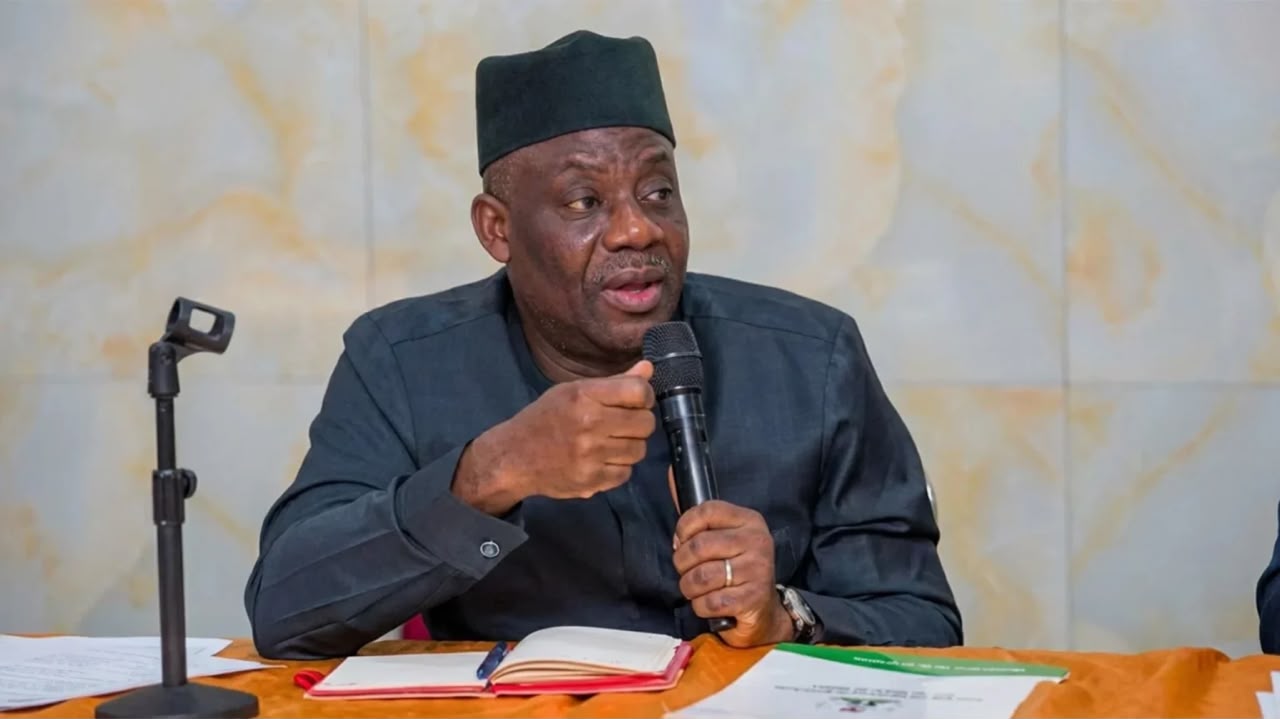
The Minister of Education, Dr Tunji Alausa, announced the policy on Wednesday during the unveiling of the National Textbook Ranking System.
Under the new system, only textbooks that have gone through national evaluation and received approval will be allowed for use in public primary, junior secondary and senior secondary schools from September 2026.
According to a statement by the ministry’s Director of Press and Public Relations, Folasade Boriowo, the initiative is expected to introduce a more transparent and merit-based process for selecting textbooks in Nigeria’s education system.
Alausa said the reform would help improve curriculum delivery, raise learning outcomes, remove poor-quality textbooks from classrooms and rebuild public confidence in the education sector.
The minister explained that a National Textbook Ranking and Selection Committee had been established, comprising representatives from relevant education agencies and education experts.
The committee, working alongside the Nigerian Educational Research and Development Council, will assess textbooks that have already obtained NERDC licensing before ranking them for final ministerial approval.
Alausa stressed that NERDC licensing alone would no longer be enough for a textbook to qualify for classroom use.
Also see: Tinubu Commands EFCC to Reverse Osun Account Restriction Order
“Every licensed textbook must undergo a rigorous national evaluation and ranking process, attain a minimum score of 70 percent and satisfy prescribed academic, pedagogical, technical and quality assurance standards before it can be approved.”
He added that only the highest-performing books would make the final list, with the number of approved titles for each subject limited to between six and 10, depending on curriculum requirements.
To reduce the financial burden on authors and publishers, the government also announced a reduction in the fees for textbook assessment and ranking.
The assessment fee has been reduced from N2,000 to N1,500 per page, while the ranking fee has dropped from N1 million to N750,000 per title.
Alausa said publishers who had already paid the former fees would be refunded, with the Nigerian Educational Research and Development Council expected to coordinate the process.
He also announced that textbooks approved under the new system would remain valid for at least three years, providing greater stability for schools, teachers, publishers and students.
The minister said implementation would be closely monitored by NERDC and other relevant regulatory agencies.
The government is also expected to enforce the new rules against schools, publishers and authors who attempt to introduce unapproved textbooks into public schools, with blacklisting among the proposed sanctions.
