


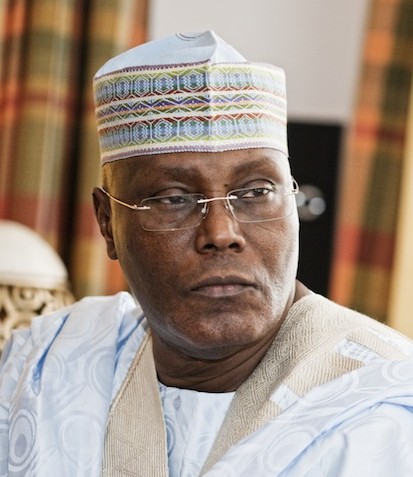
Former Vice President of Nigeria and Presidential Candidate of the African Democratic Congress (ADC), Atiku Abubakar, has characterized the recent revelation that the Federal Government surpassed its 2024 borrowing limit by ₦4.79 trillion raising new credit to ₦12.62 trillion as additional evidence that the President Bola Tinubu-led administration has fully forfeited control over the nation’s financial system.
In an official statement released by his Senior Special Assistant on Public Communication, Phrank Shaibu, Atiku noted that citizens were assured that the painful elimination of fuel subsidies, successive tax increases, and other severe economic policies would curb borrowing and re-establish fiscal equilibrium. Instead, the nation is observing the precise inverse: persistent borrowing, expanding debt burdens, and unprecedented extravagance.
According to the Budget Office, the Federal Government acquired loans 61.2 percent in excess of the amount sanctioned by the National Assembly. Even more concerning, a supplementary ₦3.19 trillion designated as “budget support” was obtained despite lacking authorization within the approved budget, with no transparent disclosure regarding its origin.
Atiku noted that this is not an isolated occurrence, expressing regret that it aligns with a troubling trend that has become the trademark of the Tinubu government: duplication, lack of transparency, and irresponsible financial stewardship.
The former VP added that this is the selfsame government that has been caught establishing fake agencies, inflating budgets with repeated allocations, concealing trillions within the ambiguous Service Wide Vote, earmarking exorbitant sums for luxury utility vehicles while essential sectors struggle for survival, and now borrowing well past statutory boundaries.
“What exactly is all this borrowing funding? Certainly not education, where children continue to learn under deplorable conditions. Certainly not healthcare, where hospitals remain underfunded. Certainly not security, where innocent Nigerians are massacred while security agencies complain of inadequate funding. Certainly not infrastructure, because the roads remain death traps and electricity has become an expensive luxury,” Atiku stressed.
He added that the tragedy is that Nigerians are being compelled to service debts whose advantages remain invisible, remarking that even more disturbing is the contradiction characterizing this leadership.
Also see: Rivers Government Rolls Out Free Hepatitis Testing And Treatment
“Only days ago, it emerged that high crude oil prices have handed the Federal Government an estimated ₦7.98 trillion oil windfall, yet instead of reducing borrowing, the government has continued to pile debt upon debt. A government earning windfalls while borrowing recklessly is not suffering from lack of revenue; it is suffering from lack of discipline,” Atiku said.
“The Budget Office report further reveals that debt servicing alone consumed ₦12.36 trillion, exceeding the budget by more than 52 per cent. Nigeria is fast approaching the dangerous point where the government exists primarily to borrow in order to repay previous borrowings. This is not economic reform. It is fiscal vandalism.
“No responsible government mortgages the future of unborn generations while simultaneously presiding over duplicated budgets, wasteful expenditures, opaque financial practices and an ever-expanding bureaucracy.
“The question Nigerians must now ask is simple: where is all the money going? When revenues increase, borrowing also increases. When taxes increase, borrowing still increases. When subsidy is removed, borrowing accelerates. When budgets are padded and duplicated, borrowing becomes the answer once again. This is not governance. It is a debt addiction.”
The ADC, according to Atiku, maintains that Nigeria merits a administration that lives within its budget, eradicates waste, restores accountability, plugs financial leakages, and directs public revenue into productive ventures rather than funding an unending cycle of borrowing.
Atiku asserted that the Nigerian public cannot keep settling today’s taxes to service yesterday’s liabilities while future generations inherit nothing but debt.
