


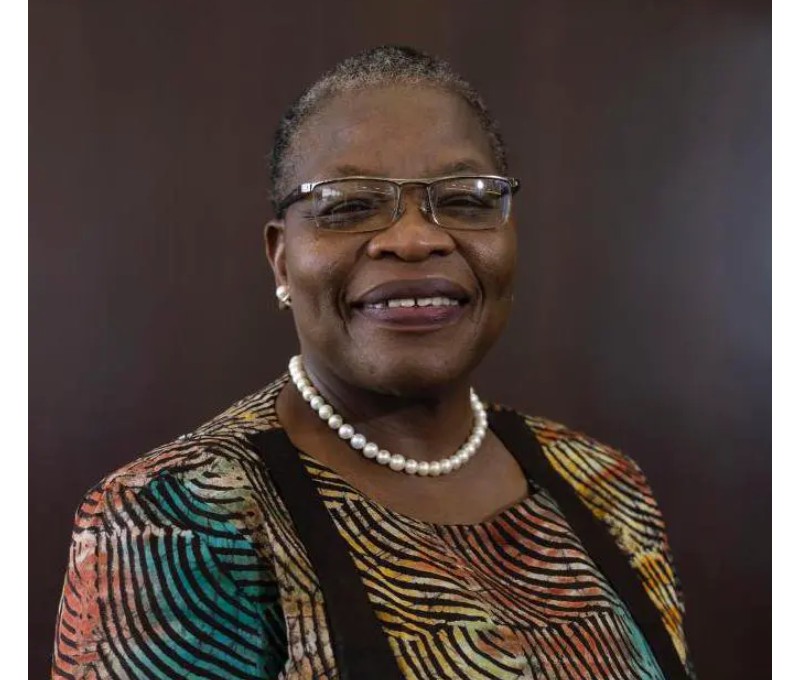
Former Minister of Education, Oby Ezekwesili, has called for collective citizen action, stressing that Democracy does not belong to politicians but belongs to the citizens.
Speaking at the Movement for Credible Elections, Emergency Stakeholders Engagement, on Monday 25 May in Abuja, Ezekwesili ”warned that Nigeria is edging dangerously close to becoming a failed state due to worsening democratic decline, weak institutions and growing public distrust in governance.
Ezekwesili, the convener of the Movement for Credible Election, noted that Nigeria’s democratic system had steadily deteriorated since 1999, noting that citizens had increasingly lost confidence in elections and public institutions.
She stressed that the low voter turnout in 2023 reflected deep distrust in the electoral system.
“It is quite evident that years later, our democracy has degraded to a churn. In all the indicators that define functional democracies, we absolutely do badly,” she said.
“The recorded 23 per cent turnout in the 2003 presidential election showed Nigeria had fallen below Africa’s democratic average” she said emphasizes.
Ezekwesili blamed the situation on institutional failures, including INEC, the judiciary, and security agencies, while warning that the abuse of state power against dissenters poses a major threat ahead of 2027.
“One major crisis is the increasing use of state power against dissenting voices,” she said.
Former Minister of Education, further criticised the political class for prioritising personal ambition over national welfare, saying insecurity and abductions were being ignored while politicians focused on elections.
She warned that the growing perception that elections are “purchased with money” had worsened corruption and fragility, placing Nigeria among the world’s most vulnerable states.
“There is growing anxiety that our elections have entirely been purchased and that nothing else matters in our democratic processes than loads of money and when you remember that none of the politicians have shown evidence of generational wealth before they came to public reckoning, then it becomes clear to me that there is a strong correlation between the level of public corruption that has reduced Nigeria to as close a failed state as can be defined by the global measure that ranks countries in terms of their fragility.
“Nigeria has persistently declined, and today we are within the range of the 13th or the 14th most fragile of countries. It just takes a tiny little push, and it goes into the category of failed state,” She added.
