


Inadequate financing, policy inconsistency, shortage of skilled technicians, weak infrastructure and affordability concerns have been identified as major barriers slowing the adoption of Compressed Natural Gas (CNG) and Electric Vehicles (EVs) in Nigeria and across West Africa.
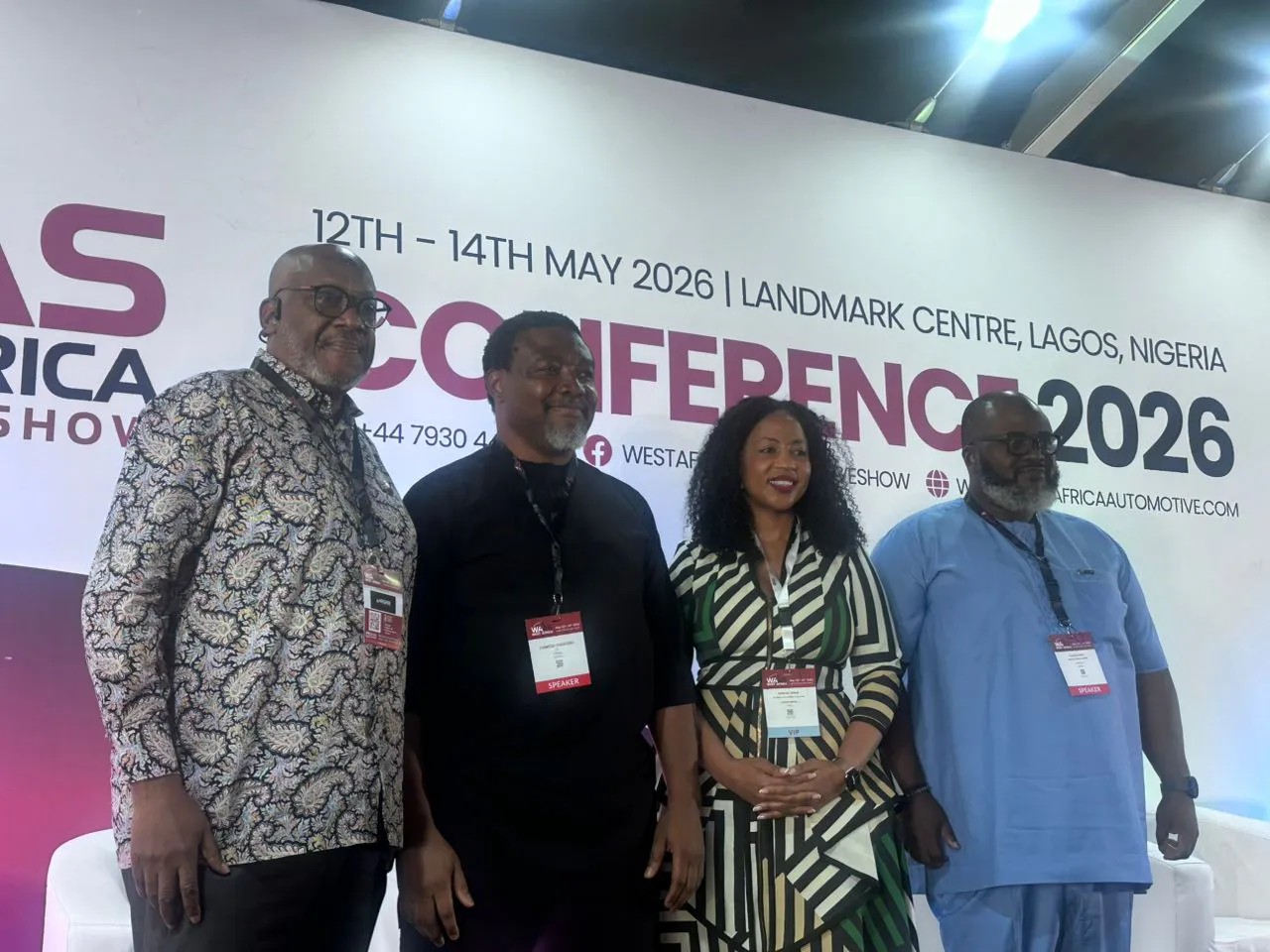
Stakeholders in Nigeria’s automotive sector raised the concern during discussions at the last day of the 2026 West Africa Automotive Show (WAAS) held in Lagos, where industry leaders and private sector operators examined the region’s readiness for cleaner mobility under the session titled, “Preparing For Change: Is West Africa Ready For EV & CNG Adoption?”Speaking during the session, the Chief Executive Officer of OMAA, Chinedu Oguegbu, said Nigeria possesses enormous natural gas resources capable of supporting a large-scale transition to cleaner transportation.
According to him, Nigeria currently has about 206 trillion cubic feet (TCF) of proven gas reserves, making it the largest gas reserve holder in Africa and the ninth largest globally.“We are blessed with about 206 TCF of proven gas reserves in Nigeria.
We have almost 100 times more gas than crude oil. In Africa, Nigeria is number one and globally Nigeria is number nine,” he said.
Oguegbu noted that although several gas transition programmes existed before the Presidential CNG Initiative and Electric Vehicles (PCNGI-EV), the current administration has accelerated investments and infrastructure deployment across the country.
He explained that over 75 CNG stations are already operational across several states, although the number remains insufficient to meet rising demand.
“There have been several programmes before PCNGI.
Today, many stations even in Benin Edo State are dispensing gas.
We still do not have enough stations but we are making progress,” he stated.
The OMAA boss said while electric vehicles would become highly competitive over time, CNG currently represents the most practical and affordable transition fuel for heavy-duty transportation and logistics operations in Nigeria.
“For heavy prime movers, CNG makes the most sense and we need to benefit from it,” he said.He maintained that Nigeria has already recorded over 100,000 vehicle conversions to CNG, while private sector investment commitments in the sector currently range between $500 million and $2 billion.
Also speaking, Olayinka Rufai, Strategic Project Adviser for the PCNGI representing the Executive Chairman of the Presidential CNG Initiative (PCNGI), Ismaeel Ahmed said Nigeria has made significant progress in laying the foundation for alternative fuel adoption.
“From our perspective driving the industry, I believe we are on the right track. We have done things the right way and we seem to have gotten it right,” he said.
Rufai, however, identified financing as one of the biggest obstacles facing the sector, particularly for logistics operators and transport companies seeking to convert their fleets.
“The scale we need to drive this revolution is such that many of the people we are bringing on board will have financial challenges,” he stated.
He lamented the high interest rate environment in Nigeria, noting that borrowing costs of between 20 and 30 per cent remain prohibitive for operators seeking to finance vehicle conversions and infrastructure projects.
“Our interest rates are double-digit — 20, 25 and even 30 per cent — and the funds are not easily available,” he said.
According to him, the rising cost of Premium Motor Spirit (PMS) is already driving increased demand for CNG conversions, especially within the logistics and transportation sectors.
Chairman of the African Association of Automotive Manufacturers (AAAM) Skills Development Chair & Head of Sub-Saharan Africa Business Development, Hyundai Motor Middle East and Africa, Nobuhle Renqe, said Africa’s transition to cleaner mobility cannot adopt a “one-size-fits-all” model because each country has unique economic realities and infrastructure gaps.
“We are ready, but we need to upskill our people for the transition,” she said.
According to her, localised training and skills development programmes are critical to ensuring African countries build the technical capacity required for EV and CNG adoption.
Renqe also stressed the need for affordability and policy certainty to encourage manufacturers and consumers to embrace cleaner vehicle technologies.
“The biggest challenge is affordability. We need to ensure vehicles are affordable and that there is policy consistency,” the group noted.
Chairman of the Auto and Allied Sector Group of the Lagos Chamber of Commerce and Industry (LCCI), Dr. Femi Eguaikhide also identified high vehicle financing costs as a major factor limiting access to brand-new vehicles in Nigeria.
According to him, the absence of affordable auto credit has pushed many middle-income earners toward imported used vehicles, popularly known as “Tokunbo.”
“Elsewhere, auto credit is available at single-digit interest rates, but in Nigeria the lowest you can get is about 26 to 30 per cent.
That is prohibitive and it significantly impacts affordability,” he said.Chairman of the Conference, Mr. Mamudu Luqman said Nigeria should roll out a financing scheme to drive massive adoption of CNG and EV as alternative mobility.
