


The Federal Government has reaffirmed its determination to fast-track the Ogoni Cleanup programme, assuring that ongoing projects under the Hydrocarbon Pollution Remediation Project (HYPREP) will be completed on schedule.
Permanent Secretary in the Federal Ministry of Environment, Dr. Salihu Aminu Usman, gave the assurance on Wednesday, 13 May 2026, during a one-day working visit to key HYPREP sites in Ogoniland.
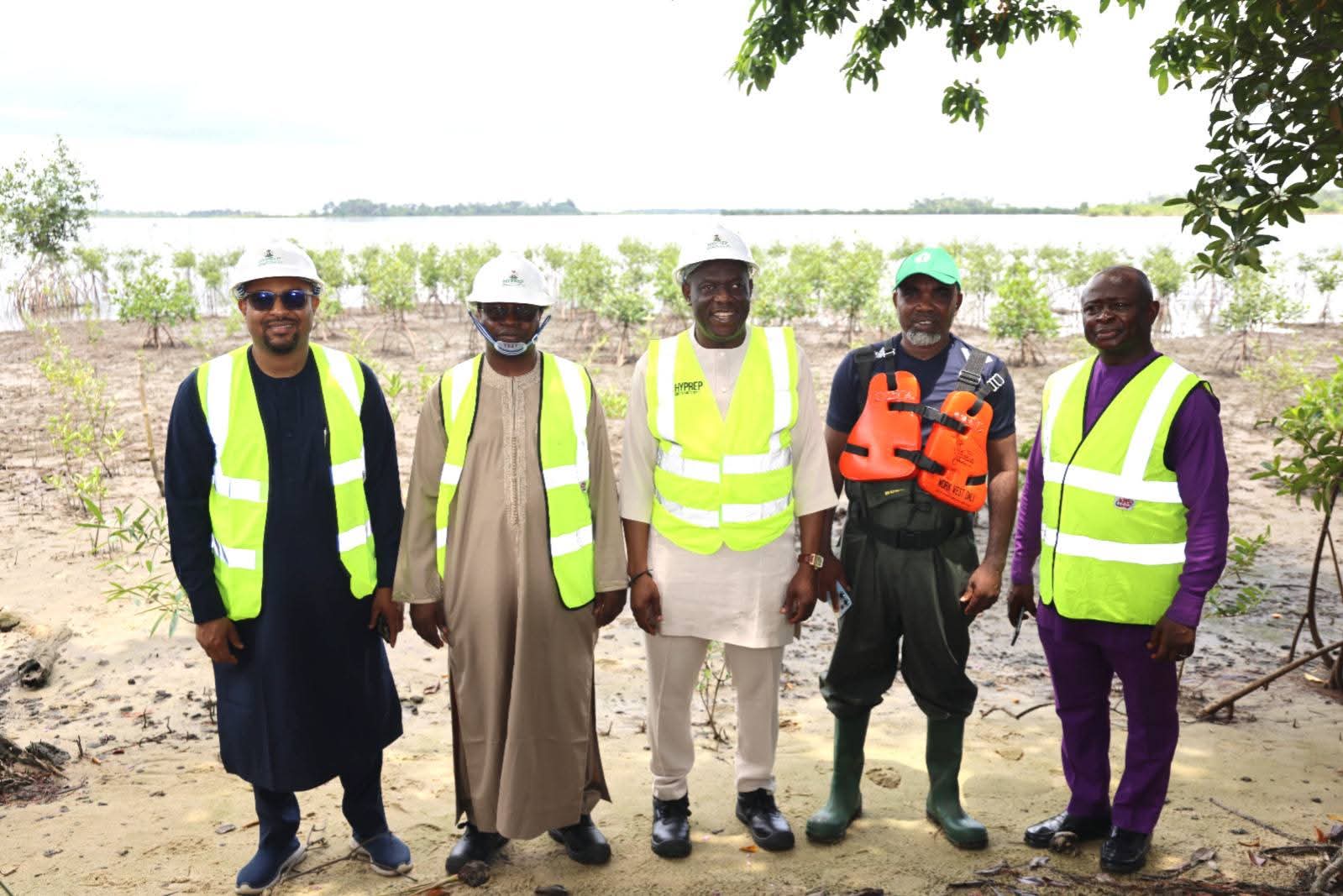
Dr. Usman inspected several landmark projects, including the 100-bed Ogoni Specialist Hospital, the 43-bed Cottage Hospital in Buan, the Centre of Excellence for Environmental Restoration (CEER), the Ogoni Power Project (Wiiyakara Transmission Substation), the Eteo Water Facility, and the Mangrove Restoration site in Bomu.
Impressed by the quality and pace of work, the Permanent Secretary commended HYPREP Project Coordinator, Professor Nenibarini Zabbey, for his prudent management of resources.
“We saw solid structures, and I believe they will go a long way in benefiting the people of Ogoniland and beyond,” Dr. Usman said.
Also Read: http://Alleged Defilement: Suspect Slips Away from Police During Investigation
“It is not a misplaced priority that so much has been invested in the project. I believe the HYPREP Project is on track. I want to commend Prof. Zabbey for his doggedness in ensuring that the resources are applied judiciously.”
Professor Zabbey assured the visiting Permanent Secretary that HYPREP is fully complying with the Presidential directive on accelerating the Ogoni Cleanup, with visible progress across all thematic areas.
The Project Coordinator described the visit as timely, especially for the new Permanent Secretary, who also chairs the Ministerial Tenders Board, to get first-hand information on the status of projects.
He briefed Dr. Usman on various initiatives, including alternative livelihood programmes, high-demand skills training, and scholarship schemes aimed at boosting youth employability.
“HYPREP is adopting a holistic approach in its project implementation, prioritising all thematic areas,” Prof. Zabbey stated. “On every front, we are pushing in line with the charge given to the Project. We are ticking the boxes seriously.
“We are now using a holistic approach to implement all the recommendations of the UNEP Report and also going beyond,” he added.
The Project Coordinator emphasised the community-driven nature of the initiatives, particularly the mangrove restoration programme. Local residents, trained as Mangrove Vanguards, are actively involved in establishing nurseries, supplying seedlings to contractors, planting mangroves, and monitoring the restored sites.
“This creates ownership which will lead to environmental sustainability,” Prof. Zabbey maintained.
