


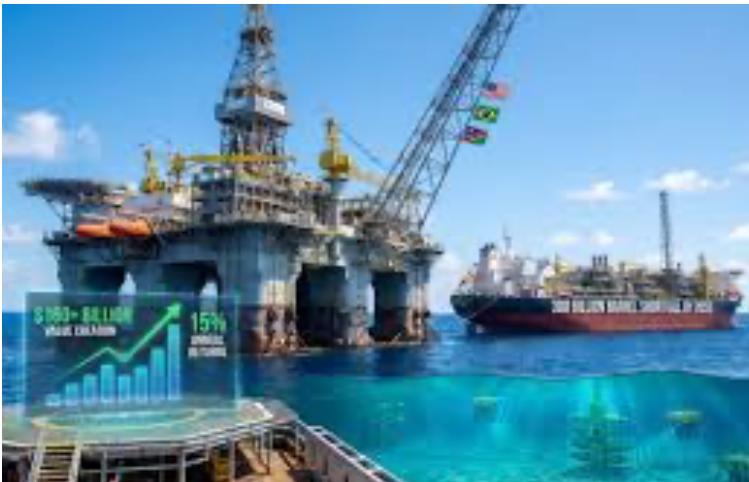
Oil majors are increasingly redirecting their attention to ultra-deepwater and frontier exploration as fears of possible supply shortages persist.
According to Wood Mackenzie, the industry may need an additional 300 billion barrels of liquid production by 2050 without further discoveries.
The study indicates that conventional oil reserves and those that have already been sanctioned will contribute around 700 billion barrels by the middle of the century.
Furthermore, there will be a 40% drop in output from existing reserves from 2025 to 2040, compelling oil majors to discover new oil deposits.
As a result, many international majors, as well as national companies like Petrobras, PETRONAS, and TPAO, are undertaking explorations in water depths exceeding 1,500 metres.
These expensive and technologically difficult locations are believed to contain large reserves of oil with substantial economic value that could meet future energy needs.
Expenditures on exploration have remained constant even with increasing operation costs, with annual expenditure amounting to an average of $19 billion in the period between 2021 and 2025. It is believed that the benefits outweigh the costs of exploration since one successful find in the deepwater area could earn the oil firm billions of dollars.
According to Andrew Latham, senior vice president for energy research at Wood Mackenzie, although early drilling outcomes in 2026 have not been promising, there is still determination to engage in high-impact exploration.
Several successes in areas such as Guyana, Brazil, West Africa, and Southeast Asia have prompted companies to embark on further drilling programs. There will be at least 23 significant drilling projects this year
