


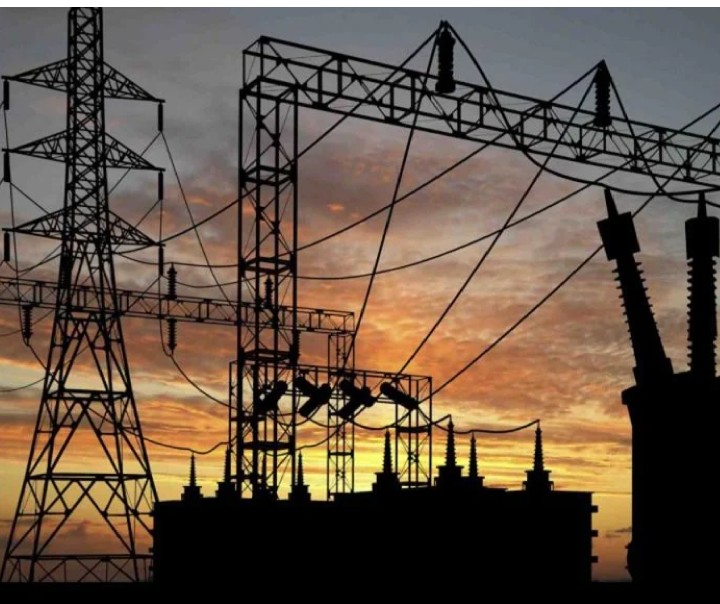
The electricity supply shortage experienced across Nigeria may worsen as suppliers have reduced the amount of gas they supply to Thermal Power Plants.
It would be recalled that the Nigerian Independent System Operator (NISO) had stated that thermal power plants require an estimated 1,629.75 million standard cubic feet of gas per day to operate at optimal capacity.
However, as of February 23, 2026, actual supply stood at about 692.00 mmscf per day, representing less than 43 per cent of the required volume.
The development is coming amid blackouts in many states, a situation that is crippling businesses.
The Chief Executive Officer of the Association of Power Generation Companies, Dr. Joy Ogaji, during an interview in a Radio programme warned that the mounting debt across the power value chain is pushing the sector toward a major crisis.
Speaking on the situation, Dr. Ogaji alleged that the crisis stemmed from the failure of the Nigerian Bulk Electricity Trading Plc to fully pay for electricity generated by GenCos since the sector’s privatisation.
According to her, the government currently owes generation companies about N6.8 trillion, with roughly 70 per cent of the amount relating to thermal plants.
She said about 70 per cent of whatever the government owes gas-fired power plants belongs to gas suppliers, meaning gas companies are owed about N3.3 trillion out of the N4.76 trillion tied to thermal generations.
Dr. Ogaji disclosed that suppliers have informed generation companies that they will no longer supply gas to power plants unless payments are made.
“NBET is set up to buy power from GenCos and sell to DisCos. The aim is that, as they buy power, they will pay in full, but since 2013 till today, they’ve never paid in full, so this debt is now N6.8tn,” she said.
Providing a breakdown of the debt, Dr Ogaji stated that the liabilities have grown significantly over time.
“From 2015 to December 2024, the debt profile grew to N4tn. In each month of 2025, there is a shortfall of N200bn. So if you calculate N200bn times 12, that is N2.4tn, making the whole debt N6.4tn after December 2025.
“We’re already in March 2026. The debt grew to N6.6tn in January and N6.8tn in February. At the end of March, you need to add N200bn again to make it N7tn,” she said.
Dr. Ogaji noted that a significant portion of the outstanding debt is owed to gas suppliers because thermal plants account for the majority of electricity generation on the national grid.
“The generation companies have hydros, and we have thermal power plants. The thermal power plants are the ones that use gas. The hydro plants use water, so they do not owe gas suppliers.
“On the grid, we have 30 power plants. Out of that, about 30 per cent are hydro now because Zungeru Hydroelectric Power Station has added 700 MW, and there are other smaller hydro plants. So, the remaining 70 per cent comes from gas.
“Therefore, for every N100 the thermal plants invoice NBET, N70 belongs to the gas suppliers. So, if we go by that ratio, out of the N6.8tn that I’m quoting, if we take out 70 per cent of that money that belongs to thermal plants, we need to work out another 70 per cent of that thermal 70 per cent, and that belongs to gas suppliers.”
“Industry estimates, based on this calculation, show that about N3.3 trillion of the total debt is owed to gas producers, whose fuel powers most of Nigeria’s electricity generation” she said.
The GenCo chief warned that the worsening debt crisis is directly responsible for the current electricity shortages.
“Yes, it is 120 per cent correct to say that the debt is the reason why we are in darkness,” she said.
Dr Ogaji added that gas producers are increasingly insisting on payment before supplying fuel to power plants.
“Gas is not available because the gas suppliers have told us that if we need gas, we need to put money on the ground to get gas in the pipe. We owe them a lot of money,” she said.
According to Dr. Ogaji, the inability of generation companies to receive payments has also left them struggling to service bank loans obtained during the 2013 power sector privatisation.
“We owe gas suppliers, and we also owe lenders. You may have read in the papers that a bank has been threatening to take over Egbin Power Station because of the acquisition loan,” she said.
She also said GenCos’ financial burden had worsened significantly due to the sharp depreciation of the naira since the loans were obtained.
“In 2013, during the privatisation, the GenCos took loans from different banks so that they could make a lot of power available to Nigeria. But with this lack of payment, they are not able to pay their loans, and another problem is that they took those loans in dollars in 2013 when the dollar to the naira was N155 to one dollar,” she added.
Consumers in different parts of the country are grumbling as blackouts and load shedding on the national grid continue.
The low supply has affected all parts of the country, with electricity distribution companies announcing load shedding across their franchise areas as a way to ration electricity to communities.
For instance, data on the platform of the Nigerian Independent System Operator showed that Abuja Disco is getting 539 megawatts from the grid, while Ikeja Disco is receiving 533MW and Eko Disco is getting 455MW.
Ibadan Disco is getting 336MW, while Benin Disco is getting 227MW, with Enugu Disco receiving 218MW and Jos Disco getting 159MW.
Kaduna Disco is receiving 178MW, with Kano Disco getting 190MW and Port Harcourt Disco getting 196MW.
The Nigerian Electricity Regulatory Commission (NERC), in a recent report, confirmed that only 32% of the 13,625 megawatts installed capacity of electricity power plants dispatched electricity in the month of February.
NERC, in the February 2026 Operational Performance Factsheet posted on its X account, said an average of 4,384MW was available for dispatch during the month.
It said the average load factor is 93%, showing that 4,102MWh/h of available capacity was utilised.
It identified Ihovbor_2, Kainji_1 and Jebba_1 as top energy producers that stood out with strong availability and high utilisation levels.
This means that hydro power plants continue to serve as major contributors to the national grid despite the dry season, which usually leads to a drop in water levels in hydro dams.
