


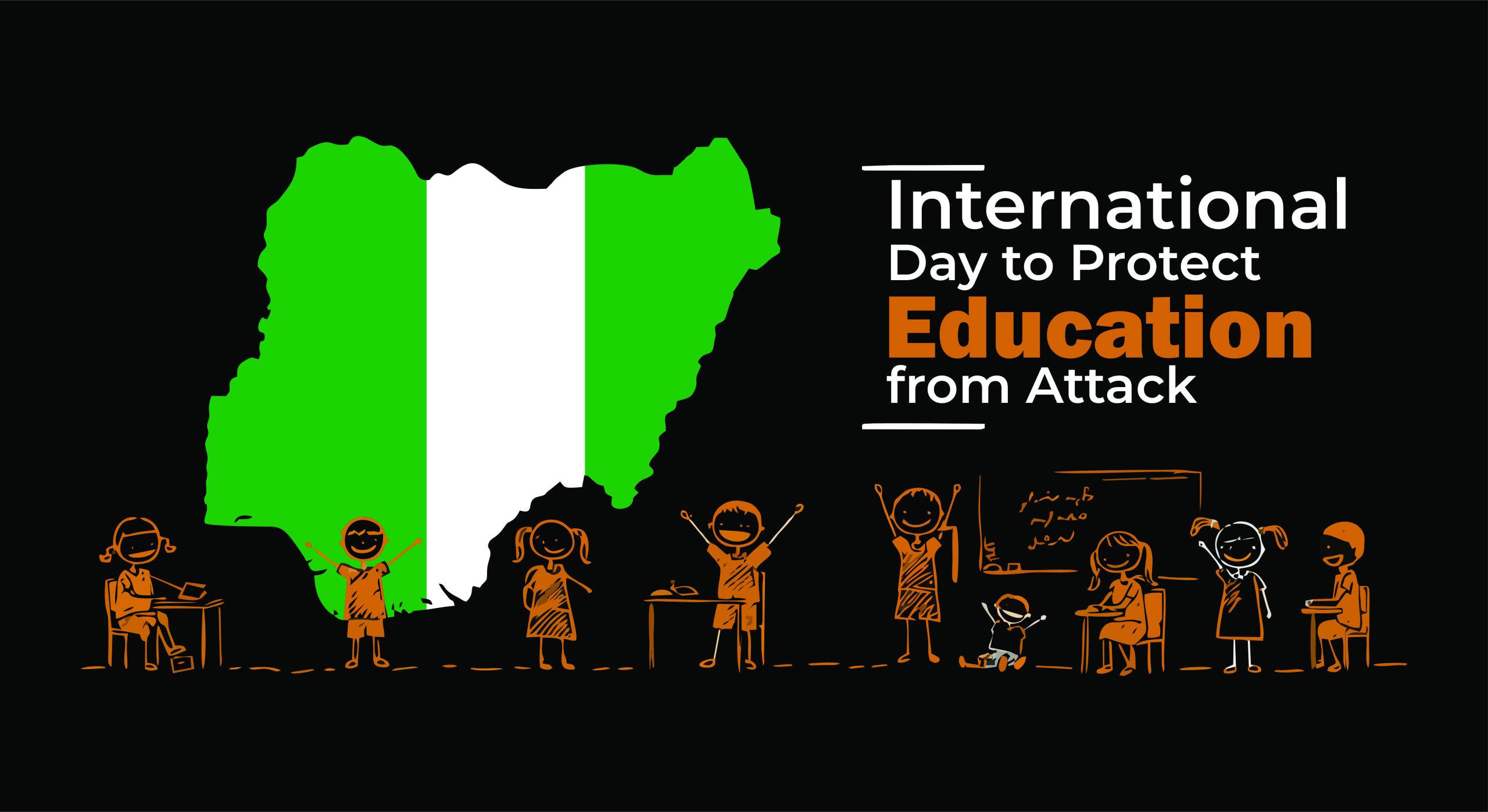
Every child who wakes up in the morning with the hope of sitting in a classroom deserves to return home safely with stories of what they learned, not scars of what they survived. Yet for many children around the world, and even here in Nigeria, education is under constant attack.
September 9 reminds us of a simple truth: when we protect schools, we protect the future. The International Day to Protect Education from Attack is not just another date on the calendar. It is a call to conscience, a day that demands we pause and remember the millions of children whose dreams are silenced by violence, conflict, and insecurity.
In Nigeria, the stories are painfully familiar. From the abduction of schoolgirls in Chibok and Dapchi to repeated attacks on schools in the North, children have been forced to trade pencils for fear and textbooks for trauma. Teachers, who once stood proudly as beacons of knowledge, now carry the weight of uncertainty each time they walk into a classroom. Parents, instead of worrying about exam grades, worry about whether children will make it home alive.
Education should be the safest place a child can be. It should be a sanctuary of laughter, curiosity, and discovery. But when armed conflict creeps into the schoolyard, that sanctuary is broken, and with it, the very foundation of a nation’s future begins to crumble. No society can thrive when its classrooms are empty, when the blackboard gathers dust, and when children are too afraid to learn.
This day is a reminder that protecting education is more than a policy issue; it is a moral obligation. A nation that cannot guarantee the safety of its learners cannot guarantee its progress. If we fail to shield our children from attacks, we fail ourselves as a people.
Also Read: International Day of Charity: Why Young Nigerians Must Invest Kindness in Education
But there is hope. Across Nigeria, communities are rising to demand safer schools. Civil society groups are pushing for stronger laws and better security. Teachers, even in the face of fear, continue to show courage by showing up. Children, resilient and determined, still cling to their dreams of becoming doctors, engineers, teachers, and leaders.
Protecting education is not the job of the government alone; it is a shared responsibility. Every parent, every leader, every citizen has a role to play. We must speak out, we must demand change, and we must ensure that no child is left behind simply because the classroom became a battlefield.
On this day, let us remember the children whose voices were silenced, and let us stand with those who continue to fight for their right to learn. Let us honour the teachers who give everything so that others can have a future. And let us recommit ourselves to one unshakable belief: education is hope, and hope must never be destroyed.
When we protect schools, we protect Nigeria. When we protect education, we protect tomorrow.
