


I didn’t want to talk about it, but I have to, for two reasons.
First, because it says something about a system that has little or no mechanism to protect ordinary people. Second, because too many businesses and organisations around here seem to believe that one person’s review doesn’t matter.
Now, what happened?
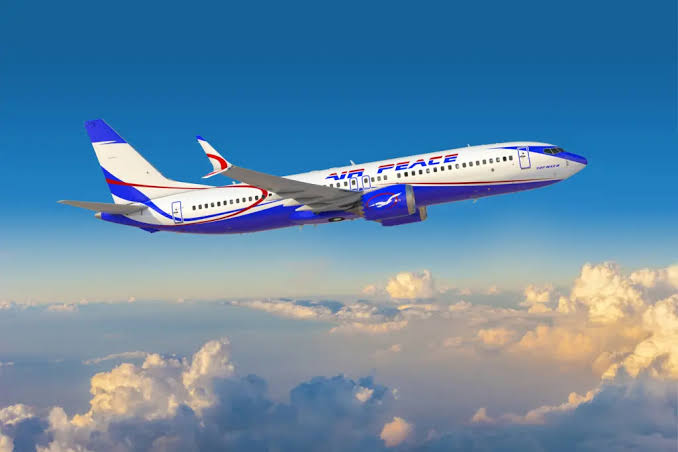
About three weeks ago, I booked a flight from Abuja to London with Air Peace. The flight was scheduled for 11:00 a.m. That was later changed to 10:45 a.m.
Air Peace sent me messages that the check-in desk would close 90 minutes before departure — 9:15 a.m.
I got to the airport before then and passed through all the security checks. I arrived at the Air Peace check-in desk at about 9:20 a.m.
Five minutes late.
There were still people in the queue. But I was told the counter had closed at 9:15.
There were three of us caught in the same situation. Some of the staff seemed willing to let us through, but the manager was adamant. No check-in, he insisted.
They told us there was another London flight the following morning at the same time and advised us to hurry to the ticketing office to reschedule.
One of the passengers was a young man who told me he had come home for his marriage rites. He had flown from Lagos to Abuja the previous day just to catch this flight.
The other passenger, a Hajia, quickly bought a ticket on Ethiopian Airlines, which was still checking in passengers. She even invited me to try my luck with them.
I actually did. But there were only a few business-class seats left, and the price was frightening.
I checked every other available flight for that day and the next. Nothing was less than ₦2.5 million.
Tight corner, right? Would I not travel again?
So I went back to the Air Peace ticketing office and asked to reschedule for the following day.
The amount they asked me to pay was one I never imagined. I paid over ₦1 million, on top of what I had already paid for the original ticket.
The other guy paid much less. We hadn’t bought our original tickets at the same time, so I don’t know how exactly they calculated the difference.
But that money pained me.
Not because I have a pot of money somewhere. It was money I had hustled for over a long time, with many things already budgeted around it.
Just like that, over ₦1 million went.
I was like, this money could have been ₦20,000 quick help to more than 50 people.
Anyway, I took responsibility for being five minutes late. So, that wasn’t even the end of the story.
I travelled to London, returned to Nigeria and, a few days later, booked another Air Peace flight. This time from Lagos to Abuja.
The flight was scheduled for 2:40pm. They later moved it to 3:00pm. When I got to the airport, there was chaos.
Passengers who had arrived for early-morning flights were still there. We eventually waited until about 5:30 pm.
Then came another issue.
There were now so many passengers that they had to use a Boeing 777-300 aircraft meant for the London route to carry us to Abuja.
But the aircraft was parked at the international wing, quite a distance from the domestic terminal. So they began shuttling passengers in batches; more delay. The takeoff was around 6:30pm.
And this is the irony.
I was five minutes late and paid heavily for it. They wasted several hours of my time. Who paid compensation for mine? That, for me, is the real issue. And no, this isn’t just about Air Peace. It is about the imbalance in the system.
The customer is expected to understand everything.
The customer must bear the inconvenience. But when the inconvenience comes from the other side, what happens?
Usually, nothing. Which brings me to reviews. I once shared a good experience I had with Air Peace here, and that post got more than 75,000 views.
So if a positive experience can travel that far, what happens when the experience is negative?
In more mature markets, companies don’t take customer feedback for granted because they understand that trust is part of the business.
Let me give you an example.
A few months ago, I bought two laptops for our office and a pressure car-wash machine in the UK. I brought them back to Nigeria.
A staff member complained that the battery wasn’t lasting as expected. I checked it and discovered that the battery health was 74%, instead of the 100% I expected.
Under normal circumstances, I could return it within 28 days. But I wasn’t going back to the UK within those 28 days. I explained this to the seller. They refunded me some money so I could replace the battery in Nigeria. They also told me that when I returned to the UK, they would provide a new battery.
The pressure washer had a similar problem. Even when fully charged, it couldn’t retain enough power to wash a car to the end. I explained that too.
They offered to send me a replacement, but I told them I wouldn’t be able to return it within the 28 days.
They refunded the full amount I paid for it. And I still had the machine.
But guess what happened afterwards? They pleaded with me not to leave a negative review.
Think about that.
They were willing to lose money to preserve the customer’s trust and their reputation. That is the difference I am talking about.
It is not that businesses abroad no dey fall hand. They do.
The difference is what happens after.
Here, too often, the customer simply absorbs the loss and moves on.
But if companies believe one customer’s experience doesn’t matter, I want to remind them: it does. Already, two passengers who wanted to travel to London via Air Peace changed their choice because I shared this story with them.
By Peter Iorter
