


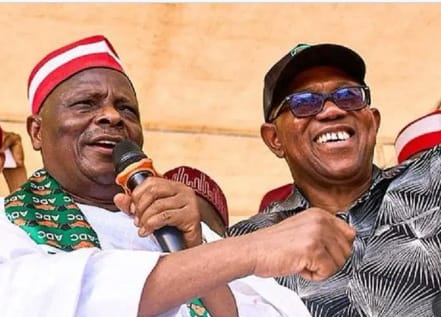
Former Anambra State governor Peter Obi and his Kano State counterpart Rabiu Kwankwaso joined the National Democratic Congress (NDC) on Sunday, marking a fresh realignment in the opposition space.
Their move was disclosed in a statement shared on Facebook by former Bayelsa State governor Seriake Dickson. Both men formally identified with the party at its national secretariat in Abuja.
The development followed Obi’s recent exit from the African Democratic Congress (ADC), as earlier reported by The Port City News. Kwankwaso had also signalled his next step, noting that he was engaged in broad consultations with the NDC.
In a statement posted on his X page the same day, Obi said he left the ADC over what he described as an increasingly unhealthy political environment, worsened by what he believes are state-backed disruptions within opposition parties.
He insisted his decision was not the result of any personal fallout with party leaders. Rather, he pointed to a recurring pattern of internal interference—similar to the circumstances surrounding his earlier departure from the Labour Party.
Speaking on the situation within the ADC, Obi said the party had become weighed down by internal tensions, which he attributed to forces that had destabilised previous political platforms.
He maintained that he still respected key figures in the party, including David Mark and Atiku Abubakar, whom he described as an elder brother, stressing that his exit was not driven by personal differences.
According to him, persistent court cases, internal disputes and growing mistrust had created distractions that undermined the party’s ability to address critical national concerns such as poverty and insecurity.
Obi also spoke about feeling sidelined within the party, likening his experience to being treated as an outsider despite being part of the system. He said sincere contributions were often overlooked, while frustrations within the party were frequently directed at him and his supporters.
Beyond partisan issues, he expressed concern about broader societal values, arguing that qualities such as humility, respect and compassion are too often misinterpreted in Nigeria’s public space.
Responding to criticism of his modest lifestyle, Obi said his approach reflects careful management of resources, with a focus on sectors like education and healthcare rather than political patronage.
He also dismissed suggestions that his actions were driven by personal ambition, emphasising that his involvement in politics is centred on achieving meaningful change.
Obi said his focus remains on building a country where people feel safe, basic needs are met, and governance is guided by empathy.
