


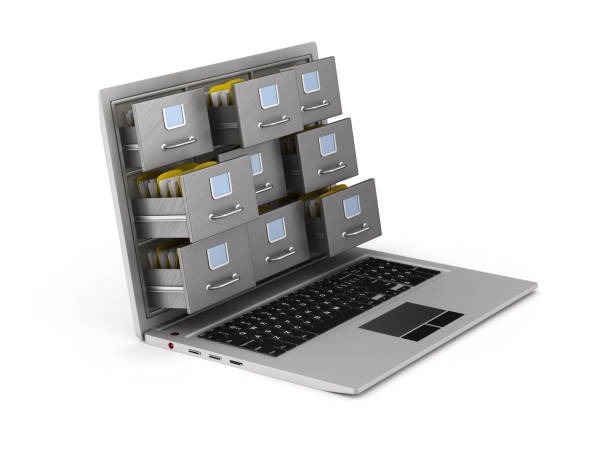
In a move that signals a clear break from tradition, the Federal High Court has introduced an Electronic Filing (E-Filing) System in its Lagos Division, ushering in a new phase of digital case management aimed at making judicial processes faster, more transparent, and easier to access.
The rollout, announced yesterday, is widely seen as one of the most ambitious technology-driven reforms within Nigeria’s justice system in recent years.
It replaces the long-standing paper-based system with a streamlined digital platform, a shift expected to significantly improve how cases are filed, tracked, and managed.
At the launch, Chief Judge of the Federal High Court, John Terhemba Tsoho, did not mince words about the need for change.
He described the development as the end of what he called the judiciary’s “era of paper antiquity,” pointing to years of delays and inefficiencies caused by bulky files and outdated administrative processes.
According to him, the reform goes beyond simply introducing new tools.
It is a broader effort to reshape how the courts function in a modern, fast-paced environment. He stressed that clinging to manual systems in a digital age would only erode efficiency and public trust in the judiciary.
The initiative also reflects the broader vision of the Chief Justice of Nigeria, Kudirat Motonmori Olatokunbo Kekere-Ekun, who has consistently pushed for technology to be embedded in judicial processes as a way of strengthening justice delivery.
One of the standout features of the new system is its built-in safeguards against corruption.
Every filing now generates a verifiable digital record, making it nearly impossible to alter dates or manipulate documents after submission.
This creates a clear audit trail and reduces reliance on informal intermediaries often found within court registries.In addition, payments for filing fees have been integrated into the platform, allowing transactions to be completed electronically.
This not only speeds up the process but also improves transparency and minimizes revenue leakages.
The system also removes one of the long standing bottlenecks in court administration time restrictions. Lawyers and litigants can now file documents at any hour of the day, from anywhere with internet access.
This flexibility is expected to ease congestion and expand access to justice, particularly for those who previously struggled with physical filing constraints.
Another major improvement lies in the speed of internal processes.
Case files that once took days to move from court registries to judges’ chambers can now be transmitted in seconds, a development that could help reduce the persistent backlog of cases.Legal practitioners, however, have been advised to adapt quickly.
The Chief Judge encouraged the use of digital tools such as electronic signatures, digital seals, and e-affidavit platforms.
At the same time, he acknowledged that the transition will not happen overnight, noting that hard copies will still be required for certain initial procedures under existing rules.
Senior lawyers were also urged to rely more on junior colleagues or IT personnel for filing-related tasks, while judges were encouraged to become familiar with the system and lean on court registrars for routine administrative support.
The launch forms part of a broader national rollout of the Nigeria Case Management System (NCMS), a digital infrastructure designed to support electronic filing and case tracking across superior courts.
The system operates under the Judicial Information Technology Policy and is managed by the Judicial Information Technology Policy Committee of the National Judicial Council.
Providing a wider perspective at the event, the committee’s chairman and Chief Judge of Borno State, Justice Kashim Zannah, described the deployment as a key step in a long-term reform agenda.
He emphasized that digitalisation is no longer a luxury but a necessity for any judiciary aiming to remain effective.
Zannah explained that the NCMS is built to create a connected judicial ecosystem where cases can move seamlessly across courts nationwide.
He also stressed the importance of keeping control of such digital infrastructure within the judiciary to safeguard independence and maintain the integrity of legal processes, even as collaboration with legal tech firms continues.
Highlighting the system’s resilience, he cited the experience in Borno State, where courts were able to continue operations during flooding that damaged physical registries, thanks to cloud-based storage.
He further revealed that early trials of artificial intelligence tools within the judiciary are already showing promise, particularly in easing the burden of legal research and judgment drafting, although such technologies are still in their early stages.
On the cost side, Zannah noted that the system is designed to be scalable and relatively affordable, requiring only basic equipment like computers and internet access, with much of the financial responsibility handled by the National Judicial Council.
The reform has also received backing from the Nigerian Bar Association. Representing the Surulere Branch, its chairman, Mr. Anene Nwadukwu, welcomed the initiative, noting that embracing technology is critical to sustaining Lagos’ reputation as a hub of legal excellence and improving the quality of legal services.
With the introduction of the E-Filing system, the Federal High Court appears set on a path toward a more efficient, transparent, and digitally driven future, one that could redefine how justice is delivered across Nigeria.
