


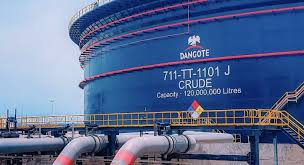
The Dangote Petroleum Refinery & Petrochemicals has announced a significant reduction in the prices of Premium Motor Spirit (PMS) and Automotive Gas Oil (AGO), commonly known as petrol and diesel, in a move aimed at easing financial pressure on consumers and supporting economic stability.
Under the revised pricing structure, the price of petrol has been reduced from ₦1,175 to ₦1,075 per litre, representing a ₦100 drop. The coastal price has also been adjusted downward from ₦1,150 to ₦1,028 per litre, a reduction of ₦122.
Diesel prices have also been cut from ₦1,620 to ₦1,430 per litre, marking a ₦190 decrease.
The refinery said the price adjustment reflects its commitment to fairness, transparency, and responsiveness to changing global crude oil market conditions.
According to the company, all crude processed at the refinery is purchased at global benchmark prices plus a premium of between $3 and $6 per barrel, with foreign exchange payments made at prevailing market rates without subsidies.
It also explained that crude supplied under the Naira-for-Crude arrangement is priced using global benchmark rates plus a premium and then converted to naira based on the prevailing exchange rate.
Also Read: http://Petrol Price Hike Pushes Pump Cost Above N1,000 Nationwide
The refinery noted that in 2025 alone, it reduced its gantry prices at least eight times and increased them only twice, describing the policy as part of its “economic patriotism” and commitment to passing cost advantages to consumers across Nigeria.
Meanwhile, the Managing Director of the refinery, David Bird, assured Nigerians that the facility would continue to meet the country’s fuel demand despite volatility in the global oil and gas market.
He explained that while several import-dependent countries are experiencing fuel shortages and rationing, Nigeria now enjoys a stronger supply position due to domestic refining capacity.
Bird also highlighted recent geopolitical tensions in the Middle East, which have pushed crude oil prices sharply upward, noting that global oil prices surged from the mid-$60 range to nearly $120 per barrel within a week, disrupting the international energy supply chain.
Despite the turbulence, he said the refinery remains committed to maintaining an uninterrupted supply to the domestic market.
Bird added that, with continued support for crude supply from the Federal Government and the Nigerian National Petroleum Company Limited, the refinery would consistently meet Nigeria’s refined fuel requirements.
Energy analysts say the price reduction could bring relief to transport operators, businesses, and households, while reinforcing Nigeria’s push toward fuel self-sufficiency through local refining.
