


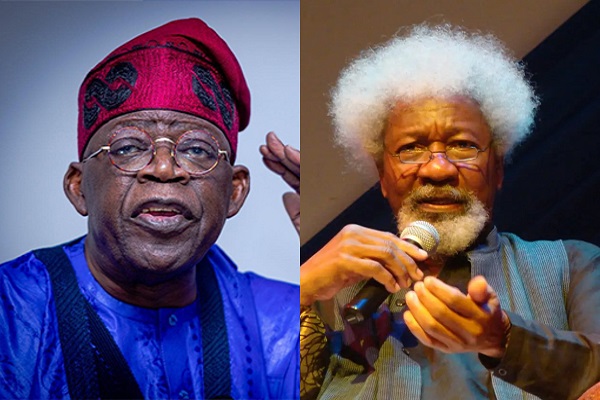
God forbid that I respect an older person that wants to kill me. If it is in my power to drag that older person into the market square and discipline them like a stranded witch or wizard caught in the middle of the night, I will gladly do so.
Now that I’ve said that, let’s talk because some of you have hidden behind “respect for elders” for far too long, and it’s starting to look like fear, not culture.
We’ve all heard it: “Respect your elders ” and yes, I agree but when did that respect become selective? Because I’ve watched people conveniently apply it when it suits them.
When Goodluck Jonathan was in power at 52, many people forgot what respect meant. He was insulted daily, dragged without restraint, and nobody remembered tradition.
When Olusegun Obasanjo speaks, the same people who preach respect suddenly switch. They call him names, some even reducing him to “omo ale,” questioning his identity and dismissing him entirely.
Then you mention Peter Obi, a 64-year-old man, and suddenly age, experience, and even competence are no longer enough. So let’s stop deceiving ourselves. This is not about respect. It is about bias. It is about tribal loyalty. It is about convenience.
Now let’s leave emotions and look at reality. Since Bola Ahmed Tinubu assumed office in 2023, Nigerians have faced one of the harshest economic periods in recent world history.
Inflation rose above 30%, eroding purchasing power across households. The naira weakened from around ₦400/$1 to over ₦1,600/$1, shrinking the value of salaries and savings.
Fuel prices more than doubled after subsidy removal, triggering increases in transportation, food, and basic living costs. Food inflation has made everyday survival a struggle for millions. This is not theory, this is lived reality.
Now let’s bring it closer to home, The South West because this is the region many believed would benefit the most but what is the reality?
In Lagos; Rent has surged across both mainland and island. Transportation fares have doubled or tripled on major routes. SMEs are shutting down or downsizing due to high diesel costs, rent, and reduced patronage.
In Oyo State and Ogun State: Manufacturing is under pressure due to rising energy costs. Traders are increasing prices just to stay afloat. Consumers are buying less, slowing down economic activity.
In Ondo State, Osun State, and Ekiti State: Salaries are not keeping up with inflation. Youth unemployment remains high. Local economies are weakening due to reduced spending.
Across the region, the pattern is clear. People are adjusting, not because things are improving, but because survival has forced them to.
So again, I’ll ask; What exactly are you defending? While the economy is tightening, the security situation is bleeding.
Across parts of the North and Middle Belt, there have been persistent reports of mass killings, displacement, and targeted attacks on communities. Villages destroyed, families wiped out, thousands displaced from their homes.
Many observers and affected communities have described this pattern as ethnic cleansing because of its consistency and targeting. Yet for many Nigerians, it has become background noise and this is dangerous.
Now let’s talk about something uncomfortable. Wole Soyinka, a man many people treat as untouchable. Yes, he has a legacy, he has contributed to Nigeria but let’s be honest.
He also has a long-standing relationship and alignment with Bola Ahmed Tinubu but what is even more telling is this, he seems to remember how to speak, how to criticize, how to take a stand, mostly when he hears the name Peter Obi.
Even though Peter Obi is not the president, though he is not the one in power, though he is not the one making the policies affecting Nigerians today. Yet, when it comes to his friend in power, when it comes to the current realities Nigerians are facing.
Silence or at best, selective commentary. So the question is simple; With everything happening in Nigeria today, economic hardship, insecurity, killings, displacement, where is the consistent, loud demand for change that Soyinka was known for?
The leadership is not about speaking only when it is convenient. It is about speaking when it is uncomfortable, even when your friends are involved.
History has taught us something important. People who were once celebrated globally can lose moral credibility when they fail to stand on the right side of humanity.
Also see: 2.2 Million Candidates Sit for 2026 UTME as Exams Begin Across Nigeria
Names like Aung San Suu Kyi, Henry Kissinger, Abiy Ahmed, and William Shockley remind us that awards do not protect legacy. Consistency does.
So let’s be honest with ourselves. Some of the people you call elders are not acting like elders because real elders: Speak truth, even when it is uncomfortable. They hold power accountable, even when it is their friend. They protect the people, not their personal interests.
You also deserve respect. You deserve good governance. You deserve safety. You deserve a system that works. Respect is not silence. Respect is not fear. Respect is not defending suffering.
Until you realize that respect is not cowardice, that speaking truth to power and demanding what is rightfully yours is not disrespect, your selfish “elders” will keep twisting tradition just to keep you in bondage.
They will call you “omo ale” the moment you start asking questions. They will try to shame you into silence so they can stay comfortable but ask yourself, don’t you also deserve respect?
I know many Nigerians have grown used to their chains and even defend the people holding them but not under my watch. I will call it out. Also, I know some of you, committed to bad governance, poverty, and ignorance, will come here to insult instead of reflect.
Or you will call me omo ale or “omo ibo” because you assume anyone from a state after Ore is Igbo. So let me help you with the spelling. It is Omo Igbo.
Iniobong Udoh
