


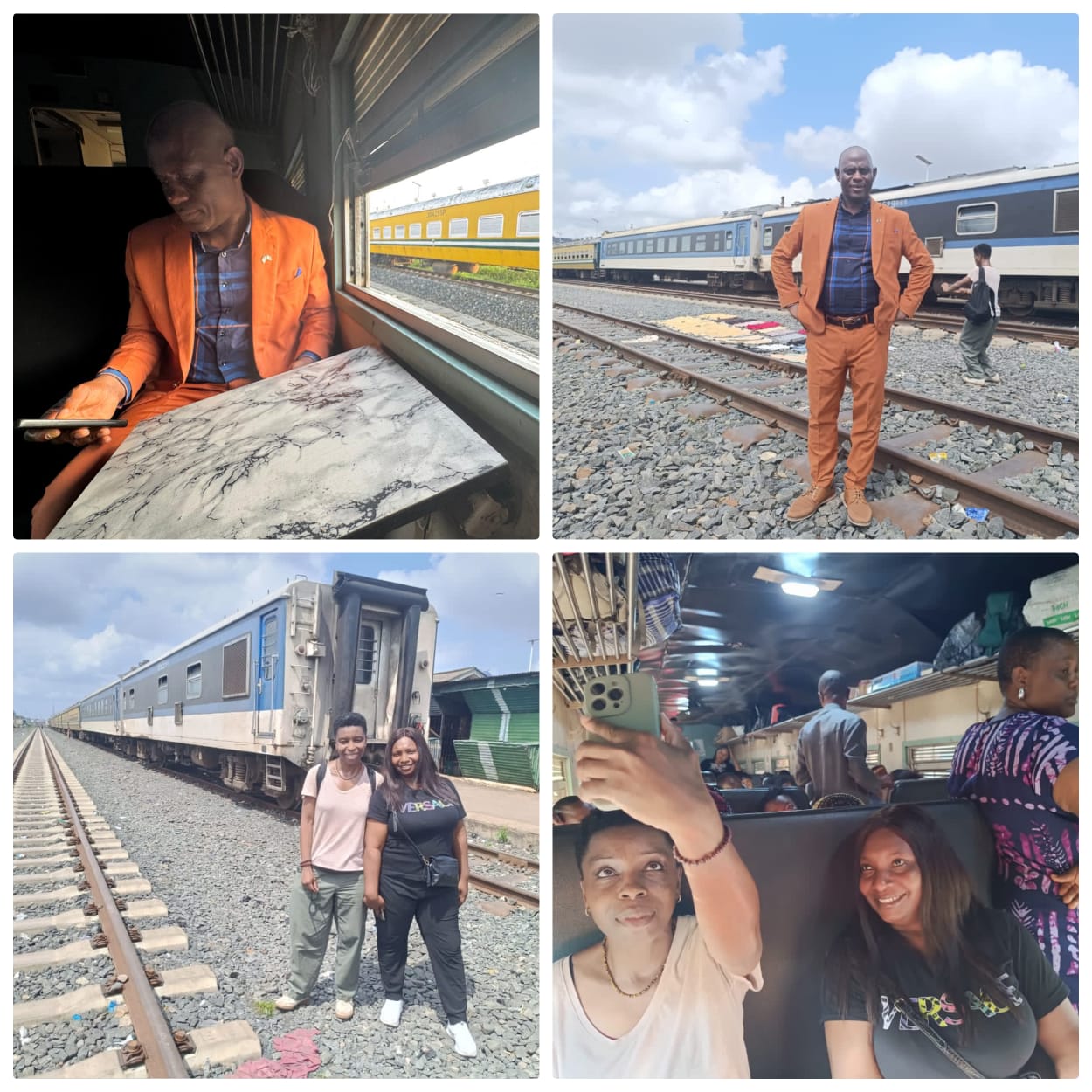
A policy analyst in Rivers State, Dr. Fyneface Dumnamene Fyneface, Executive Director of the Youths and Environmental Advocacy Centre (YEAC-Nigeria) has called on the State and federal governments to urgently improve the train service in the State to a modern standard.
Speaking in an interview with our correspondent, Fyneface said there is a huge gap between Nigeria’s rail services and those in more developed countries, while also pointing to opportunities for growth and modernization in the sector.
Given insight on a recent train journey he embarked from Port Harcourt, Rivers State, to Aba, Abia State, he highlighted both the potential and the challenges of Nigeria’s rail transport compared with services abroad.
The trip, undertaken with travel writer Noo Saro-Wiwa and other companions, offered a first-hand experience of rail travel in Nigeria, in contrast to more advanced systems in countries such as the United States and the United Kingdom.
“Having used trains to travel when I am outside the country, like in the US, UK, etc., and not having used train service in Nigeria before, I decided today to explore and experience a train ride from Port Harcourt to Aba, Abia State. I was not alone on this adventurous journey; I went with Noo Saro-Wiwa.
“She initiated the idea to also experience the ride, having had such an experience long ago, in the 80s, as a child with her siblings, from Port Harcourt to Enugu, after her father and our hero, Ken Saro-Wiwa, put them on the train to the destination. With us were Mrs. Eno-Obong, Joy Peterside, and my friend, who joined us from the Elelenwo station. It was fun, and I watched things through the window.
Fyneface further said the train journey, which lasted about two hours, was eventful but revealed the poor state of the rail system, cutting across the management services, sanitation improvement, and passenger comfort.
“Despite the affordable fares, N800 for regular tickets and N1,500 for the VIP coach, the train was heavily overcrowded. Passengers reported difficulty securing seats, with many forced to stand, hang on doors, or even climb onto the roof of the train during the journey. Such practices, according to some commuters, have led to several deaths in the past, including incidents of electrocution and falls.
“Sanitation and maintenance issues were also evident with poorly maintained fans, non-functional restrooms, and generally unhygienic conditions within the coaches,” he said.
He, however, raised concerns over visible environmental degradation, particularly signs of crude oil pollution around the Oyigbo axis extending towards the Imo River. The observation prompted his call for further investigation into possible oil spills in the area.
The expert called for the purchase of more coaches to meet the high demands of commuters using the rail services in ensuring proper revenue accountability.
“The train service, operated by the Nigerian Railway Corporation (NRC), currently runs only one trip daily from Port Harcourt to Aba, departing at 8:00 a.m., with a return journey at 3:00 p.m. This limited number of coaches does not meet growing demand, contributing to unsafe travel conditions,” he said.
He also urged adequate safety measures and enforcement to be put in place to safeguard the lives and property of those on board.
“Inside the coaches, informal trading with vendors selling food, drinks, and other items. A mobile preacher also addressed passengers before departure, which highlights safety concerns and soliciting support from commuters,” he explained.
