


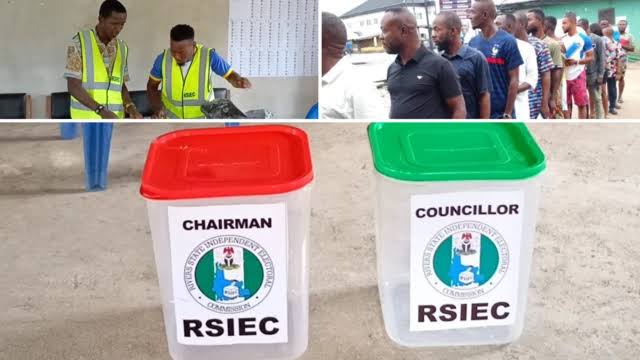
In the heart of Nigeria’s oil-rich Rivers State, a storm is brewing over the upcoming local government elections scheduled for August 30, 2025. The Rivers State Independent Electoral Commission (RSIEC) finds itself under intense scrutiny, with opposition parties, such as the African Democratic Congress (ADC) and factions of the All Progressives Congress (APC), crying foul, labeling the electoral process a “charade” and threatening a boycott.
This unfolding drama is not just a local squabble; it’s a microcosm of the broader challenges facing Nigeria’s democratic experiment, particularly at the grassroots level. As a concerned citizen who has watched Rivers State’s political volatility with growing unease, I believe this controversy raises critical questions about electoral integrity, the legitimacy of independent bodies, and the fragility of democracy in politically charged environments.
The ADC’s decision to pull out of the August 30 polls, as reported on X, stems from their assertion that RSIEC lacks the authority to conduct credible elections. They argue that the commission’s actions disregard court orders and fail to adhere to constitutional norms, a sentiment echoed by prominent figures like Atedo Peterside and Uche Secondus, who have called the process “null and void” due to the absence of a legally constituted RSIEC.
The Inter-Party Advisory Council (IPAC) has gone further, directing all registered political parties to boycott the elections, branding them unconstitutional under the state’s emergency rule. This emergency rule, declared by President Bola Tinubu in March 2025, suspended the state’s elected institutions, leaving a sole administrator in charge, a move critics argue undermines the democratic process.
At the heart of this controversy is the question of legitimacy. The Rivers State Independent Electoral Commission Law of 2018 mandates that RSIEC officials be appointed by an elected governor and confirmed by the State House of Assembly. With both the governor and assembly suspended, the current RSIEC leadership, appointed under emergency conditions, lacks this constitutional backing.
The opposition’s argument is simple: how can an electoral body, itself questionably constituted, deliver a free and fair election? This is not merely a legal technicality; it’s a matter of trust. For the people of Rivers State, who have endured years of political turbulence, trust in institutions like RSIEC is already wafer-thin.
The stakes are high because local government elections are the bedrock of grassroots democracy. They determine who controls the purse strings for community development, from fixing pothole-riddled roads to ensuring clean water in rural areas.
When opposition parties boycott, as the ADC and others have signaled, the process risks becoming a one-sided affair, alienating large swaths of the electorate and undermining the very inclusivity democracy demands. The Supreme Court’s annulment of the 2024 local government elections in Rivers, cited for procedural irregularities, should have been a wake-up call for RSIEC to prioritize transparency.
Yet, the commission’s insistence on forging ahead, as stated by Commissioner Prof. Godfrey Ngozi Woke, suggests a troubling disregard for these concerns.
As someone who grew up in a Rivers State community where local elections shaped our daily lives, I find this situation deeply personal. I remember the excitement of election days, the queues at polling units, the debates among neighbors, and the hope that a new chairman might finally fix the market drainage system.
But I also remember the disillusionment when results seemed predetermined or when violence marred the process. Rivers State’s political landscape, often a tug-of-war between factions loyal to Governor Siminalayi Fubara and former Governor Nyesom Wike, has long been a battleground. The current crisis, with RSIEC accused of bias and opposition parties opting out, feels like a betrayal of that grassroots hope.
Also Read: http://Nutrition Over Oil: A Step in What Direction for Rivers State
Electoral integrity hinges on independent institutions acting as impartial arbiters. RSIEC’s role is to ensure that every voice, from the bustling markets of Port Harcourt to the riverine villages of Degema, is heard. Yet, the commission’s decision to proceed despite legal challenges and widespread distrust risks further eroding public faith.
The revised timetable, party primaries from July 31 to August 3, campaigns starting August 12, and the final candidate list by August 20, may appear organized, but it sidesteps the core issue: legitimacy. Without addressing the constitutional questions raised by IPAC and others, RSIEC’s commitment to “fairness and transparency,” as promised by Chairman Michael Odey, rings hollow.
The broader implications for Nigeria’s democracy are stark. Rivers State, with its economic significance and political volatility, often sets the tone for national politics. If grassroots elections here are perceived as a sham, it sends a dangerous signal that democracy can be manipulated under the guise of emergency rule.
The coalition of civil society organizations, ACCESS, has called for the suspension of the polls, emphasizing the need for a credible process. Their demand resonates with many residents of Rivers who yearn for elections that reflect their will, not the machinations of a few.
RSIEC must pause and address these concerns. Engaging stakeholders transparently, resolving pending court cases, and ensuring constitutional compliance are non-negotiable steps toward restoring trust. The Rivers State Police Command’s pledge for robust security is a start, but safety alone cannot salvage a flawed process.
For the sake of grassroots democracy, RSIEC must prioritize legitimacy over expediency. The people of Rivers State deserve elections that empower them, not ones that deepen their disillusionment. As we approach August 30, the choice is clear: uphold electoral integrity or risk further fracturing a state already on edge.
