


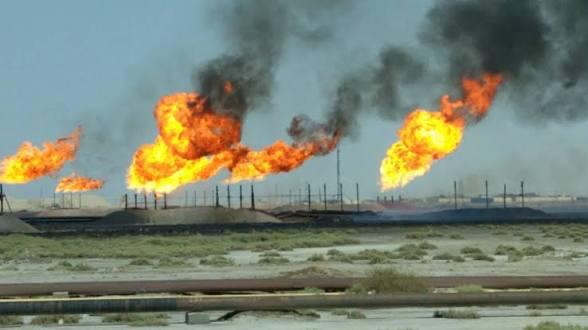
The Nigerian economy has suffered a loss of more than $56.75 billion from the process of gas flaring in the last two decades, according to figures provided by the World Bank, making it a major threat to the nation’s development.
Each day, some 192 million cubic meters of natural gas is flared in Nigeria, a result of the lack of enough gas flaring infrastructure and pipelines as well as commercial demand.
The World Bank report on gas flaring of 2025 also put Nigeria as one of the countries with the highest intensity growth in gas flaring activities in the continent.
Experts have also noted that Nigeria’s loss through gas flaring is more than just monetary. According to technology expert Simi Ajayi, Nigeria could gain some 3,400 megawatts of electricity from the flared gas, almost equivalent to the country’s existing generation capacity, which would greatly ease the country’s shortage of power supply.
Beyond domestic needs, the wasted gas could play a role in meeting rising global energy demand, particularly from data centers powering artificial intelligence. As demand for computing power surges worldwide, energy supply has become a critical constraint.
News: Okrika Council Opens Bids for Key Education Projects
The International Energy Agency projects that electricity consumption by data centers will nearly double by 2030, growing much faster than other sectors. Major technology firms are already racing to secure stable energy sources, while established data hub locations face delays in grid connections.
Nigeria has attempted to address the issue through policy measures such as the Petroleum Industry Act (PIA) of 2021 and the Nigerian Gas Flare Commercialisation Programme (NGFCP), which allows private investors to capture and utilise flared gas. So far, dozens of companies have been awarded permits under the initiative.
However, experts argue that implementation remains slow and lacks a focused strategy, particularly in directing captured gas toward high-demand sectors like data infrastructure.
With improving digital connectivity, especially in Lagos where major submarine cables land, Nigeria has some of the building blocks needed to attract large-scale data center investments. But competition is intensifying, with countries like Kenya, South Africa, and Egypt already making significant progress.
Industry observers warn that while the opportunity is clear, Nigeria must act quickly to turn wasted gas into economic and technological gains.
