

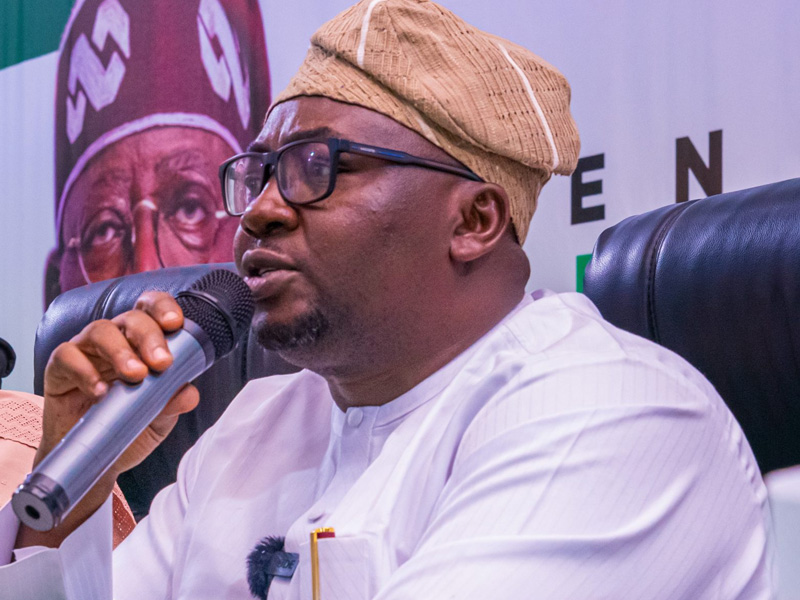
Nigeria’s Minister of Power, Adebayo Adelabu, on Tuesday, 24 March 2026, offered a public apology to citizens for the prolonged and disruptive power outages that have plagued households, schools, industries, and businesses across the country, exacerbating hardships during the intense dry-season heat.
He rendered the apology while speaking at a press briefing in the capital. Mr Adelabu acknowledged the widespread frustration caused by erratic electricity supply in recent weeks.
“I want to apologise to Nigerians, officially now, coming from me as the Minister of Power, for this temporary issue that is leading to hardship being experienced, especially during this dry season,” he said.
The minister attributed the crisis largely to constraints in gas supply to thermal power plants, a recurring challenge that has strained generation capacity.
He noted that the situation has left many Nigerians struggling without reliable power for cooling and essential operations, reminiscent of similar energy shortfalls experienced in 2022.
News: Niger Delta Summit Targets $5bn Investment, 500,000 Jobs
Mr Adelabu, however, sought to reassure the public that relief is on the horizon. He disclosed that a dedicated committee has been established to monitor compliance by gas suppliers, while urgent repairs to critical infrastructure, including pipelines linked to operators such as Seplat Energy, are underway.
“With the committee that we have set up, and commitments from gas suppliers, we should start seeing improvements in supply. Two weeks,” he stated confidently.
The minister further highlighted ongoing federal efforts to boost national electricity generation, with a target of reaching 6,000 megawatts by the end of 2026. He described the current setbacks as temporary and emphasised that all necessary steps are being taken to restore stability.
The apology comes as public discontent continues to mount over the unreliable power sector, which has long been hampered by structural deficiencies, inadequate infrastructure, and fluctuating fuel supply. Many Nigerians have expressed hope that the promised timeline will bring tangible relief from the current discomfort.
