


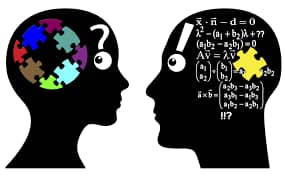
There’s an underlying language of the universe that helps us, as creations of the universe, to act, think, and respond in harmony with its intricate web of patterns and structures. By deciphering and understanding these universal codes, we gain insight into the workings of nature, human behavior, and our own place within the grand scheme. This profound understanding empowers us to navigate life’s complexities, make informed decisions, and cultivate wisdom that resonates with the universe’s inherent rhythms and harmonies.
When math struggles become legendary and you claim, “I’m not wired for angles,” or “Geometry’s a maze I’ll never navigate”, and teachers and parents buy into these excuses, lack of effort is the real issue, not maths. Most kids tend to coast through school, relying on their natural ability or charm to get by, rather than putting in the effort to truly master the material.
The Minister of Education, Dr. Maruf Tunji Alausa, has announced that arts students will no longer require a mathematics credit to gain admission into higher institutions in Nigeria. This policy shift aims to remove unnecessary barriers and promote inclusivity in education. However, this move might lead to students becoming too complacent, as mathematics has previously been a challenging subject for many. What’s your take on this policy change? Do you think it will benefit arts students or create more problems in the long run?
Arts students who don’t study mathematics in secondary school may face significant challenges when encountering calculative subjects in higher institutions. Without a solid foundation in mathematics, they may struggle to understand and apply mathematical concepts and techniques in subjects like economics, statistics, or research methods.
Also Read: http://Bayelsa High Court Sentences Woman to Seven Years for Alleged Human Trafficking
These subjects require a strong mathematical background, and students without it may find it difficult to analyze and interpret data, leading to frustration and poor academic performance. And now the pertinent question: will other calculative subjects in higher institutions be removed as well?
Instead of dodging the bullet, let’s shine a light on the root of the problem and tackle it head-on, for it’s in confronting our challenges that we find true solutions, and by facing the fire, we can forge a stronger foundation for a brighter future. To help students understand and pass mathematics in their Senior Secondary Certificate Examination, several policies could be implemented. One approach is to provide targeted support, especially for mathematics teachers, enabling them to effectively convey mathematical concepts to their students. This could involve intense professional development programs that focus on innovative teaching methods and strategies to engage students in mathematics classes. The intense development programs can empower mathematics teachers to create a supportive and challenging learning environment that fosters students’ mathematical literacy, critical thinking, and problem-solving skills.
Additionally, the government can implement policies in schools that promote a growth mindset among students, emphasizing that mathematics is a skill that can be developed over time with effort and practice. This could involve seminars and symposiums in secondary schools, providing opportunities for students to reflect on their learning, identify areas for improvement, and set goals for themselves.
