


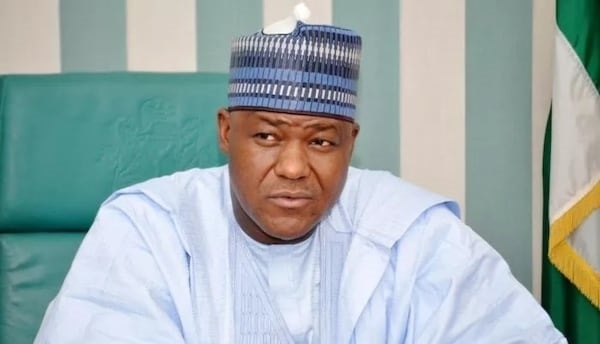
Former Speaker of the House of Representatives, Yakubu Dogara, has stated that President Bola Tinubu inherited a devastated economy upon taking office in May 2023.
Dogara, who also serves as the Chairman of the National Constitutional Governance Council (NCGC), praised the Nigeria Tax Act 2025 as a major move toward a more modern and organized tax system that aligns with global standards.
Speaking at a recent lecture in Abuja, Dogara explained that by the time Tinubu assumed power, the nation’s economic problems were too significant to be ignored.
He pointed to the N22.7 trillion in “Ways and Means” that had been printed, which he said devalued the Naira.
Dogara also criticized the dual exchange rate system, which he claimed allowed “anointed people” to make enormous profits from foreign exchange allocations without contributing to the economy.
According to Dogara, it was clear from the beginning that a major, even revolutionary, change was needed to prevent the economy from collapsing.
He argued that the President’s role as a reformer began on his first day in office, noting that a true reformer must be willing to fight for progress and not expect everything to be under control.
Dogara also emphasized that for democracy to be meaningful, it must provide economic opportunities and justice, especially for the most vulnerable citizens.
He stated that the new tax law, while promising to boost revenue, will only succeed with consistent implementation, clear regulations, and investments in administrative capacity.
The former lawmaker described tax reform not as a punishment but as a “pact” between the government and its people.
He noted that the Tinubu administration’s creation of the Presidential Committee on Fiscal Policy & Tax Reform was a crucial step in this process.
Dogara acknowledged that reform efforts often face strong opposition from those who benefit from the existing system, describing the opposition to the new tax act as “fierce and furious,” and motivated by “something sinister.”
Also see: Rivers State Elders Sue for Peace as Emergency Rule Nears End
Dogara further clarified that a five percent fuel surcharge in the new law is not a new tax but a provision that already exists in the Federal Roads Maintenance Agency Act of 2007.
He stressed that the government has included it in the new act for transparency and that it will not be immediately implemented.
He also noted that several household fuels, such as kerosene, cooking gas, and CNG, are exempt from the surcharge.
In a separate but related development, the Minister of Budget and Economic Planning, Abubakar Bagudu, warned that Nigeria must attract at least $100 billion in annual investments to achieve its ambitious Agenda 2050 development goals.
He cautioned that without bold reforms and better collaboration between the legislative and executive branches, the country could fall further behind its global peers.
