


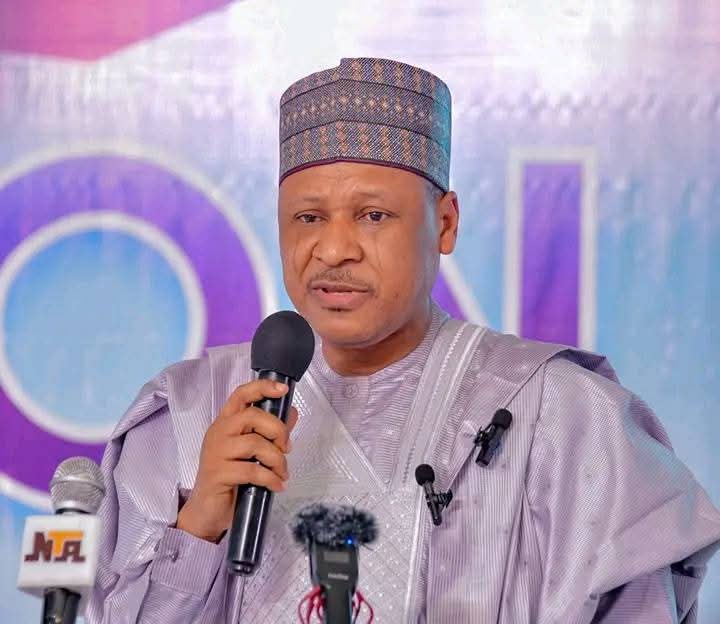
The Nigerian government has defended its recent temporary ban on raw shea exports. Minister of Information and National Orientation, Mohammed Idris defended the action while speaking at the 20th Institute of Chartered Accountants of Nigeria (ICAN) Northern Zonal Accountants’ Conference recently.
He stated the policy is a strategic step to boost the nation’s rural economy, create jobs, and establish Nigeria as a global leader in high-value shea products.
Idris explained that the temporary suspension of raw shea exports is not merely an experiment but a “bold and forward-looking measure.”
According to the Minister, the policy will compel local processing of the commodity, thereby unlocking the full economic potential of Nigeria’s shea industry.
Idris, who was represented by the Director-General of Voice of Nigeria (VON), Jibrin Baba Ndace, highlighted that despite Nigeria accounting for over half of the world’s shea production, the country has remained a supplier of raw materials.
The new policy aims to change this by stimulating local investment, driving technology transfer, and creating quality jobs, particularly for women and youth in rural communities.
The Minister noted that his home state of Niger, a major shea production hub, stands to benefit significantly from this initiative.
Idris also touched on the broader theme of the conference, “Socio-Economic Potentials, Accountability and National Re-Orientation: Unlocking Nigeria’s future,” emphasising that accountability is the cornerstone of a thriving society.
Also see: Ibas Pledges Support for Smooth Takeoff Of FUET Ogoniland
He called on citizens to embrace new values and hold institutions responsible for unlocking Nigeria’s future. The Minister detailed ongoing reforms under the Tinubu administration, including fiscal discipline, infrastructure renewal, and digital transformation.
He cited major infrastructure projects like the Lagos–Calabar Coastal Highway and the rehabilitation of the Eastern rail corridor as evidence of the government’s commitment to equitable resource distribution.
Additionally, Idris pointed to key financial reforms, such as the use of the Treasury Single Account and the Government Integrated Financial Management Information System (GIFMIS), as measures to reduce waste and promote transparency.
He highlighted the country’s improved ranking in the Transparency International Corruption Perceptions Index, which rose from 145th in 2023 to 140th in 2024, as a testament to these policies.
The Minister concluded by urging chartered accountants to serve as strategic partners in national re-orientation, leveraging their expertise to inspire a new culture of accountability that will drive sustainable development.
