

The African Democratic Congress (ADC) has accused the federal government of misrepresenting recent comments made by World Trade Organisation (WTO) Director-General, Dr Ngozi Okonjo-Iweala, on Nigeria’s economic situation.
The party claims that the government is selectively highlighting her praise for “stabilising the economy” while ignoring her more critical message about the urgent need for job creation and social safety nets to alleviate widespread hardship.
The Port City News reported that Ngozi Okonjo-Iweala, who recently visited President Bola Tinubu, listed two things Tinubu must do for the country’s economy.
She revealed that Tinubu’s team must now grow the economy and provide a social safety net to cushion the impact of the reforms.
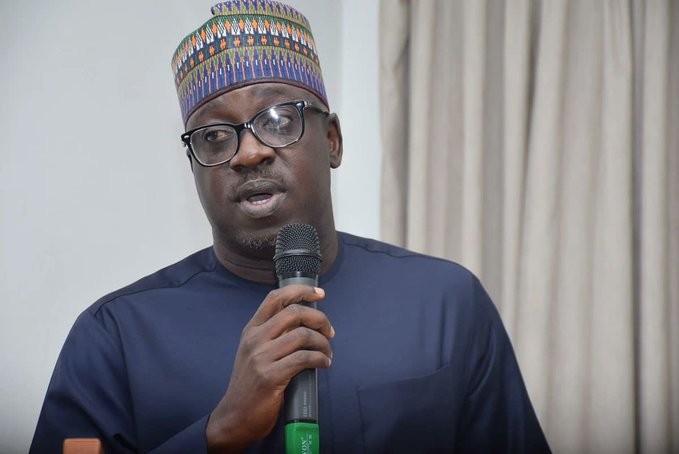
In a press statement signed by National Publicity Secretary Bolaji Abdullahi, the ADC stated that the government’s focus on a single positive remark reflects a desire for validation rather than a genuine commitment to addressing the economic realities faced by Nigerians.
Abdullahi argued that the government is overlooking the core of Okonjo-Iweala’s remarks, which called for tangible growth and support for citizens suffering from the administration’s reforms.
Abdullahi contended that true economic stability must be reflected in the daily lives of citizens, not just in headline figures.
He noted that the government’s celebration of “stability” is “meaningless” if it leaves the majority of the population in “grinding poverty.” Abdullahi provided specific economic data to support the party’s claims.
He cited sluggish GDP growth in the first and second quarters of 2025, a persistent headline inflation rate of 22.22% as of June, and a naira that has significantly weakened against the dollar, trading at approximately N1,530.
Also see: FG Pledges to Prosecute Child Abusers in Rivers
He also pointed out that the average price of petrol remains a significant burden at N1,037.66 per litre.
Abdullahi asserted that the economic policies of the Tinubu administration—such as the removal of the fuel subsidy, naira devaluation, and electricity tariff hikes—are the direct cause of the current distress, making social safety nets a necessity, not an option.
He criticised the government for what it described as a haphazard approach to implementing these support programs.
Abdullahi also referenced a clarification Okonjo-Iweala made on social media, in which she acknowledged the hardship Nigerians are facing due to the reforms and emphasised the importance of implementing more programs to help the poor and vulnerable.
He said she also stressed the need to “start work on growing the economy to create more jobs and put money in people’s pockets.”
Abdullahi added that Okonjo-Iweala’s candour highlights the need for the federal government to move beyond “rhetoric and propaganda” and address the “daily harsh realities” of millions of Nigerians.
