


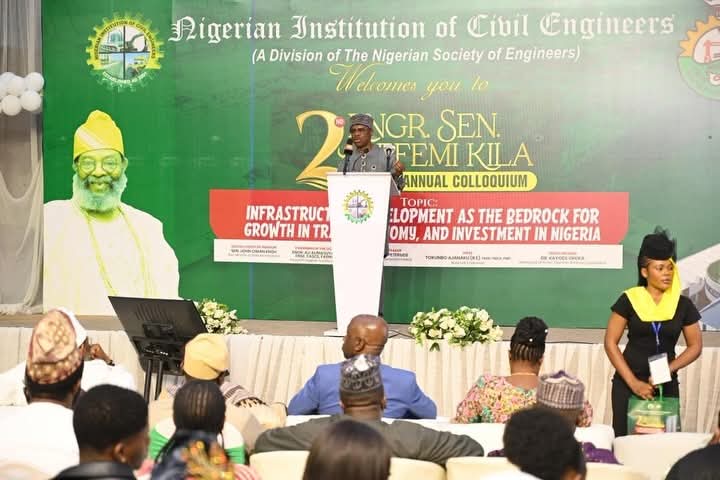
Former Governorship candidate of the All Progressive Congress and Former Director General of Nigerian Maritime and Safety Administration, NIMASA, Dr. Dakuku Peterside has attributed weak governance, poor planning and politicised procurement, as the biggest obstacles holding back Nigeria’s infrastructure development.
Delivering the keynote address at the 2nd Engr. Senator Adefemi Kila Annual Colloquium organised by the Nigerian Institution of Civil Engineers (NICE) on Saturday March 28, 2026, Dr. Peterside said shortage of funds of funds was the least of problems affecting the country’s growth.
He stressed that sustainable trade growth, economic resilience and attraction of investments depend largely on modern and functional infrastructure in transport, energy, digital and social sectors.
While painting a picture of the huge infrastructure deficits running into hundreds of billions of dollars across different sectors in Nigeria the former NIMASA Chief opined that bad infrastructure continues to raise business costs, reduce productivity, limit exports and weaken investor confidence, thereby undermining Nigeria’s growth potential.
“The real issue is not funding, but governance,” Peterside declared. “Weak planning, poor maintenance culture, politicised procurement processes and weak institutions have continued to frustrate efforts to close the infrastructure gap.”
Dr. Peterside called for the building of strong institutions, upholding of professional integrity, transparent planning and a long-term vision that goes beyond election cycles.
He called for Nigeria’s infrastructure projects to be integrated into regional and continental frameworks to unlock the country’s full potential in Africa and beyond.
With the theme: “Infrastructure Development as the Bedrock for Growth in Trade, Economy and Investment in Nigeria.”
Dr. Peterside advocated strategic partnerships and prioritised investments as key to financing critical projects that can drive trade, boost the economy and attract sustainable foreign direct investment.
The event which brought together engineers, legislators, policymakers and industry leaders had sessions to discuss ways of repositioning the nation’s infrastructure.
