


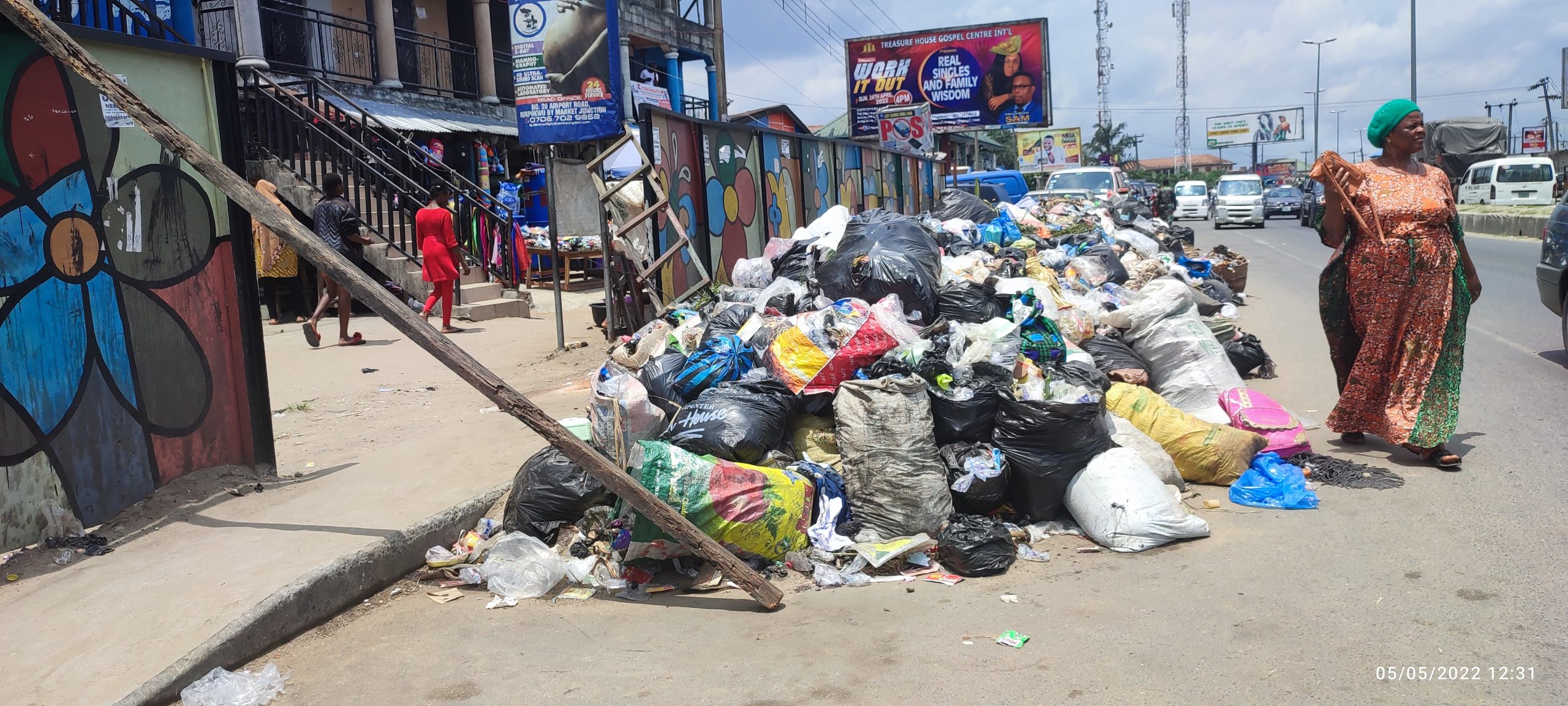
The Rivers State capital is currently facing a severe environmental and biological threat as massive heaps of uncollected waste take over major thoroughfares and residential neighborhoods. On Thursday, February 5, 2026, health experts and residents raised an urgent alarm over the potential for an epidemic, as decomposing refuse continues to mount at key junctions, including Igwuruta, Eleme, and the popular Oil Mill Market.
The crisis has placed the Rivers State Waste Management Agency (RIWAMA) under intense scrutiny. Dr. Samuel Nwanosike, who was appointed as the Sole Administrator and Chairman of the RIWAMA board in August 2025, is facing significant pressure to address the lapse in evacuation services.
While Nwanosike recently re-introduced the monthly sanitation exercise and banned waste disposal on road medians, the reality on the ground suggests that service providers are struggling to keep pace with the city’s daily waste generation. Reports indicate that many waste contractors have been irregular in their duties, with some citing faulty equipment and others pointing toward the state’s lingering political distractions as the primary cause of the service breakdown.
From a clinical perspective, the health implications for Port Harcourt residents are dire. Medical practitioners at the Rivers State University Teaching Hospital have warned that the rotting organic matter is serving as a primary breeding ground for disease vectors such as rodents, flies, and mosquitoes.
Also Read: http://FAAN to Enforce New Cargo Tariffs
“We are looking at a ticking time bomb for cholera, dysentery, and typhoid fever,” noted a community health practitioner in the city. The stench from decomposing waste is not just an aesthetic nuisance; it contains bioaerosols that can trigger or worsen respiratory illnesses like asthma and bronchitis, particularly among children and the elderly who live near these dump sites.
The situation is further complicated by the activities of scavengers who often scatter bagged refuse in search of recyclables, leaving the waste exposed to the wind and rain. When it rains, leachate, a toxic liquid produced by decomposing trash, seeps into the soil and groundwater, potentially contaminating the borehole water that many residents rely on for domestic use. Environmental biologists have urged the government to move beyond policy announcements and provide the necessary funding and enforcement to ensure contractors evacuate waste within the mandated 24-hour window.
As of Thursday afternoon, the Trade Union Congress (TUC) and the Association of Community Health Practitioners have joined the call for Governor Siminalayi Fubara to intervene. While the Governor has vowed not to be distracted by political rifts, health stakeholders argue that the “Garbage City” status currently haunting Port Harcourt requires an emergency response to prevent a full-scale public health disaster. For now, all residents of the Garden City remain at the mercy of the mounting filth, waiting for RIWAMA to restore the cleanliness and safety of their environment.
