


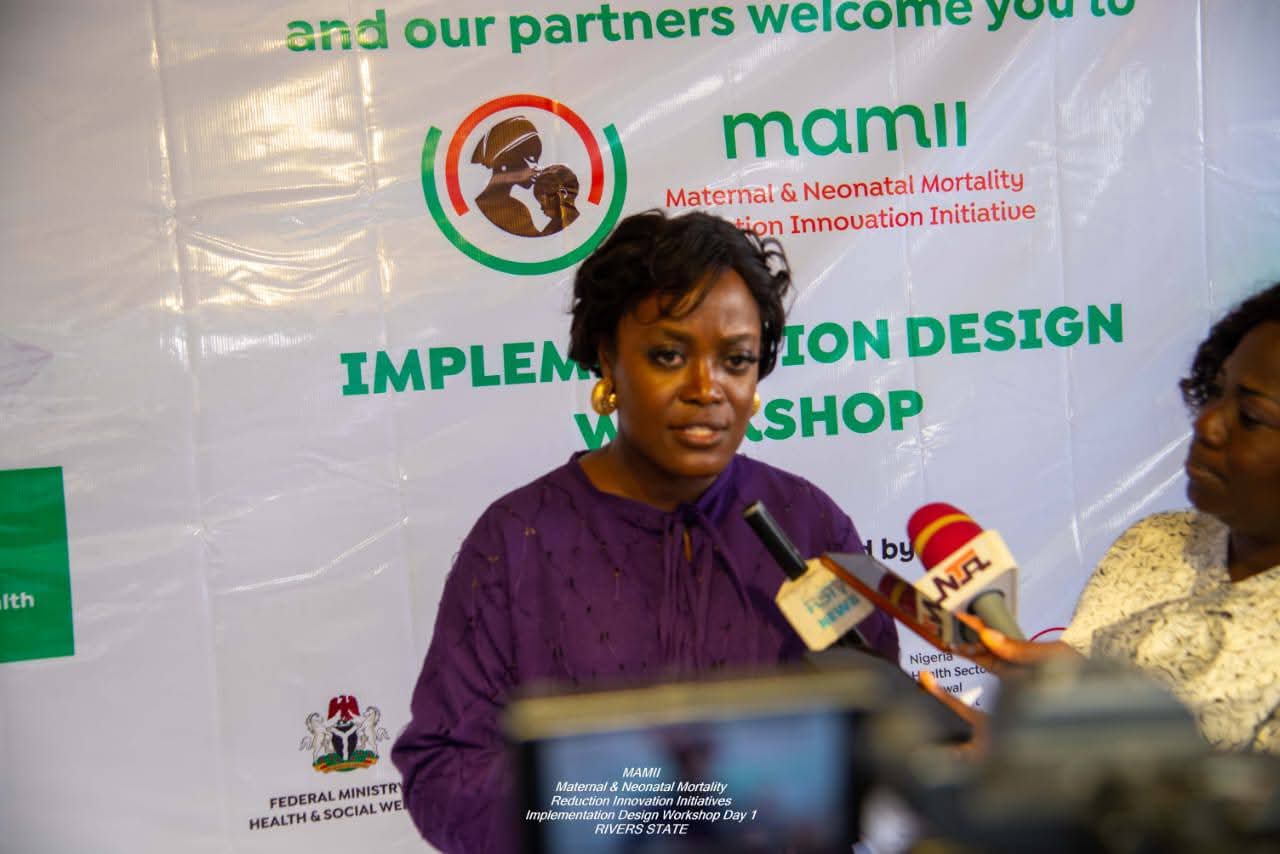
The Rivers State Government has commended health stakeholders for their sustained efforts to reduce maternal and neonatal deaths, even as six local government areas in the state have been identified among those with the highest mortality burden in Nigeria.
The government disclosed that six local government areas in Rivers State, Etche, Akuku-Toru, Andoni, Ahoada West, Bonny and Emohua, are among the 172 LGAs nationwide with the highest rates of maternal and neonatal mortality.
The Commissioner for Health, Dr Adaeze Oreh, revealed the figures during the opening of a five-day maternal and neonatal mortality reduction workshop held in Port Harcourt.
Read Also: Bangha Monarch Urges Calm After Foiled Assassination
The programme, which runs from 26 January to 30 January, is part of ongoing efforts to strengthen interventions under the Maternal and Neonatal Mortality Reduction Innovation Initiative (MAMII).
Dr Oreh said the state government is committed to identifying the root causes of maternal and neonatal deaths in the affected LGAs and implementing targeted interventions aimed at reducing mortality to zero.
She praised stakeholders in the maternal and newborn health sector for their dedication and collaborative efforts, noting that their contributions remain critical to achieving improved health outcomes.
According to her, the MAMII programme focuses on investigating individual cases of maternal and neonatal deaths, identifying systemic gaps, and ensuring rapid response mechanisms to prevent avoidable fatalities.
Also speaking at the event, the Planning and State Engagement Associate National Sector-Wide Approach (SWAP) Coordination Officer at the Federal Ministry of Health and Social Welfare, Dr Adan Ahmad, reaffirmed that achieving zero maternal and neonatal mortality remains a national priority.
Dr Ahmad commended the Rivers State Government, under the leadership of the Honourable Commissioner for Health, for demonstrating strong political will and commitment towards addressing the challenge.
He urged continued collaboration between federal and state actors, development partners and frontline health workers to accelerate progress.
