


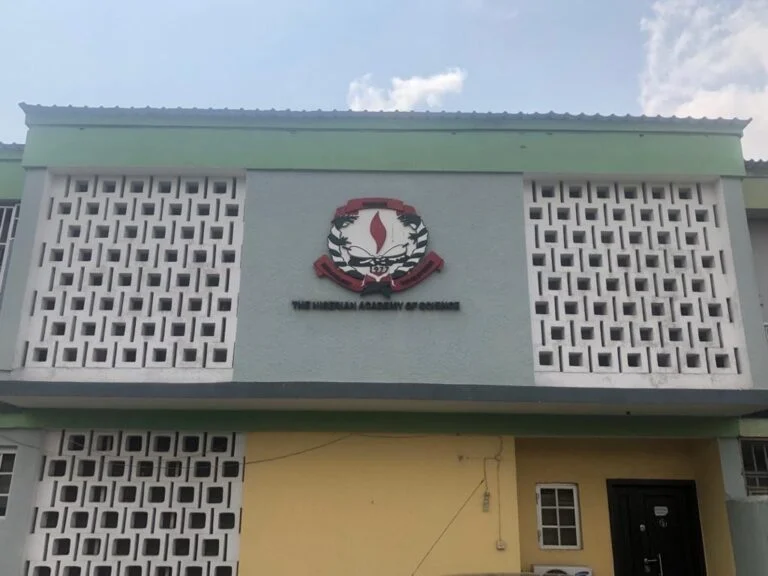
Nigeria’s worsening brain drain is no longer confined to hospitals and clinics, as a growing number of researchers and scientists quietly exit the country in search of better career prospects abroad, the Nigerian Academy of Science (NAS) has warned.
The Executive Secretary of NAS, Dr Oladoyin Odubanjo, raised the concern on Monday during an interview with the News Agency of Nigeria (NAN) in Abuja, describing the trend as a looming threat to the nation’s scientific future.
While the migration of health workers has dominated public discourse, Odubanjo said a similar pattern was unfolding within Nigeria’s science and technology ecosystem, particularly among young and early-career researchers.
Read Also:Brain expert calls for ban on ball heading, says it damages the brain
According to him, the steady loss of scientific manpower is undermining the country’s research capacity, as effective research depends on collaboration between senior academics and emerging scholars.
“People talk a lot about doctors and nurses leaving, but researchers are also leaving in large numbers,” Odubanjo said. “Many young scientists are relocating to other countries in search of viable career paths, and those countries are benefiting from the talent Nigeria is losing.”
He warned that without a critical mass of researchers, scientific inquiry and innovation would stagnate, weakening Nigeria’s ability to address national development challenges through evidence-based solutions.
Odubanjo, however, expressed cautious optimism that the situation could improve if reforms in the research funding framework are sustained.
He pointed to recent policy adjustments aimed at easing restrictions linked to the Treasury Single Account (TSA), which had previously slowed access to research grants.
He explained that under the former system, funds awarded to researchers were routed through the TSA, making it difficult to access money for laboratory reagents, fieldwork and data collection, especially when approvals were centralised in Abuja.
With improved funding access, better policy coordination and deliberate efforts to retain skilled manpower, Odubanjo said Nigeria’s scientific research sector could begin a gradual recovery in the year ahead.
