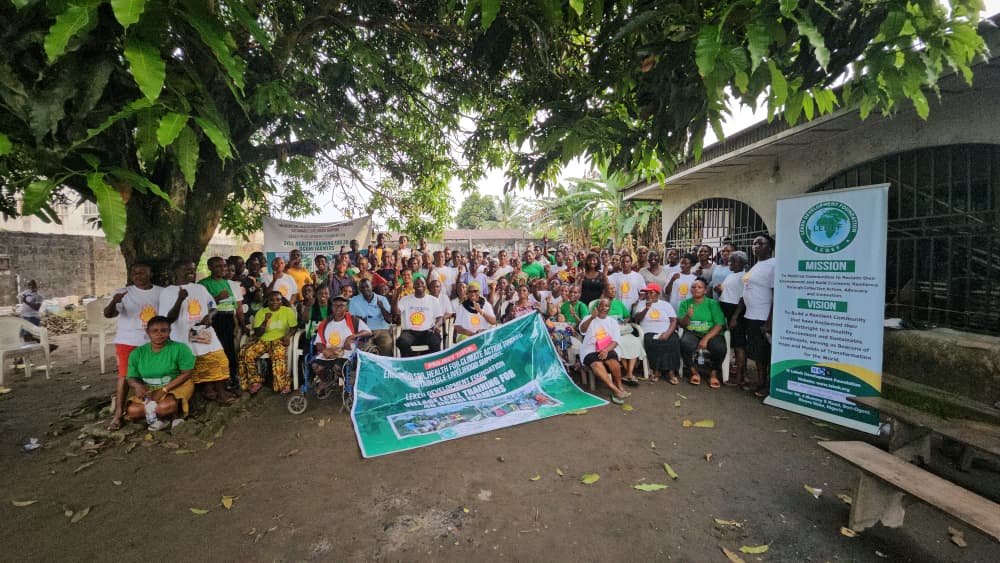
Hundreds of Ogoni farmers have begun using indigenous micro-organic fertilizers to grow crops as part of efforts to promote agroecology and restore degraded soils in the region.
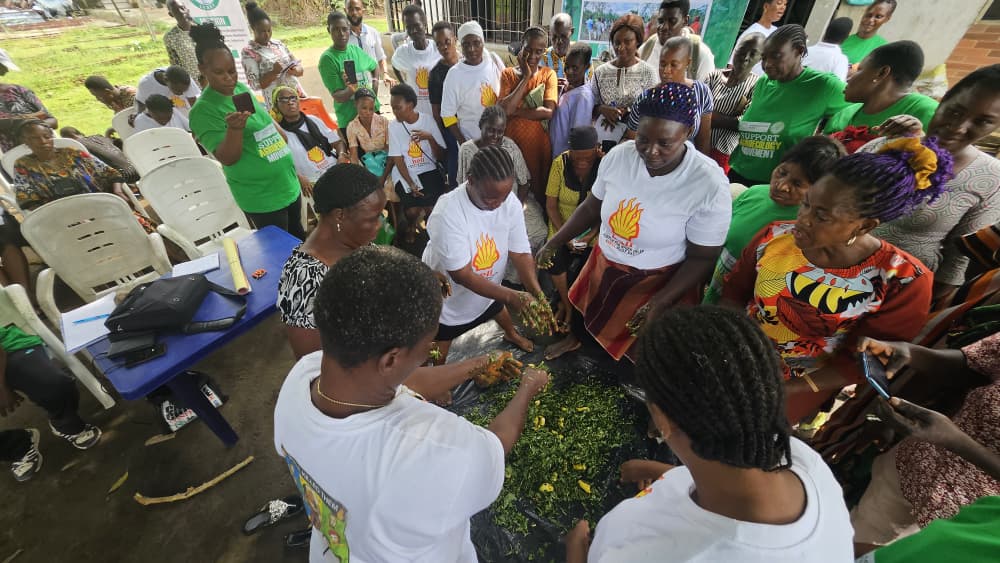
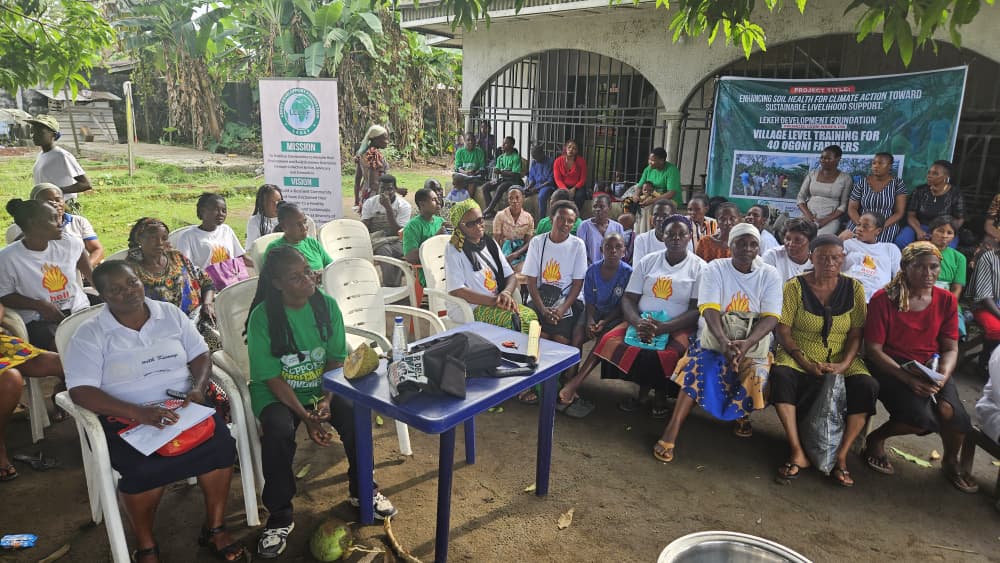
The development followed a practical agroecology training held on Monday, for over 100 farmers organised by the Lekeh Development Foundation with funding support from Agroecology Fund. Theme: “Enhancing Soil Health for Climate Action Toward Sustainable Livelihood Support.”
Speaking at the event in Bori, the Executive Director of Lekeh Development Foundation, Friday Nbani, said the training equips Ogoni farmers with natural methods of producing fertilizers and pesticides, reducing their dependence on harmful chemical inputs.
He noted that decades of oil spills and environmental pollution have left Ogoni soils in crisis, adding that agroecology offers real solutions to soil fertility loss, climate change, and declining food production.
“For more than three decades, our soil has suffered from oil extraction, spillage and contamination. Farmers have been neglected. Agroecology is key to restoring soil health and addressing climate challenges,” Nbani said.
He explained that farmers were taught how to produce ash-based pesticides and indigenous microorganisms (IMO) using simple locally available materials such as rice, ash, soap and pepper. These organic inputs, he said, boost soil fertility without harming humans, animals, or beneficial organisms.
Nbani added that the training includes a Train-the-Trainer (ToT) model across 16 community chapters in Ogoniland, enabling participants to step down the knowledge to thousands of other farmers.
Also speaking, Samuel Kabuya, an agroecology consultant from Uganda and lead trainer, said the initiative aims to drastically reduce the use of chemical fertilizers and pesticides which contribute to soil degradation, cancers and other health challenges.
“We are not sabotaging businesses, but we need healthy people for a greater nation. Chemicals are destroying our soils and our bodies. Through this practical training, farmers can now produce their own fertilizers and pesticides at zero percent chemical use,” Kabuya stated.
Farmer participants described the training as transformative.
Diginee Helen, from Bane community, said she learned multiple indigenous methods of producing manure and pesticides, which she hopes to teach other women.
“With this training, I believe we will grow healthier food and reduce the diseases caused by chemical fertilizers,” she said.
Another participant, Sunday Akerebari from Dogbam, said the programme will help eliminate waste, promote environmental cleanliness and enable farmers to farm without purchasing chemical inputs.
Similarly, Jacob Gabriel, a farmer, said practical demonstrations revealed that crops grown with natural fertilizers are healthier, adding that the knowledge gained will help improve soil fertility and food production across the region.
The Lekeh Development Foundation says it hopes the programme will eventually support farmers to produce organic inputs commercially, creating new livelihood opportunities while rebuilding Ogoni’s damaged ecosystems.
Read also: Private Investors Set To Join Port Harcourt Refinery Management