


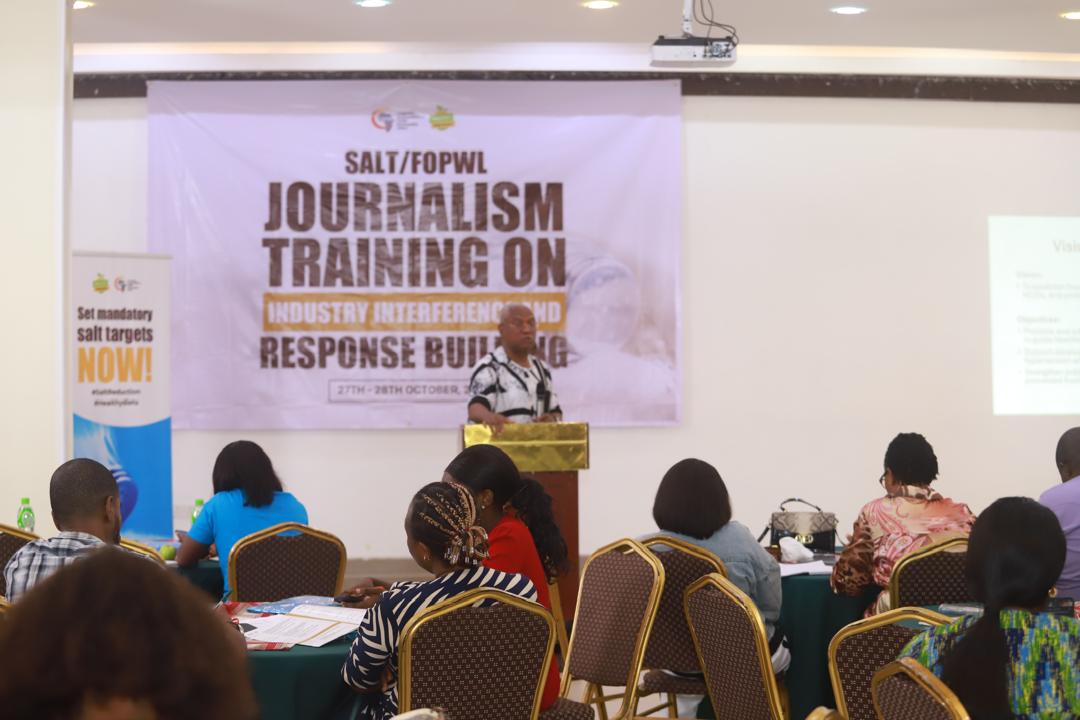
Journalists in Rivers State have been urged to intensify efforts in industry monitoring and public interest reporting to expose policy gaps in the manufacturing sector and hold corporate organizations accountable.
Robert Egbe, Media and Communication Officer at Corporate Accountability and Public Participation Africa (CAPPA), made the call while delivering a paper titled “Media Accountability as a Tool for Industry Monitoring and Public Interest Reporting” during a journalism training on industry and response building held in Port Harcourt on October 28.
Egbe emphasised the critical role of the media as a watchdog and catalyst for social change, stressing that journalists must hold both corporations and policymakers accountable through evidence-based reporting.
According to him, “Media accountability means that media professionals and their organisations uphold professional and ethical standards such as accuracy, fairness, transparency, and a commitment to the public good. But it also means holding powerful actors like food corporations and policymakers accountable through rigorous, independent reporting.”
He explained that the media plays a vital role in tracking and questioning corporate behaviour, especially where such actions affect public health, safety, or policy outcomes.
He warned that the food and beverage industry could resist such initiatives through lobbying, funding misleading research, or launching public relations campaigns to undermine reforms.
“Accountable journalism must investigate and expose such tactics, monitor company compliance, and educate the public on why sodium reduction is crucial to health,” he added.
News: CAPPA Rejects Lagos PPP Water Plans, Warns Against Privatisation
He also highlighted the importance of Front-of-Pack Labelling (FOPL), a policy designed to make nutritional information clear and accessible to consumers. Egbe noted that some corporations oppose strong warning labels, preferring voluntary systems that confuse the public. He urged journalists to scrutinise such interference and inform citizens of their right to accurate labelling.
Egbe encouraged reporters to pursue investigative stories such as: Deceptive Advertising to Children examining how brands use cartoons, influencers, and giveaways to market unhealthy foods..Policy Manipulation probing how corporations influence or delay health-related regulations.
Harmful Corporate Social Responsibility (CSR) uncovering how firms use donations of unhealthy products to polish their image.
He said, “When the media is proactive and accountable, public awareness grows, policy implementation improves, and industry behaviour becomes more transparent and aligned with public health goals.”
Some journalists who participated in the two-day training described the programme as impactful and enlightening.
One participant said the training opened his eyes to how companies manipulate consumers through labelling and deceptive pricing practices. “I’ve learned how to pay more attention to product details not just for myself, but also for my household and community,” the journalist added.
Another participant commended CAPPA for organising the workshop, saying it had broadened their understanding of corporate accountability and the importance of fair consumer practices.
The training, organised by CAPPA, aimed to equip journalists with the skills to use investigative and accountability journalism as tools for promoting public health and ensuring corporate responsibility in Nigeria’s industrial and food sectors.
