


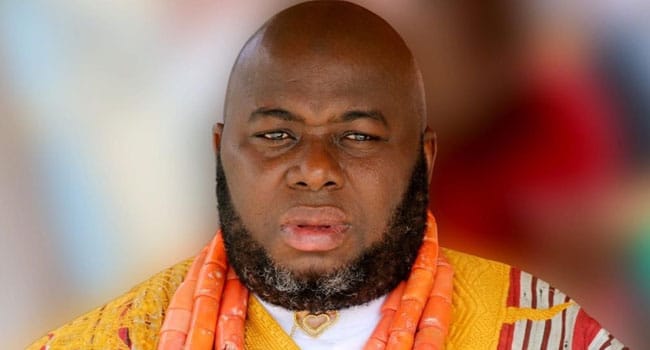
The Nigerian private security sector is facing a significant labor crisis today as Mujahid Asari Dokubo, the leader of the Niger Delta Peoples Volunteer Force (NDPVF), decries a massive backlog in payments. Speaking from his residence in Rivers State on Sunday, April 12, 2026, the former militant leader revealed that his organization and affiliated paramilitary groups have not received their contractual disbursements for a staggering 45 months.
Dokubo, whose private military company has long claimed to operate as a critical auxiliary to the Nigerian Armed Forces, expressed deep frustration over the “abandonment” of his men, who he maintains are currently deployed on the frontlines against terrorists in several states across the Federation.
The dispute highlights a growing friction in the “Private Security-State” partnership model that has defined Nigeria’s counter-insurgency strategy since 2022. Dokubo’s group, which includes elements of a civilian JTF-style workforce, has been a controversial yet visible presence in the fight against banditry and oil theft.
Also Read: http://Oil Boom: Nigeria Failing To Capitalise on Rising Prices – Expert
However, the 45-month payment gap, dating back to mid-2022, suggests a total breakdown in the fiscal arrangement between the Federal Government and the Kalabari-born leader. “Our men are fighting side by side with battle-wearied troops, yet their families are starving,” Dokubo stated, warning that the lack of financial support threatens the operational morale of the non-state actors currently manning key infrastructure in the North and the Niger Delta.
This latest complaint comes amidst a broader restructuring of Nigeria’s pipeline surveillance architecture. While other ex-militant leaders like Tompolo have successfully renewed their multi-billion naira contracts under the Tantita Security banner, Dokubo has faced significant pushback from the Defense Headquarters (DHQ).
Only recently, in late 2025, military officials challenged Dokubo’s claims of front-line collaboration, daring him to “face the battlefield” directly rather than through social media declarations. Business analysts in the energy sector suggest that the 45-month debt may be a strategic “choking” of funds as the government moves toward more formal, state-controlled security mechanisms under the Petroleum Industry Act (PIA).
As of Sunday afternoon, April 12, neither the Ministry of Defense nor the Nigerian National Petroleum Company Limited (NNPCL) has issued a statement clarifying the status of the “45-month” arrears. For the business community in Rivers State, the escalation of this dispute is a cause for concern, as unpaid security contractors have historically turned back toward the “bunkering” and sabotage they were hired to prevent. With Dokubo now declaring himself a “Jihadist and Islamic extremist” in a separate recent broadcast, the stakes of this financial standoff have moved beyond simple labor wages into the realm of national security risk.
