


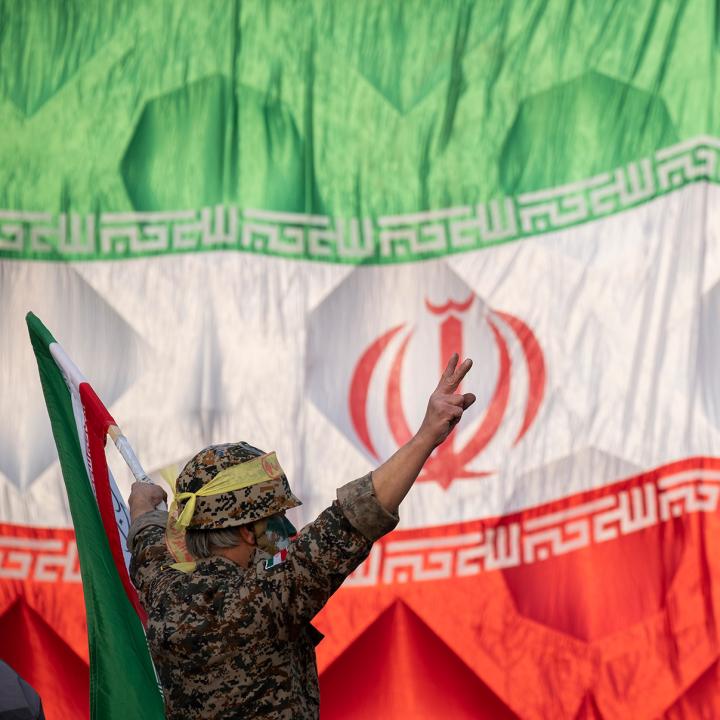
Iranian regime functions on the Shia Islamic ideology and belief that it is their duty to trigger the return of the Mahdi (the Messiah) by causing a great destruction of Israel and other places around the world. They believe an apocalyptic event will trigger the return of their Messiah
They preach this openly. They do not pretend about it, but many people seem to be ignorant of this. The Ayatollah and his Mullahs talk about this all the time. Their proxies around the world talk about this all the time
They are not like North Korea. North Korea is not driven by religious ideology so they are very unlikely going to wake up one day and just launch nuclear weapons. But Iran is not like NK. Iranian Shia ideology actually believe it is their duty to make this happen.
The Iranian regime are religiously driven, and they are of the extreme type. They are a death cult. Their executive and legislative arm or government sit in meetings and chant death to America and Israel on live TV. You can watch their videos on YouTube. You can also listen to their Mullahs talk about their ideology, vision, and mission on YouTube. These are all in the public domain
They are currently one of the few country governments in 2026 that mass murders its citizens. Most people don’t seem to know who the Ayatollah is. The Ayatollah, according to the regime beliefs, is next to God. That is why he is called the supreme leader. His word is law.
Iranian regime runs a fake democracy where they pretend to elect leaders, but the leaders are all subject to the Ayatollah who acts like a king and who is the real law of the country
Here are 7 key religious claims and beliefs that define “the Ayatollah” (primarily referring to the Supreme Leader of Iran under the doctrine of Wilayat al-Faqih, or Guardianship of the Islamic Jurist, as established by Ayatollah Ruhollah Khomeini and upheld by his successor Ayatollah Ali Khamenei) regarding his identity and authority as a religious and political leader in Twelver Shia Islam.
These stem from Khomeini’s foundational writings (such as Islamic Government) and the Iranian constitution, which frame the Supreme Leader’s role as divinely sanctioned during the occultation (absence) of the 12th Imam, Imam Mahdi.
- He is the Wali-ye Faqih (Guardian Jurist): The Ayatollah claims to be the qualified Islamic jurist (faqih) divinely entrusted with guardianship (wilayat) over the Muslim community and state until the return of the Hidden Imam (Imam Mahdi). This is not a human election but a religious necessity to implement Sharia and protect Islam.
- His authority equals that of the Prophet and Imams in governance: He believes the faqih inherits the same political and administrative rights as the Prophet Muhammad and the infallible Imams for ruling society, judging disputes, and executing divine law—though without their personal infallibility. This makes clerical rule the only legitimate Islamic government.
- Obedience to him is obedience to God: The Ayatollah holds that following the Supreme Leader’s commands is a core religious obligation (faridah), equivalent to obeying God, the Prophet, and the Imams. Disobedience is seen as rebellion against divine order, as stated in interpretations of Quranic verses like 4:59 (“Obey God and obey the Messenger and those in authority among you”).
- His guardianship is absolute (wilayat-e mutlaq): He asserts comprehensive authority over all aspects of life—political, social, economic, and religious. This allows him to issue rulings that can temporarily override secondary Islamic obligations (like prayer or fasting) if needed to preserve the Islamic state or faith, prioritizing the “primary injunction” of protecting Islam.
- He is the deputy/representative of the Hidden Imam on earth: As Supreme Leader, he positions himself as the Imam Mahdi’s vicegerent, responsible for guiding the Shia community, enforcing justice, and preparing for the Imam’s return. This gives his rule a messianic and sacred character in the absence of the divinely appointed Imam.
- Non-clerical rule is illegitimate (taghut): He claims that any government not headed by a just faqih (such as monarchy or secular systems) is a form of idolatry or unbelief (taghut) that Muslims must reject and replace. Only rule by a qualified jurist ensures true Islamic governance.
- He serves as a source of emulation (marja’ taqlid) with supreme religious authority: The Ayatollah views himself (or the office) as a high-ranking mujtahid whose fatwas and interpretations of Sharia are binding on followers worldwide. This extends his influence beyond Iran as a global Shia religious guide, blending spiritual emulation with political leadership.
In Iran, citizens vote directly for the president (every 4 years, max two terms) and members of parliament (Majlis). However, the Guardian Council—a 12-member body (6 clerics appointed by the Supreme Leader, 6 lawyers approved by parliament)—vets all candidates for “Islamic suitability,” loyalty to the system, and other criteria.
This routinely disqualifies thousands of aspirants, including prominent reformists, former officials, and critics. In past cycles, only a handful of approved candidates (often aligned with the Leader’s vision) make it to the ballot. There is no meaningful appeal against disqualifications.
Also see: Abua/Odual Council Denies Involvement in ADC Congress Disruption
The Supreme Leader’s overriding authority (per Article 110 of the Constitution) states as follows
He determines the general policies of the state (domestic and foreign) and supervises their implementation.
He serves as commander-in-chief of the armed forces, including the powerful Islamic Revolutionary Guard Corp (IRGC).
He appoints/dismisses key figures: head of the judiciary, commanders of the military and IRGC, heads of state media, and clerics on the Guardian Council.
He can declare war/peace, mobilize forces, issue decrees for referendums, and resolve disputes between branches.
He oversees the three branches of government (executive, legislative, judicial) in a supervisory role.
So when you see people from the West support the Iranian regime, you have to laugh and wonder how stupid such people are because if their countries were like Iran, they wouldn’t even be able to say the things they say everyday on social media
One sad part of liberal secular societies is that people become like spoilt kids, ignorant, and irresponsible folks because of the liberty they have. Liberal societies end up breeding weak men who end up destroying themselves
“Hard times create strong men, strong men create good times, good times create weak men, weak men create hard times”
This is why you see Nigerian society today so weak. So much so that evil politicians have so much freedom and effrontery to do whatever they like. They know the people have become too docile, and mentally weak to resist because they have been weakened by years of liberal materialism and self indulgence. Too much sensual pleasure, indulgence and depravity have weakened their convictions and inner resolve
The truth is, if we have a lot of Nigerians who support the Islamic Jihadist Iranian regime, then if things dont take a drastic turn, years from now, we will also have these same folks supporting Boko Haram and telling you that you are being too mean and Islamophobic for wanting to destroy them
Mebele Edwin Okugbo
