


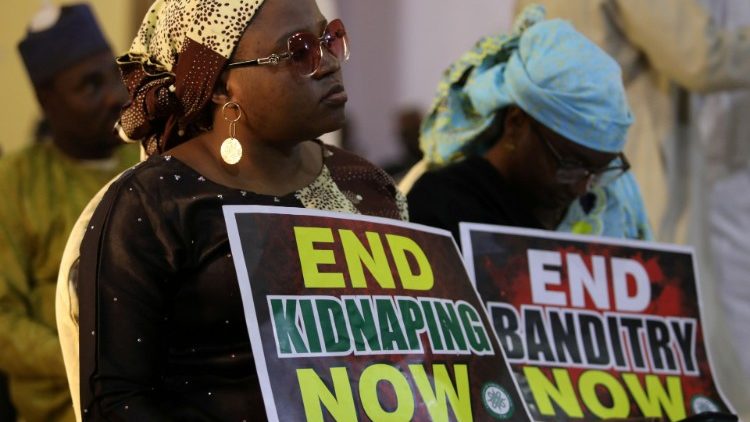
A friend from Denmark read the post I made yesterday about the carnage in Jos, and how we have got so acclimatized to the news of deaths and insecurity to the extent that people go about their normal lives as if nothing is at stake.
She could not believe some of the responses she read on my post. How we have become so adaptable to crises that we do not feel the risks anymore.
I understood her points. I understood the extent of mental damage the majority of Nigerians have been subjected to.
I understand how the brains of Nigerians have undergone a series of reprogramming and rewiring to be able to accommodate the impacts of the abuses they are daily subjected to.
Above all, I understand and appreciate the fact that nobody living in Nigeria is normal, even though most of them would strongly argue against this fact. If you visit Yabaleft, almost all the patients on admission there believe that they are okay.
It is not our fault. Maybe the fault is in our stars because people living in dangerous environments whether war zones, violent neighborhoods, or volatile domestic situations often don’t perceive the full extent of their danger for a complex set of interwoven reasons.
These aren’t signs of stupidity or weakness; they are, in fact, powerful, often unconscious, survival mechanisms outside their full control. It is the brain stewpid.
The human brain is wired to adapt to its circumstances to conserve energy and function effectively. To carry out these very important assignments dutifully, the brain devises ways to cut out distractions and noise while focusing on the most critical job at hand: keeping you alive.
To achieve this, the brain stops registering the chronic stressor as an alert. A constant sound of gunfire in the distance becomes like the sound of traffic noticed only when it changes or stops. And sights like that Mother holding her dead son in Jos appears like a Tom and Jerry cartoon to most of us.
Living in a constant state of high alert is metabolically expensive and psychologically unsustainable. To avoid complete burnout, depression, or anxiety disorders, people’s minds must dial down the threat response. They create a new baseline of what feels “safe enough” to function to go to work, raise children, and find moments of joy.
That is why an outsider feels creepy about our dangerous environment while we relax and sip peppersoup in the midst of gunshot sounds. What an outsider sees as “dangerous” becomes the “new normal.” And with every new normal, we keep lowering the bar to accommodate the new normal.
We started with “they are our brothers” to “They are misguided”, then to “We should pray for their repentance” to the present “They are prodigal sons.” All these official excuses are the brain’s ways of accommodating new red lines, and redrawing new lines on the sand.
As these developments keep growing, the people develop intricate, often subconscious, routines and rules that give them a sense of control over their environment.
For example, when Mararaba was attacked, those living in the FCT told themselves that Mararaba was about 62 kilometers from where they live, and their brains dumbed down the risks. This feeling of control can mask the reality that the environment itself is uncontrollably dangerous.
Another major factor in how our minds play tricks on us is that it compares our situation with that of others, assuring us that things are not that bad.
Supporters of the government easily use this to gaslight people when they work extra hard to get videos and photographs of crimes in “saner crimes” to dampen down whatever is happening here.
We also suffer from optimism bias in that our brain’s default tendency is to believe that bad things happen to other people, not to oneself. Even in a dangerous environment, individuals often hold the unconscious belief, “That it is not my portion.”
This bias is essential for risk-taking and forward movement in life, but it can be dangerously amplified in high-risk settings.
Our people also suffer from availability heuristic in that we assess risk based on how easily we can recall examples. If we have personally survived hundreds of dangerous incidents without getting hurt, our brain uses that readily available data to conclude, “This is survivable,” even if the statistical probability of eventual harm is incredibly high.
For example, if someone points out that traveling by road is dangerous, some would provide evidence of how many times they have traveled by road this 2026 and nothing happened.
Unfortunately, we are raising a generation that is growing under conditions that provide them with limited access to alternative realities which is one of the most insidious aspects of living in a dangerous environment. Peaceful environment is fast becoming an abstract concept in Nigeria.
Without the daily, tangible experience of safety, it’s difficult to grasp what we are missing. A generation that has never lived without the threat of violence doesn’t perceive the “extent of danger” because they have no experiential yardstick to measure it against. Their lived reality is all they know. We have damaged an entire generation.
So my Danish friend may be overreacting. This is because what looks like a lack of perception to an outsider is often a different kind of hyper-specialized perception.
For example, an outsider might see a child playing near a broken window in a violent neighborhood and think the family is oblivious to the danger.
Also see: Fubara Provides ₦100m Aid To Tackle Environmental Threat
But the mother might have a hyper-accurate mental map: she knows the exact sound of every car on the block, the time the neighbor comes home, the facial expressions of the loiterers on the corner, and the specific time of day when tensions rise.
She isn’t ignoring danger; she has filtered out the 99% of “noise” (what outsiders see as danger) to focus on the 1% that represents an imminent threat.
The failure to perceive the full extent of danger in a hazardous environment is not a simple oversight; it is a complex, multi-layered adaptation strategy.
It is the mind’s way of balancing the need for self-preservation with the equally vital need to maintain sanity, function socially, and preserve hope.
Acknowledging the true, unvarnished extent of the danger would often require acknowledging a painful reality: that one is trapped, that one’s home is unsafe, that one’s government has failed, or that one’s life is in someone else’s uncontrollable hands.
Intriguingly, such an acknowledgment, without a clear path to safety, can be psychologically catastrophic. Therefore, the perception of safety within danger is often a necessary, if tragic, act of psychological resilience and that is what the Nigerian brains are doing.
Overworking to save us all from being shipped to Yabaleft or to Aro. That’s why those who live in smelly environments lose the ability to perceive how odoriferous their environments are. To save their sanity.
The normalisation of abnormalities is the brains response to balance our mental states, and suppress our madness. Everything is connected to everything.
Kelechi Deca
