


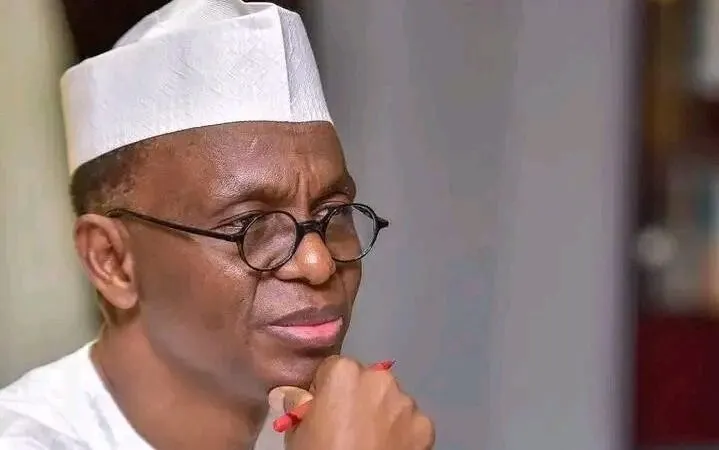
The Independent Corrupt Practices and Other Related Offences Commission (ICPC) is set to formally arraign the former Governor of Kaduna State, Malam Nasir El-Rufai, before the Federal High Court in Kaduna today, Tuesday, March 24, 2026.
The high-profile proceeding follows weeks of detention and mounting political tension, as the anti-graft agency moves to prosecute the former governor on a 10-count charge bordering on fraud, money laundering, and the alleged conversion of public funds during his eight-year tenure from 2015 to 2023.
According to a statement confirmed by ICPC spokesperson John Okor Odey, El-Rufai will appear alongside a co-defendant, Joel Adoga, in a suit marked FHC/KD/73/2026. The charges center on the alleged misappropriation of state resources, including the suspicious handling of a World Bank loan and the award of multi-billion naira contracts to entities described as “unregistered.” Specifically, the prosecution alleges that El-Rufai induced the state to pay ₦11 billion for a light rail project that was never executed and illegally approved severance payments totaling ₦289.8 million for himself in 2020 and 2023.
Also Read: http://NDDC Challenges Private Sector on Investment in Niger Delta
In a parallel legal offensive, the ICPC has also filed a separate 10-count charge against El-Rufai and another defendant, Amadu Sule, at the Kaduna State High Court (KDH/KAD/ICPC/01/26). These state-level charges focus on abuse of office, conspiracy, and unlawful land dealings.
Investigative sources revealed that the charges involve the revocation of land from private citizens and its subsequent reallocation to associates. The dual-court strategy by the ICPC underscores the “multi-layered nature” of the alleged financial misconduct discovered during the commission’s year-long probe into the previous administration’s accounts.
The former governor’s arrival in Kaduna was managed under tight security to prevent civil unrest, following weeks of advocacy from political stakeholders and family members who characterized his detention as “political extortion.” Chieftains of the African Democratic Congress (ADC) and former Vice President Atiku Abubakar had previously called for his release, arguing that the prolonged custody violated his fundamental human rights. However, the ICPC maintained that it strictly followed due process, asserting that the charges were filed within the valid court-ordered detention period and that all defendants were served in accordance with the law.
