


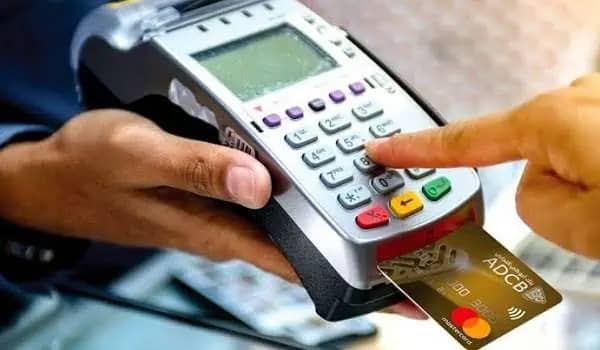
Point of Sale terminals have been hailed as a lifeline in Nigeria’s cash-strapped economy. In Nigeria, POS has become the bridge between people and their money. Quick withdrawals, transfers, and payments turned small stands into trusted financial contacts.
But now, that trust is now being tested. A growing pattern is emerging in marketplaces and public spaces. Increasingly, individuals posing as mobile POS operators are exploiting unsuspecting customers, turning what should be a simple transaction into a costly mistake.
The method is as subtle as it is dangerous. A customer approaches to withdraw N15,000. The operator collects the card, inputs the amount, and hands over the terminal for a PIN. But somewhere in that process, an extra zero is added. What should have been 15,000 naira becomes 150,000 naira.
If the customer fails to carefully check the amount displayed before authorizing the transaction, the damage is done in seconds and just like that, a withdrawal becomes a financial loss that may never be recovered.
What makes this trend particularly alarming is its setting. These are not always fixed, traceable POS shops. Many of these operators move around in markets, along roadsides, in crowded areas, making it difficult to identify or track them after the fact. Without a physical shop or recognizable business identity, accountability becomes almost impossible.
This shows a shift and swap in the perception of fraud. For a long time, attention was focused on protecting cardholders from external scams like phishing messages, fake bank alerts, ATM skimming. Now, the threat is becoming more immediate and physical. The very person meant to assist with access to cash may, in some cases, be the one orchestrating the deception.
Also see: JAMB Releases Mock UTME Slips for Candidates
The POS machine itself, once a symbol of withdrawal and financial inclusion, is being repurposed as a tool for exploitation.
For many victims, the result is not just financial but emotional. There is embarrassment, frustration, and often self-blame. “I should have checked,” becomes a painful repetition. But the reality is that these transactions often happen in busy, distracting environments where people are in a hurry and trust is given too easily.
The lesson here is not to abandon POS services as they remain essential, especially in areas where banking infrastructure is limited, but there is a clear need for heightened awareness.
Customers must begin to treat every transaction with the same level of caution they would apply at an ATM. Always confirm the amount displayed before entering a PIN. Avoid handing over your card without watching the process. Whenever possible, use operators with fixed, known locations rather than mobile or unfamiliar setups.
This trend raises questions about regulation and oversight. As POS businesses are spreading, who is monitoring these operators? What safeguards are in place to protect customers? And how quickly can victims seek redress when things go wrong?
