

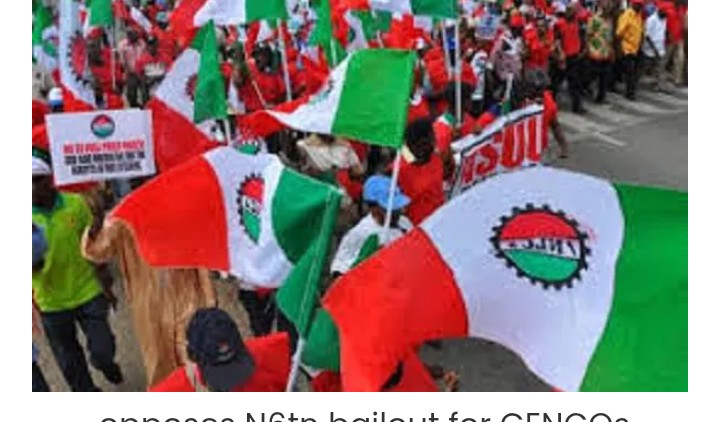
The Nigeria Labour Congress (NLC) has expressed worries over the persistent crisis in Nigeria’s power sector, describing it as a major burden on workers, manufacturers and the general public.
In a statement on Sunday 22 March by its President, Comrade Joe Ajaero, the labour body criticised the alleged continued exploitation of Nigerians through high electricity tariffs and poor service delivery.
The NLC alleged that operators in the power sector, particularly distribution and generation companies, have continued to benefit from subsidies and tariff increases while citizens “pay for darkness.”
“The nation’s power sector has become a perpetual millstone around the necks of Nigerian workers while crony-capitalist allies in the DISCOs and GENCOs continue to feast on the commonwealth,” the statement read .
The union also faulted the proposed N6 trillion bailout for power generation companies, describing it as a temporary fix to a deeply flawed system.
“We cannot continue to apply bandages to a system that is fundamentally fractured,” the NLC stated.
As part of its recommendations, the Congress called for the immediate merger of the Federal Ministry of Power and the Federal Ministry of Petroleum Resources into a single Ministry of Energy.
According to the NLC, the current separation of the two ministries has contributed significantly to inefficiencies in the sector, particularly in gas supply for thermal power generation.
The union argued that the proposed unified ministry would ensure better coordination and accountability in the management of Nigeria’s energy resources.
“For too long, these two critical ministries have operated in silos while the productive base of our economy collapses.
“Under a single ministry, there would be one minister accountable to the Nigerian people. This would end the era of blame game between power and petroleum authorities” the statement stressed:
The NLC further accused the petroleum sector of prioritising exports and profits over domestic energy needs.
“Gas is treated as a commodity for export to fetch foreign exchange for the elite, while the power sector struggles to keep the lights on,” it said.
The labour body maintained that a unified Ministry of Energy would enable the government to prioritise domestic electricity generation, ensure fair pricing and strengthen national energy planning.
It also called for a review of the current electricity tariff regime, urging a shift from what it described as “cost-reflective tariffs” to a system that reflects actual service delivery.
“Nigerians should not be forced to pay for inefficiency and greed. Electricity must be priced based on service, not imposed costs,” the NLC insisted.
Reiterating its opposition to the privatisation of the power sector, the Congress said the 2013 reform had failed to deliver expected results.
The NLC, therefore, urged the Federal Government to halt the proposed bailout, begin the process of merging the two ministries, and convene a national stakeholders’ summit to develop a people-focused roadmap for the power sector.
“The private sector cannot and will not solve Nigeria’s power crisis. Their model is built on extracting maximum tariffs while providing minimum service.
“Electricity is a social service and a fundamental right, not a luxury commodity” the statement added:
