


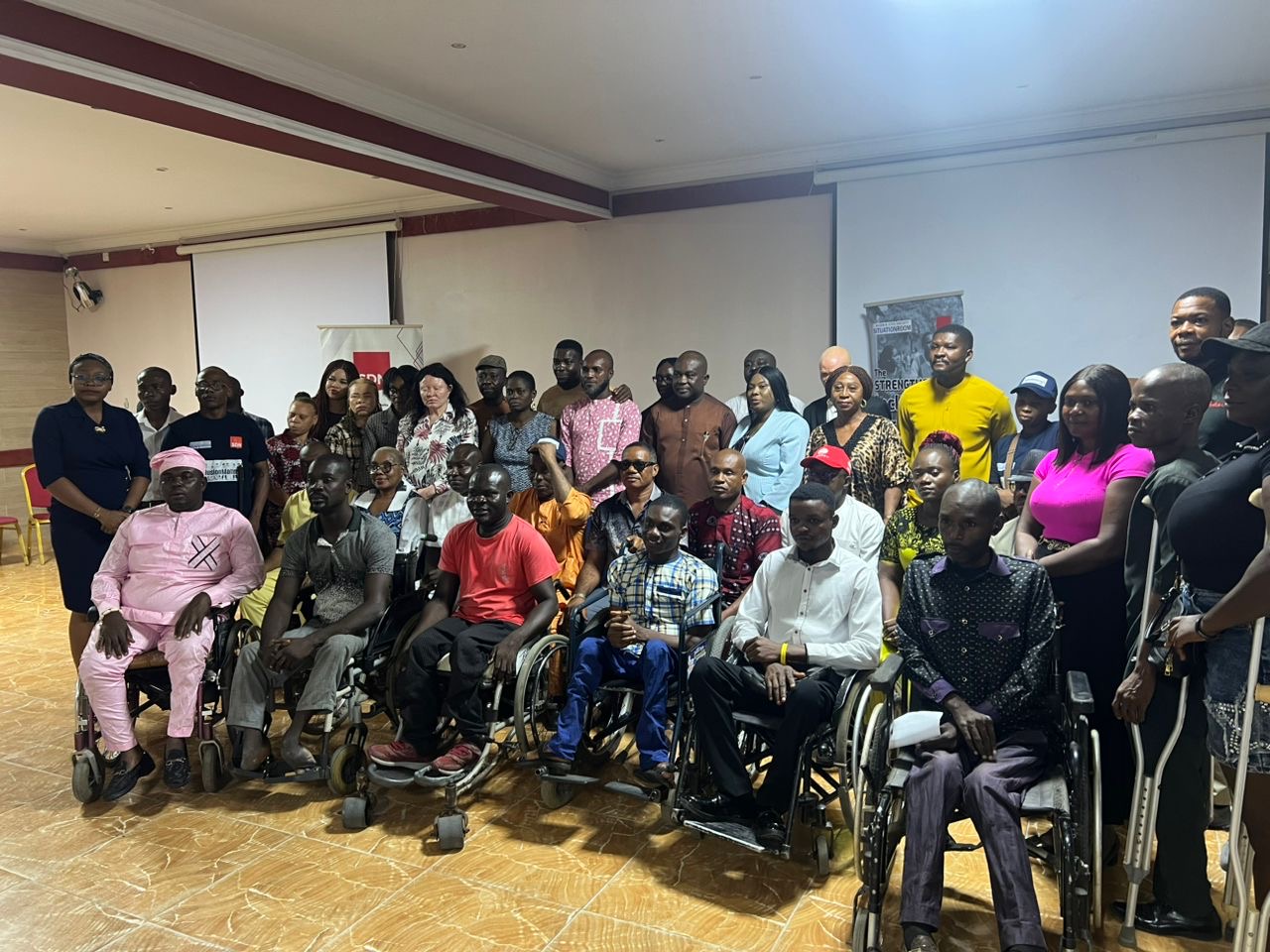
Persons with disabilities have renewed calls for full inclusion in Nigeria’s electoral process, urging authorities to provide the necessary support and assistive tools to enhance their participation.
The call was made during a multi-stakeholder roundtable on the Inclusion Agenda organised by Stakeholder Democracy Network (SDN).
Speaking at the event, SDN Country Director, Florence Ibok-Abasi, said discussions centred on key issues affecting persons with disabilities, including access to voter registration, collection of Permanent Voter Cards, and involvement in political parties and elections.
She explained that persons with disabilities have varying needs, such as visual, hearing, and mobility challenges, and emphasized the importance of tailored approaches to ensure effective inclusion.
Ibok-Abasi noted that SDN has continued to advocate for inclusive governance since the last election cycle, incorporating the concerns of persons with disabilities into broader development agendas and engaging political actors to drive change.
She added that the organisation has also partnered with the Rivers State Government to develop policies on gender and youth inclusion, while pushing for reforms that align disability laws with international standards.
Also speaking, the Rivers State Head of Voter Education and Publicity at Independent National Electoral Commission (INEC), Geraldine Ekelemu, outlined steps taken by the commission to support persons with disabilities.
She said INEC has set up a dedicated unit to address disability-related issues and introduced an online option for the Continuous Voter Registration process, allowing people to begin registration from their homes. She added that the exercise has been brought closer to communities through ward-level registration.
Ekelemu further stated that the commission uses data tools to identify the needs of voters with disabilities, enabling the provision of appropriate assistive materials during elections. She also highlighted the use of sign language interpreters during result announcements to ensure inclusiveness.
Participants at the roundtable stressed the need for more practical support, especially the availability of assistive tools on election day. One participant, Mrs Ifeyinwa Djegbada, welcomed INEC’s commitment to introduce alternative voting methods, including toe voting, for individuals unable to use their hands.
She also called on the National Orientation Agency to improve awareness campaigns targeting persons with disabilities, while urging political parties to create opportunities for them to contest elective positions.
Another participant, Nwosu Justice, commended SDN for its consistent advocacy and training efforts, noting that they have helped increase awareness of rights among persons with disabilities.
He, however, pointed out that discrimination remains a significant challenge, even within families, and called for greater efforts to promote acceptance and inclusion.
The roundtable ended with a renewed commitment by stakeholders to collaborate in building a more inclusive electoral system in Nigeria, with participation from agencies including the Independent National Electoral Commission, National Orientation Agency, Rivers State Government, and the Inter-Party Advisory Council.
