


Hunger has been described as a product of unequal power relations within global and local food systems, rather than a mere shortage of food production.
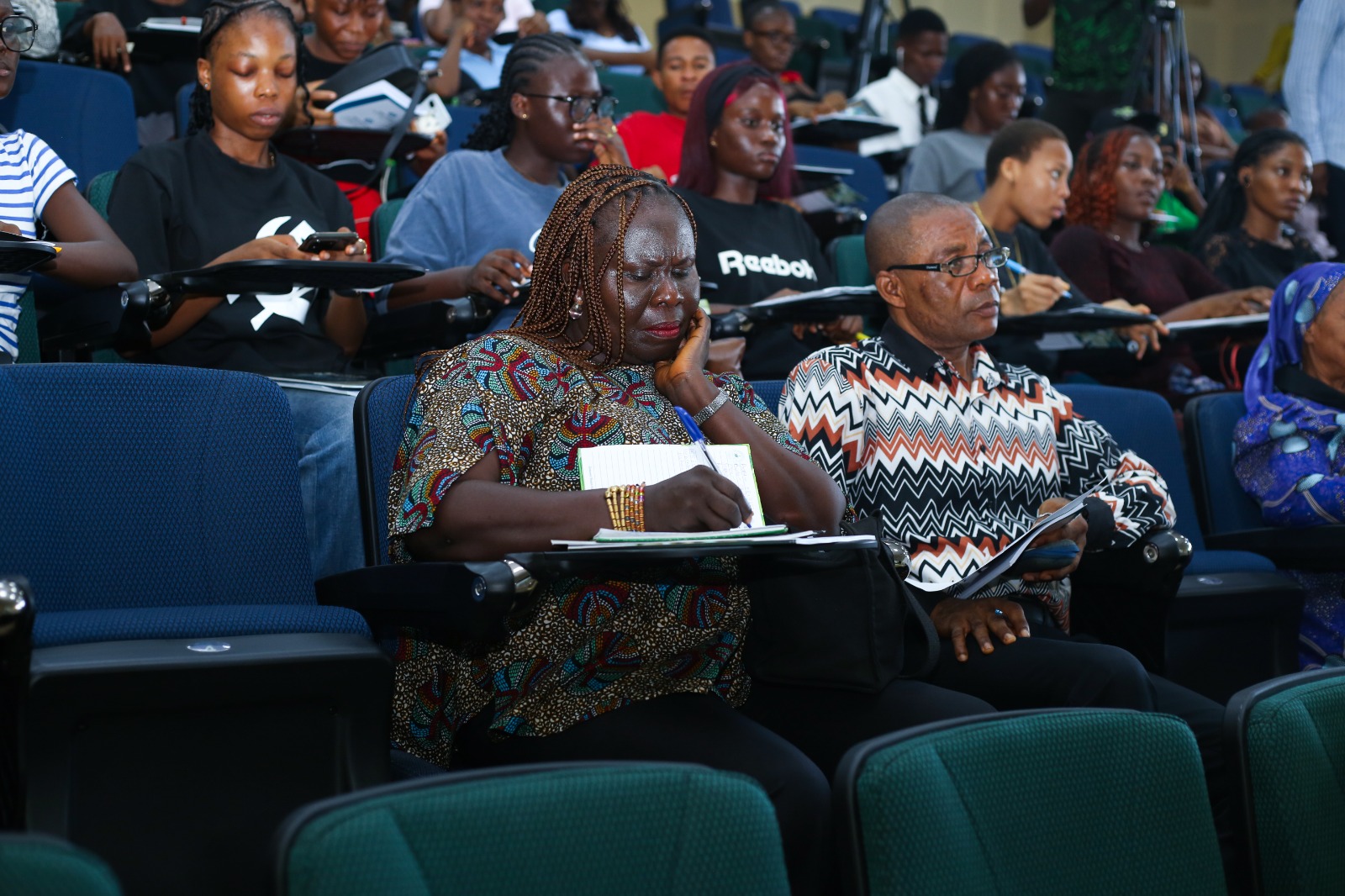
This position was highlighted at the Sustain-Ability Academy on Food, Power and the Politics of Hunger, hosted by the Health of Mother Earth Foundation in collaboration with the Centre of Politics University of Port Harcourt on March 19, 2026.
Executive Director of HOMEF, Nnimmo Bassey, in his remark said hunger and food insecurity are often the result of deliberate decisions that affect food availability and access.
According to him, food systems are increasingly shaped by profit-driven interests that prioritise economic gains for a few enterprises over equitable access.
Bassey emphasised that food is deeply rooted in culture, identity, and social relations, warning against policies that undermine traditional agricultural practices such as seed sharing. He also raised concerns over the growing influence of fast food culture and genetically modified foods, noting their potential impact on health, local food systems, and cultural heritage.
He called for the “decolonisation” of food systems through the preservation of indigenous food varieties, protection of local farmers, and increased scrutiny of global market forces influencing food governance.
Guest Speaker at the event, Director-General of the Shehu Musa Yar’Adua Foundation, Amara Nwankpa, stressed that hunger should be viewed as a systemic and political issue rather than a temporary or purely technological challenge.
Nwankpa noted that food insecurity in Nigeria is often linked to inefficiencies in infrastructure, market systems, and governance, rather than inadequate production. He cited post-harvest losses estimated between 30 and 40 per cent as a major contributor to food insecurity.
He argued that addressing hunger requires shifting decision-making power to local populations, promoting food sovereignty, and tackling structural inequalities within food systems.
Also speaking, Professor Fidelis Allen of the Centre of Politics, University of Port Harcourt, said hunger has increasingly been “weaponised” within political and governance structures.
According to Allen, individuals experiencing hunger often become vulnerable to manipulation within power systems, especially where poor policy decisions and governance failures persist.
He warned that normalising hunger poses a serious societal risk, describing it as a systemic issue rooted in negative power relations and political choices.
Participants at the event said the discussions provided deeper insights into the links between power, poverty, and food insecurity, and called for stronger policy engagement and reforms to promote food sustainability and equitable access.
