


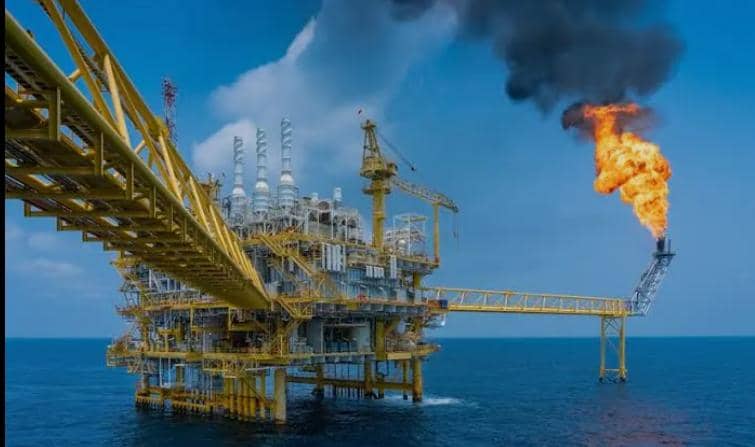
Despite possessing one of the world’s largest natural gas reserves, Nigeria has consistently faced chronic electricity shortages, exposing deep inefficiencies in the country’s energy sector.
Nigeria is estimated to hold about 600 trillion cubic feet (tcf) of unproven gas reserves, yet millions of citizens still experience regular power outages caused by grid disturbances, load shedding, and recurring system collapses.
In recent weeks, electricity supply across major cities has deteriorated further as gas shortages limit power generation.
Data from the Nigerian Oil Spill Monitor, supported by the National Oil Spill Detection and Response Agency (NOSDRA), shows that gas flaring remains a significant issue. Oil and gas companies reportedly flared about 323.2 million standard cubic feet (scf) of gas in 2025, underscoring ongoing challenges in commercialising associated gas resources.
News: Akuku-Toru LGA Chairman Unveils 2026 Budget Proposal
Although decline ranges from 349.3 million scf recorded in 2020, the trend has been inconsistent.
Nigeria recorded 264.6 million scf in 2021, 230.1 million scf in 2022, 278.3 million scf in 2023, and 301.3 million scf in 2024.
Energy researcher Oyinkepreye Orodu questioned the country’s readiness to maximise gas utilisation, noting that nearly 40 percent of the federal government’s “Decade of Gas” initiative, launched in 2020 and scheduled to end in 2030, has already elapsed with limited progress in reducing flaring.
Meanwhile, the shortage of gas continues to constrain electricity generation. Thermal power plants, which dominate Nigeria’s power mix, require about 1,629.75 million standard cubic feet of gas daily to operate at full capacity.
As of February 23, 2026, actual gas supply stood at roughly 692 million standard cubic feet per day less than half of the required volume significantly reducing power available to distribution companies and worsening electricity shortages nationwide.
