


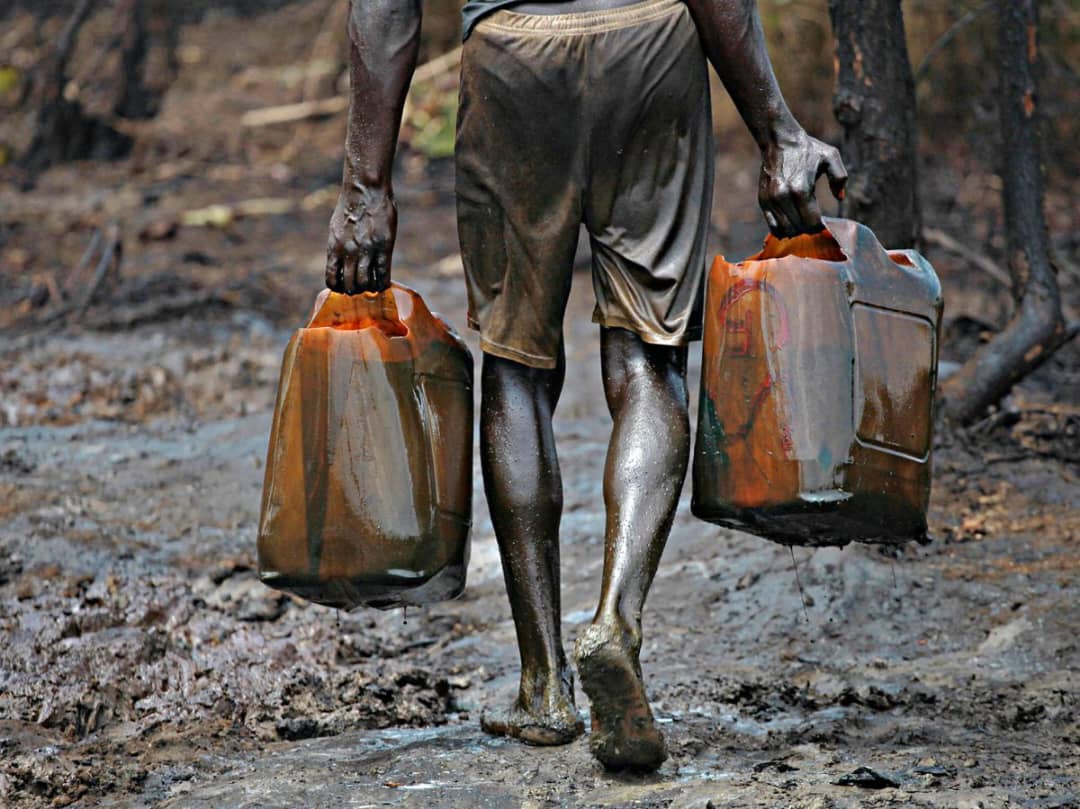
The Niger Delta, home to Nigeria’s most important oil resources, has for decades faced a serious problem: oil theft. Illegal tapping of pipelines, crude theft, and small-scale refining have become common, costing Nigeria billions of naira each year and creating a range of social, economic, and environmental problems.
The issue is complex. While oil is the main source of wealth for the country, many communities in the Delta remain poor and underdeveloped. High unemployment and lack of opportunities have pushed some local youths into illegal activities, including crude oil theft. These actions are often dangerous, with accidents at illegal refineries sometimes resulting in deaths, injuries, or large-scale environmental damage.
Security forces have increased efforts to combat oil theft. In 2025, the Nigerian Air Force conducted 495 missions targeting illegal operations in the Niger Delta. Troops have destroyed makeshift refineries, intercepted stolen crude, and arrested suspects across Rivers State and other parts of the region. These interventions have helped reduce illegal activities in some areas, but oil theft continues to evolve, with networks moving operations to less monitored locations.
The environmental impact of oil theft is significant. Pipeline spills and illegal refining release toxic substances into the soil and water, affecting farmland, fisheries, and drinking water. These consequences hit communities hardest, even those not directly involved in oil theft. Health risks, crop losses, and economic disruption have become everyday challenges for people living near oil facilities.
Also see: Utomi Advocates National Character Above Self-Gratification
Experts argue that enforcement alone cannot solve the problem. While military and police operations are important, lasting solutions require addressing the economic and social causes of oil theft. Investments in education, job creation, and community development are critical to reducing the number of people who turn to illegal activities out of necessity. Better governance and stricter monitoring of oil infrastructure are also necessary to prevent corruption and complicity within the industry.
Oil theft in the Niger Delta is a symptom of a deeper structural problem. The wealth of the region has not translated into sustainable development or opportunity for its residents. Until there is a strategy that combines enforcement with economic empowerment, oil theft is likely to continue, bringing environmental destruction and social hardship along with it.
The Niger Delta remains a region where the potential of its resources clashes with the reality of poverty and crime. Effective solutions will need both strong security measures and long-term development strategies to protect Nigeria’s oil resources and support the communities who live alongside them.
