


The Bayelsa State Government has intensified its offensive against illicit drug operations, with the State Security Council identifying fresh hotspots for surveillance and possible demolition following a recent major raid in Yenagoa.
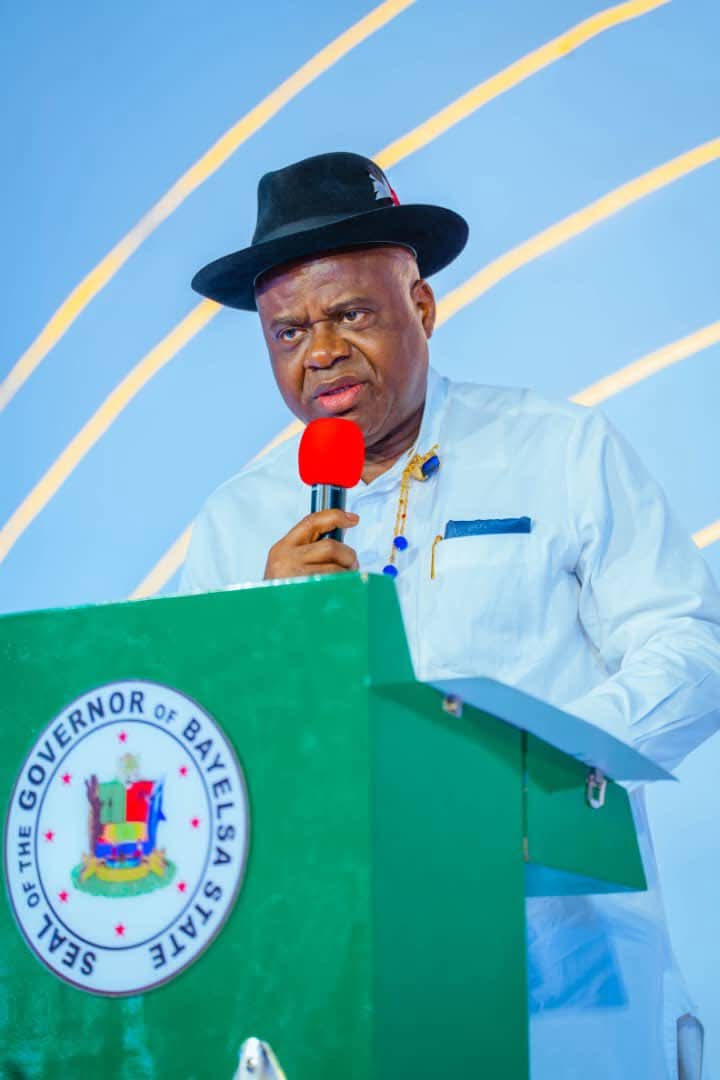
Governor Douye Diri gave the directive on Thursday during the 42nd meeting of the State Security Council at Government House, Yenagoa, stressing that criminal hideouts would not be allowed to thrive in any part of the state.
The renewed crackdown comes days after security operatives pulled down a notorious drug enclave popularly known as “Aboki Quarters” at Yenizue-Gene.
Read Also: “Avoid Politics of Bitterness” – Diri Urges Bayelsans
The demolition was carried out by a joint team of security agencies following intelligence reports on widespread drug peddling and other unlawful activities in the area.
Speaking at the meeting, Diri commended the Commissioner of Police, the Brigade Commander of the Nigerian Army and other service commanders for what he described as a prompt and coordinated operation. He, however, warned that the exercise would not end there.
According to him, reports indicate that some of those displaced by the demolition may have regrouped at a nearby location. He directed security agencies to intensify surveillance around the area and ensure that criminal elements do not re-establish their base.
The governor maintained that his administration would not tolerate the proliferation of makeshift settlements used as centres for drug abuse and other social vices, noting that such environments pose a threat to vulnerable young people and public safety.
While reaffirming the government’s zero tolerance for crime, Diri clarified that the action was not targeted at non-indigenes residing in the state. He emphasised that Bayelsa remains hospitable to law-abiding residents and business owners regardless of their ethnic background.
The council also reviewed recent clashes involving rival cult groups that reportedly resulted in three fatalities. The governor directed security agencies to apprehend those responsible and prevent further breakdown of law and order.
Meanwhile, the Deputy High Commissioner of the British High Commission, Gill Lever, attended the session as part of her visit to assess the progress of the “Brighter Futures” initiative, a crime prevention and youth empowerment programme implemented in partnership with the state government.
Lever said the project, which has run for three years in Bayelsa and three other states, focuses on reducing cultism and drug abuse at the grassroots level. She disclosed that over 200 young people in the state have received vocational training and starter packs to help them build sustainable livelihoods.
The Commissioner for Youth Development, Alfred Nimizigha, noted that the programme has prioritised agriculture and skills acquisition, adding that the state government remains committed to supporting initiatives that combine security enforcement with economic empowerment.
With fresh directives issued to security agencies, the Bayelsa State Security Council signalled that its campaign against illicit drugs and organised crime will continue with sustained intensity across the state.
