


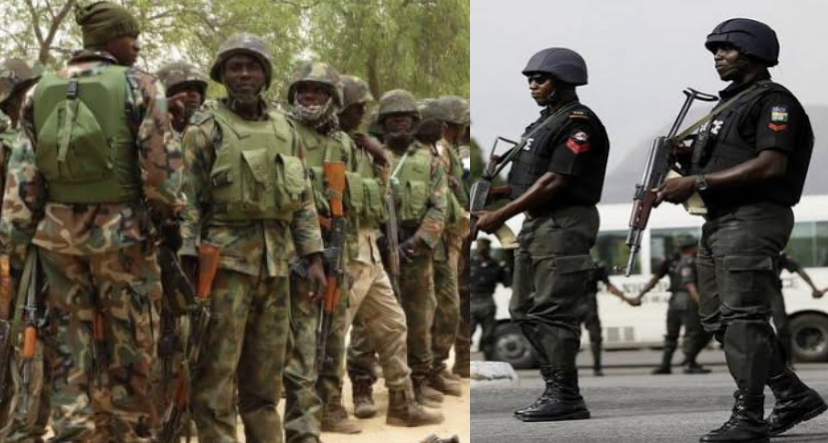
In Nigeria’s ongoing struggle with insecurity, collaboration between the Nigeria Police Force and the Nigerian Army has become both indispensable and deeply controversial.
Over the years, the lines between military and civilian security roles have blurred, with joint operations increasingly deployed to address insurgency, banditry, kidnapping, and other violent crime. But these collaborations raise tough questions about effectiveness, accountability, and the health of Nigeria’s democracy.
When Collaboration Has Been Necessary
To understand the scale of the challenge, consider the persistent security breakdown in the northwest and northeast regions. Armed banditry, kidnappings, and terrorism have terrorized communities in Zamfara, Kaduna, Katsina, and Borno states for years. Recently, Nigerian troops working alongside police officers were ambushed in Zamfara state, resulting in the deaths of five soldiers and one police officer, a stark reminder of the risks of frontline cooperation.
In the same region, joint operations successfully freed 62 hostages from a notorious forest hideout, demonstrating the life-saving potential of such cooperation. These operations are part of broader efforts to dismantle criminal networks that neither the police nor the army could tackle alone.
In Delta State, the police and army have recently agreed to deepen their cooperation under “Operation Delta Sweep,” harmonizing intelligence and operational strategies against riverine crime and armed syndicates in Oshimili North. Between January 8 and January 19, 2026, the police arrested 25 suspects and recovered firearms, while the army dismantled a major criminal syndicate clear evidence that, when coordinated well, joint efforts can produce tangible results.
Joint trainings and strategic planning exercises also reflect a conscious effort to build better synergy. In March 2025, army and police personnel participated in an intensive training program in Lagos and Ogun states aimed at improving inter-agency coordination, strategic planning, and operational readiness.
The Military’s Role in Counter-Insurgency
In the northeast, the Nigerian military has been at the forefront of combating Boko Haram and related extremist groups under Operation Hadin Kai (formerly Operation Lafiya Dole). While this initiative is primarily a military counter-insurgency campaign, its success often depends on intelligence support and community policing functions traditionally associated with the police and civilian agencies. As the insurgency adapted, so too did the nature of collaboration among all security stakeholders.
The federal government’s declaration of a nationwide security emergency in November 2025, with orders to recruit more police and army personnel and to reprioritize deployments, underscored the severity of the threat and the continued reliance ona combined force.
Tensions and Accountability Concerns
However, collaboration has not been without its critics, and for good reason. Historic flashpoints reveal the risks when military involvement in internal security undermines civil liberties. The 2020 Lekki Toll Gate shooting during the End SARS protests, where Nigerian Army personnel opened fire on unarmed protesters, remains etched in public memory as a traumatic and divisive moment. Although not strictly a police-army operation, the incident highlighted the dangers of deploying military forces in civilian contexts without clear mandates and robust safeguards.
The uneasy mix of police and army roles is also visible in joint operations where lines of authority and responsibility are ambiguous. Similar tensions have been observed in past collaborations that lacked clear civilian oversight, sometimes leading to allegations of heavy-handedness or rights abuses.
Why Collaboration Endures
Despite these tensions, police-army collaboration persists because the security threats confronting Nigeria are multifaceted and often exceed the capacity of any single agency. From banditry in the northwest to insurgency in the northeast and criminal networks in the south, the army brings training and hardware that the police simply do not have at the same scale. The police contribute essential local intelligence, investigation skills, and a mandate to enforce the rule of law.
Recent initiatives aimed at fostering cohesion, such as joint simulation exercises involving the Office of the National Security Adviser, military, police, intelligence, and emergency agencies, show a recognition that shared threats require shared responses.
Making Collaboration Work Without Undermining Democracy
For this collaboration to be sustainable and legitimate, Nigeria must invest in several key reforms: Clear Legal Mandates: Joint operations should operate under well-defined legal frameworks that respect constitutional boundaries between military and civilian roles.
Accountability Mechanisms: Independent oversight is essential to investigate abuses and protect human rights, ensuring that the use of force is both necessary and proportional.
Police Reform: Strengthening the Nigeria Police Force, through better training, equipment, community engagement, and reforms addressing brutality, must be a priority so that reliance on the army diminishes.
Community Trust: Security policy must be grounded in the trust of the communities it seeks to protect, which requires transparency, dialogue, and consistent respect for civil liberties.
Police and army collaboration in Nigeria reflects both necessity and crisis. It has delivered results in hostage rescues and joint crackdowns on criminal networks, but it has also sparked painful debates about the role of force in a democratic society.
As Nigeria grapples with persistent threats, the challenge is not simply to make these partnerships more effective but to ensure they are anchored in the rule of law, accountability, and respect for human rights. Only then can Nigeria move from a reactive posture of emergency to a proactive stance of sustainable peace and security.
