


Nigeria’s effort to strengthen public-health protection through taxation of sugar-sweetened beverages (SSBs) has reached a decisive stage, following renewed legislative scrutiny of the existing excise duty framework.
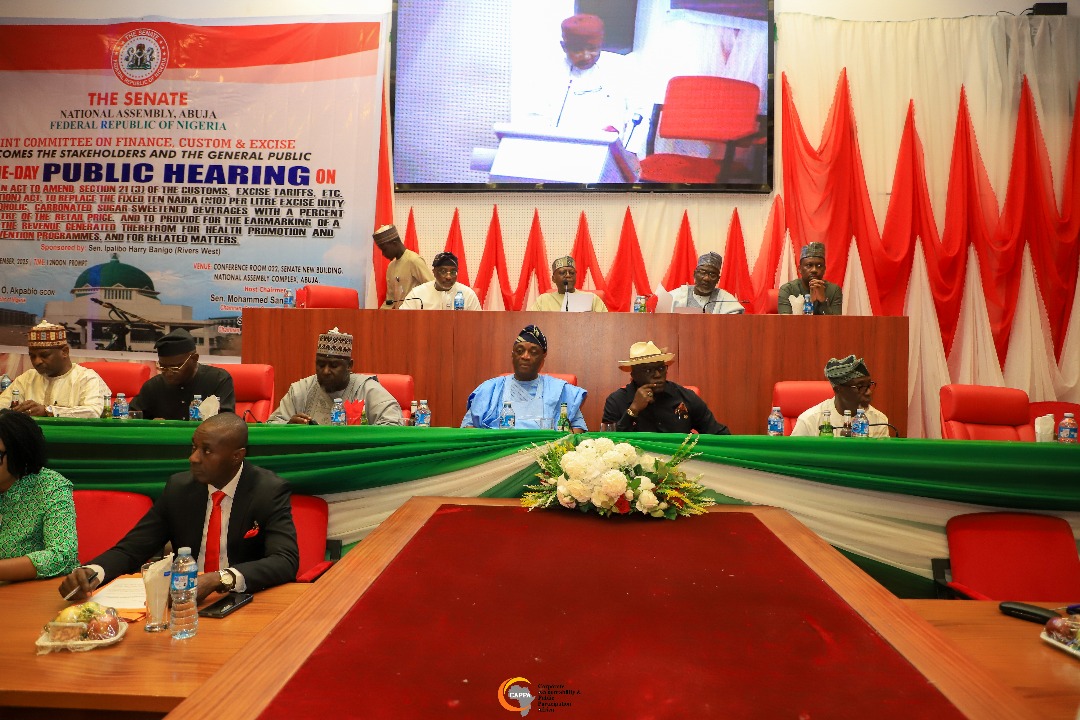
In November, the Senate Joint Committee on Finance, Customs and Excise held a public hearing in Abuja on a bill seeking to amend Section 21(3) of the Customs, Excise Tariffs, Etc. (Consolidation) Act. The proposed amendment would replace the current fixed excise duty of ₦10 per litre on non-alcoholic, carbonated, sugar-sweetened beverages with a levy based on retail price, while earmarking part of the revenue for health promotion and disease prevention.
Sponsored by Senator Ipalibo Harry Banigo, the bill is anchored on growing medical evidence linking the consumption of sugary drinks such as soft drinks, energy drinks, and sweetened juices to the rising prevalence of non-communicable diseases (NCDs) in Nigeria.
Read more: Ogu/Bolo Rolls Out School Support for Diadvantaged Students
Opening the hearing, Senate President Godswill Akpabio, represented by Senator Adeniyi Adegbonmire, described the proposal as more than a fiscal adjustment. He said the amendment was designed as a public-health investment strategy aimed at aligning taxation policy with national health priorities by redirecting part of existing revenue toward health programmes and infrastructure.
Robert Egbe, a healthy food advocate at Corporate Accountability and Public Participation Africa (CAPPA), note that SSBs are widely recognised as key contributors to obesity, type 2 diabetes, cardiovascular diseases, and premature deaths. In Nigeria, consumption of sugary drinks particularly among children and young adults has risen sharply. Non-communicable diseases now account for nearly 30 per cent of annual deaths, placing increasing pressure on households and an already overstretched health system.
Nigeria is also among the world’s fastest-growing markets for sugary beverages. Estimates suggest that the average consumer drinks about six bottles weekly, spending roughly ₦2,500. Health advocates warn that this trend is contributing to a growing disease burden once considered uncommon in the country.
The economic and human costs are significant. The Diabetes Association of Nigeria estimates that about 30,000 Nigerians die annually from diabetes, while approximately 11.4 million live with the condition. Monthly management costs range between ₦100,000 and ₦120,000. Heart disease presents similar challenges, with limited surgical capacity and rising treatment costs that place care beyond the reach of most citizens.
Nigeria introduced an excise duty on SSBs in 2021 through the Finance Act, imposing a ₦10 per litre levy. However, analysts argue that the rate has become ineffective due to inflation and rising retail prices. While a 33cl bottle sold for ₦100–₦150 in 2021, current prices range from ₦350 to ₦500, leaving the tax with little impact on consumption or product reformulation.
The debate has intensified amid concerns over chronic underfunding of the health sector. Nigeria allocates less than five per cent of its national budget to health, far below the 15 per cent target set in the 2001 Abuja Declaration. Recent fiscal reforms earmarked funds for sectors such as education, defence, and technology, but none specifically for health.
Supporters of the amendment argue that a retail-price-based SSB tax would discourage excessive consumption, encourage manufacturers to reduce sugar content, and generate sustainable funding for health programmes. Industry groups, however, have warned that higher taxes could lead to job losses and factory closures.
Public-health advocates counter that similar claims have been disproven elsewhere. More than 50 countries including South Africa, Mexico, the United Kingdom, and the Philippines have implemented comparable taxes without widespread job losses. Instead, companies have diversified products and invested in lower-sugar alternatives. They also argue that the cost of inaction is already being borne by Nigerians. Estimates suggest households spend about ₦1.92 trillion annually managing diet-related NCDs, with additional losses from reduced productivity and premature deaths.
Lawmakers are now weighing recommendations that include adopting a strong retail-price-based excise structure, earmarking SSB tax revenues for health, and establishing a national monitoring framework to assess health and fiscal outcomes. As NCD rates continue to rise, observers say the National Assembly faces a clear choice: maintain a largely symbolic levy or strengthen the SSB tax in line with global best practice to prioritise public health over private profit.
