


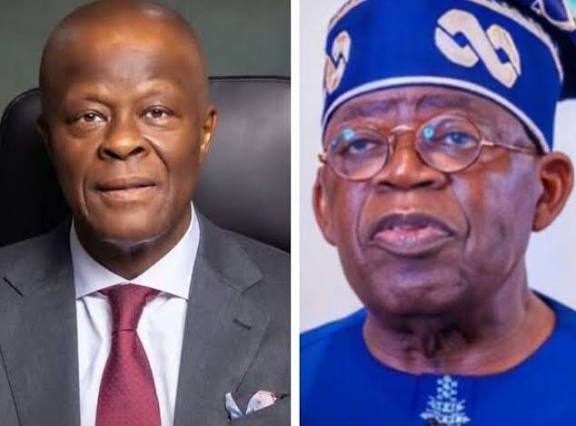
The unfolding drama between President Bola Ahmed Tinubu and his Minister of Finance and Coordinating Minister of the Economy, Mr. Wale Edun, has moved beyond routine cabinet disagreement into the realm of political intrigue. What Nigerians are witnessing is not merely a policy dispute, but a calculated stripping of authority that raises questions about intent, succession, and the real power dynamics within the Tinubu administration. At the heart of the crisis is a sharp contradiction over revenue performance.
While the President publicly declared that revenue targets were being met and even surpassed, Edun reportedly took a different route. In engagements with global financial institutions the World Bank, the IMF, and other multilateral partners he is said to have presented figures that reflected economic realities rather than political optimism. In doing so, he allegedly sought to distance himself from what he considered financial propaganda built on numbers “beyond manipulation.”
That divergence appears to have triggered presidential ire. Shortly after what insiders describe as a media onslaught by the minister, Edun was summoned to the Presidential Villa and reportedly rebuked harshly. The reprimand was swiftly followed by action: a circular was issued stripping him of his core statutory responsibilities and transferring them to the Minister of State for Finance, Dr. Doris Uzoka-Anite. Overnight, the office of the substantive minister was rendered largely ceremonial his desk emptied, his authority hollowed out.
Yet, curiously, Edun was neither relieved of his appointment nor permitted the dignity of resignation. He remains a minister in name, trapped in a political limbo that suggests a deliberate strategy: neutralise first, discard later.The depth of the rift became public during the Federation Account Allocation Committee (FAAC) meeting. As customary, Edun arrived to chair the session, only to be confronted by his minister of state, armed with instructions to preside instead. The standoff forced an adjournment. When the meeting reconvened later in the day, both ministers again insisted on their legitimacy.
News: Rivers Elders Forum Condemn Impeachment Move Against Fubara, Deputy
Summoned to a higher authority, the matter was settled decisively. By 5pm, only Dr. Uzoka-Anite returned to chair the meeting. The message was unmistakable. Beyond the personal clash lies a broader political context. Tinubu’s appointments have drawn criticism for favouring his ethnic and political base, reinforcing perceptions of exclusion and narrowing trust within the federation.
Against this backdrop, the re-emergence of former Finance Minister Kemi Adeosun into public discourse has not gone unnoticed. Adeosun, who resigned under President Muhammadu Buhari over allegations relating to a forged NYSC exemption certificate, has recently granted a series of confident interviews. She now leans on a court judgment which held that an NYSC discharge or exemption certificate is not a prerequisite for ministerial appointment.
However, as Premium Times has pointed out, the ruling did not directly address the allegation of forgery itself. Still, the vigor with which Adeosun has reclaimed the public space suggests more than personal vindication. It suggests readiness. Is Wale Edun being quietly eased out to make way for a familiar face aligned with Tinubu’s comfort zone? The pattern of public humiliation, institutional emasculation, and sustained silence points to a managed exit rather than an abrupt dismissal.
For now, Edun remains suspended between office and oblivion, a cautionary tale of what happens when technocratic truth collides with political narrative. Whether he survives this storm or becomes another footnote in Nigeria’s revolving door of finance ministers is a question only time and the President will answer. Ricky Saint writes from Abuja
