


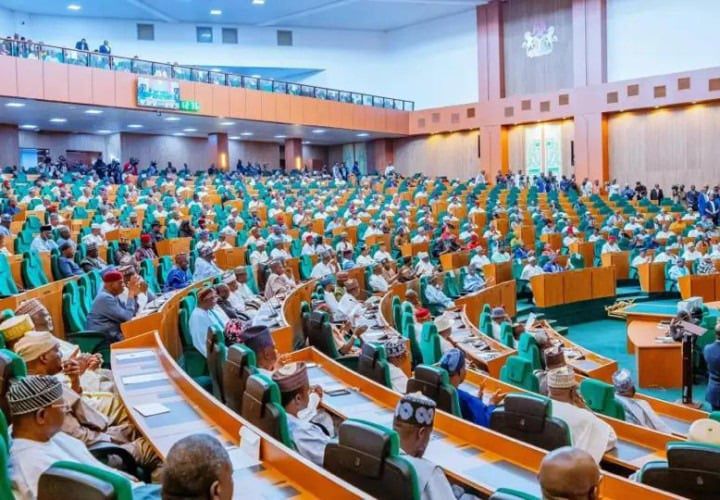
The Nigerian House of Representatives has initiated moves toward a far-reaching constitutional amendment that would empower the National Assembly to block the budgets of Ministries, Departments, and Agencies (MDAs) that fail to submit audited financial statements. The proposal, unveiled in early January 2026, is aimed at strengthening fiscal discipline and closing long-standing accountability gaps in public finance management.
The amendment is being driven by the House Committee on Constitution Review and seeks to alter Section 85 of the Constitution by introducing new subsections that impose strict timelines for financial reporting. Under the proposed provisions, all government entities, including statutory corporations and commissions, would be required to submit their audited financial statements to the Office of the Auditor-General for the Federation (OAuGF) within 90 to 180 days from the beginning of a new financial year.
Central to the proposal is a stringent enforcement mechanism described by lawmakers as “no audit, no budget.” If an MDA fails to comply with the audit submission deadline, the National Assembly would be constitutionally barred from approving that agency’s budget for the subsequent fiscal year. Lawmakers argue that this measure is necessary to curb a culture in which some agencies operate for years without submitting audited accounts, making it difficult to track public spending or determine whether audit queries have been addressed.
The push for reform comes amid a tense budget cycle for the 2026 fiscal year. The Federal Government has already directed MDAs to limit their capital budget proposals to 70 per cent of their 2025 allocations, with a ban on introducing new projects. In addition, some legislators have recently threatened to delay consideration of the 2026 Appropriation Bill, citing poor implementation of the 2024 and 2025 budgets and unpaid contractors.
Also Read: http://RSU Researchers Pioneer Sustainable Aquaculture Techniques
Fiscal pressures have further heightened calls for accountability. Reports indicate that the Federal Government fell short of its 2025 revenue targets by an estimated ₦30 trillion, intensifying scrutiny over how limited public resources are managed.
The National Assembly is expected to debate and vote on the proposed constitutional alterations following its resumption from the Christmas and New Year recess. If approved by both chambers and signed into law by the President, the amendment would mark one of the strongest fiscal discipline measures in Nigeria’s history, directly linking budget approval to transparency and compliance with audit requirements. By Victor Georgewill
The Nigerian House of Representatives has initiated moves toward a far-reaching constitutional amendment that would empower the National Assembly to block the budgets of Ministries, Departments, and Agencies (MDAs) that fail to submit audited financial statements. The proposal, unveiled in early January 2026, is aimed at strengthening fiscal discipline and closing long-standing accountability gaps in public finance management.
The amendment is being driven by the House Committee on Constitution Review and seeks to alter Section 85 of the Constitution by introducing new subsections that impose strict timelines for financial reporting. Under the proposed provisions, all government entities, including statutory corporations and commissions, would be required to submit their audited financial statements to the Office of the Auditor-General for the Federation (OAuGF) within 90 to 180 days from the beginning of a new financial year.
Central to the proposal is a stringent enforcement mechanism described by lawmakers as “no audit, no budget.” If an MDA fails to comply with the audit submission deadline, the National Assembly would be constitutionally barred from approving that agency’s budget for the subsequent fiscal year. Lawmakers argue that this measure is necessary to curb a culture in which some agencies operate for years without submitting audited accounts, making it difficult to track public spending or determine whether audit queries have been addressed.
The push for reform comes amid a tense budget cycle for the 2026 fiscal year. The Federal Government has already directed MDAs to limit their capital budget proposals to 70 per cent of their 2025 allocations, with a ban on introducing new projects. In addition, some legislators have recently threatened to delay consideration of the 2026 Appropriation Bill, citing poor implementation of the 2024 and 2025 budgets and unpaid contractors.
Fiscal pressures have further heightened calls for accountability. Reports indicate that the Federal Government fell short of its 2025 revenue targets by an estimated ₦30 trillion, intensifying scrutiny over how limited public resources are managed.
The National Assembly is expected to debate and vote on the proposed constitutional alterations following its resumption from the Christmas and New Year recess. If approved by both chambers and signed into law by the President, the amendment would mark one of the strongest fiscal discipline measures in Nigeria’s history, directly linking budget approval to transparency and compliance with audit requirements.
