


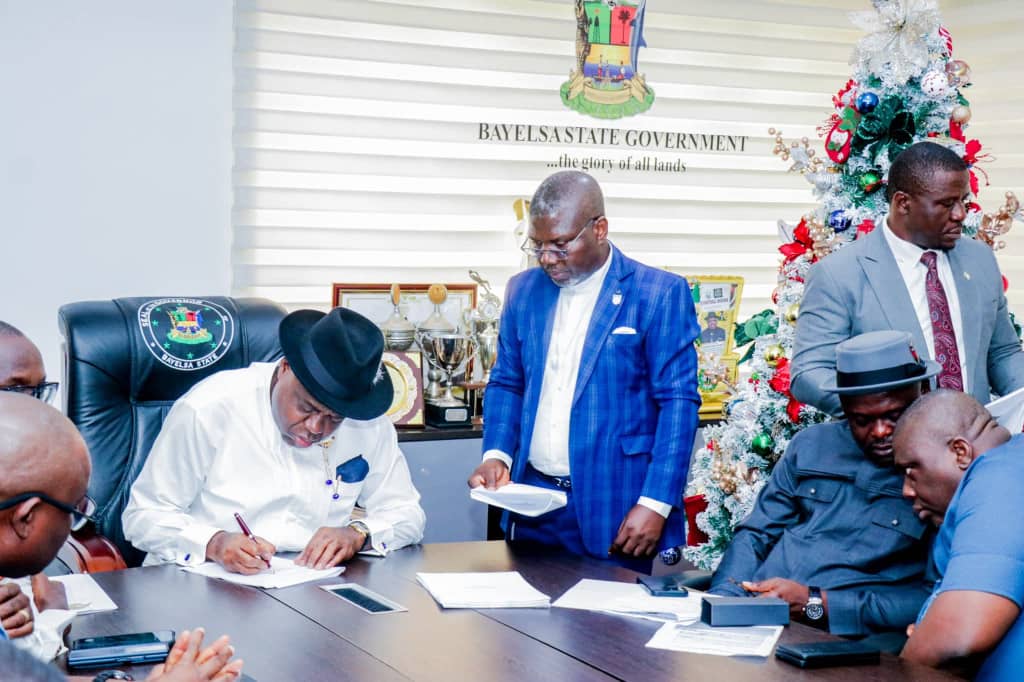
The Governor of Bayelsa State, Douye Diri, on Tuesday signed the 2026 Appropriation Bill of N1.016 trillion into law.
In a statement, his Chief Press Secretary, Daniel Alabrah, said the governor also signed six other bills into law at Government House, Yenagoa.
The legislation signed by Diri included the Rural Access Funds Law 2025, Rural Access Road Authority Law 2025, Water Sector Law 2025, Statistics Law 2025, Harmonised Taxes and Levies (Approved List for Collection) Law 2025, and the Bayelsa Medical University Amendment Law 2025.
The governor explained that his administration initially presented a budget of N998.371 billion to the House of Assembly on 13 November, but after careful scrutiny and consultations with Ministries, Departments and Agencies, the Assembly increased the figure by N17.7 billion, representing 1.77 per cent.
Diri disclosed that his administration would do everything possible to ensure the full implementation of the 2026 budget law, noting that the government adhered to the January–December budget cycle in the outgoing year.
He urged lawmakers to sustain their mutual understanding and cooperation to promote sustainable growth and development in the state, while emphasising the importance of checks and balances.
“If there is any aspect of implementation that is not progressing well, exercise your powers to ensure that this law is adhered to. On our part, we will do our best to ensure the full implementation of the 2026 Appropriation Law,” he said.
Also see: Six Rivers PDP Reps Defected to APC
The governor also commended the Assembly leadership for the timely passage of the bills, adding that cooperation among the three arms of government had enabled them to continue addressing the state’s developmental challenges.
Speaking during the budget presentation, the Speaker of the House of Assembly, Abraham Ingobere, said the budget represented more than legislation.
He described it as a symbol of appreciation for the progress made in improving the lives of Bayelsans, particularly in infrastructure, healthcare, public utilities, education and agriculture.
Ingobere added that the Assembly slightly reviewed the budget upward to reflect current economic realities and to demonstrate the legislature’s responsiveness to the aspirations of the people of the state.
