


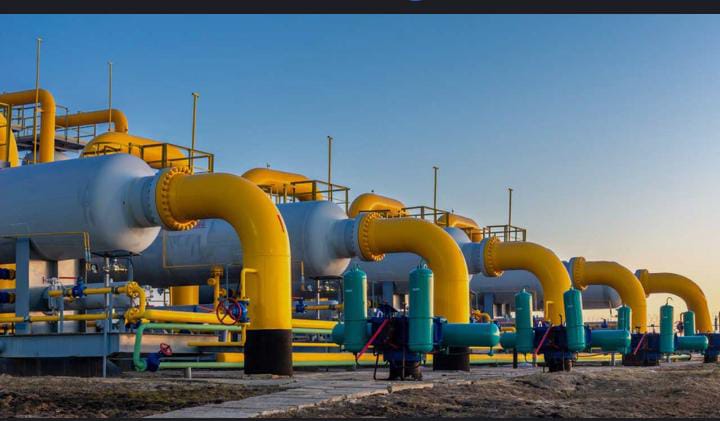
Nigeria’s gas commercialisation drive is gaining momentum as new figures from the Nigerian Midstream and Downstream Petroleum Regulatory Authority (NMDPRA) show significant expansion in processing capacity and fuel distribution infrastructure.
According to the Authority, Nigeria’s total installed gas processing capacity reached 6.1 billion standard cubic feet per day (bscf/day) as of October 2025.
An additional 11.05 bscf/day from gas conditioning and treatment plants brought the country’s combined capacity to 17.2 bscf/day. Average operating capacity stood at 3.94 bscf/day, translating to a utilisation rate of 64.7 per cent.
The Nigeria LNG (NLNG) Trains 1–6 remained the sector’s biggest contributor, accounting for 3.5 bscf/day, or 71.68 per cent of total processing. Other key facilities also posted strong performance, with MPNU’s BRT plant handling 0.69 bscf/day and the Escravos Gas Plant delivering 0.68 bscf/day at a utilisation level of 75.57 per cent.
Also Read: Nigeria’s Shipping Industry Soars as Currency Stability Drives Growth
On the domestic front, gas supply between Q1 and Q3 2025 averaged 1.572 bscf/day, distributed across power generation (0.641 bscf/day), commercial users (0.522 bscf/day), and gas-based industries (0.409 bscf/day).
The downstream petroleum sector also reflected substantial growth.
The NMDPRA reported 22,681 registered filling stations and over 25,000 tanker trucks in operation nationwide.
The country currently has 256 depots supporting product storage, with national capacity standing at 4.72 billion litres of petrol, 2.54 billion litres of diesel, and 464 million litres of aviation fuel.
With retail outlets nearing 23,000 and logistics assets.
