


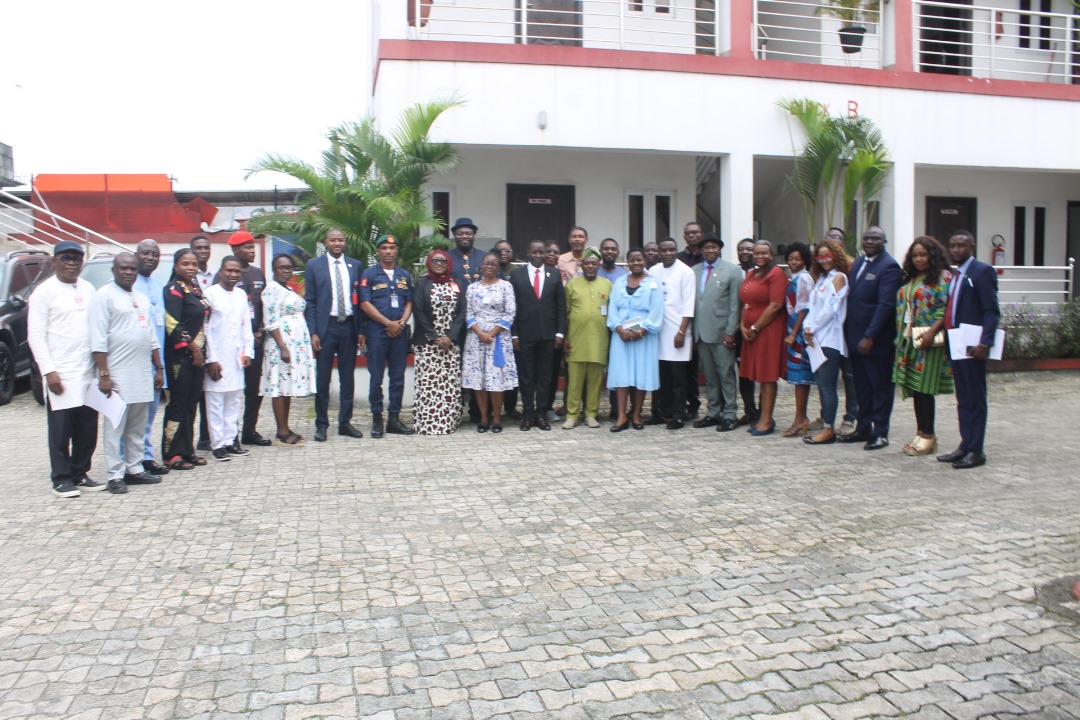
The Economic and Financial Crimes Commission (EFCC) has called for stronger collaboration with the media and civil society organisations (CSOs) to curb the growing wave of cryptocurrency-related fraud and other emerging financial crimes in Nigeria’s cyberspace.
Speaking at a one-day capacity-building workshop for journalists and CSO’s in Port Harcourt on November 27, 2025, Hassan Saidu, Acting Director, ACE I, EFCC Port Harcourt Zonal Command, said the rising cases of digital money laundering and cyber-enabled crimes demand a united front.
Saidu emphasised that combating corruption and cybercrimes is a collective responsibility, noting that the Commission’s decision to organise the workshop underscores the strategic importance of the media and CSOs as societal watchdogs.
“Your ability to inform, educate, and mobilise public opinion is a critical asset in the fight against economic and financial crimes,” he said. He added that global partnerships between anti-corruption agencies and the media have proven vital in promoting transparency and accountability.
According to him, Port Harcourt remains a hotspot for various economic crimes, including pipeline vandalism, foreign exchange scams, business email compromise, and crude oil theft. He warned that cryptocurrency fraud has become particularly alarming, making public sensitisation indispensable.
The 2025 edition of the workshop focused on Understanding Cryptocurrency Fraud and Other Emerging Financial Crimes and on the Prosecution of Financial Crimes: Issues, Challenges, and the Way Forward.
Saidu noted that while EFCC continues to target offenders, many citizens still fall victim due to ignorance or the lure of quick wealth. He urged journalists and CSOs to intensify awareness campaigns across print, broadcast, digital, and community platforms.
News: Bayelsa Govt Celebrates Maiden Flight of Newly Acquired Aircraft
The EFCC, he said, remains committed to deepening partnerships that promote patriotism, integrity, accountability, and justice.
In his presentation on cryptocurrency-related crimes, CSE Coker Oyegunle, Head of Advanced Fee Fraud, explained that digital assets are increasingly being used for money laundering, identity theft, phishing, malware attacks, and ransomware, most of which involve untraceable crypto payments.
He noted that Nigeria now has a coordinated regulatory framework involving multiple agencies. The Securities and Exchange Commission (SEC) serves as the lead regulator under the Investment and Securities Act 2025, defining digital assets as securities and licensing virtual asset service providers.
The CBN, which earlier banned cryptocurrency transactions, now permits banks to service only SEC-licensed crypto firms. The Nigeria Deposit Insurance Corporation (NDIC), however, stressed that it does not insure cryptocurrency investments, meaning investors bear full risk.
Oyegunle further highlighted EFCC’s use of blockchain analysis tools, its successful arrests of major crypto-fraud syndicates, and ongoing collaborations with Interpol and other international agencies to tackle cross-border cybercrimes.
He warned that despite the global shift toward digital payments, cryptocurrency remains high-risk for individuals and organisations due to its decentralised and borderless nature.
The EFCC urged all stakeholders to remain vigilant and committed to safeguarding Nigeria’s financial system.
